



ARTICLE CONTENTSOn this page 5 sections
Art Tools and Equipment
Performance Objectives
By the end of the lesson, students should be able to:
- explain meaning of art tools and equipment;
- types of art tools and equipment;
- usage of art tools and equipment;
- use and handle arts tools and equipment.
Meaning of Art Tools and Equipment
Art tools and equipment are the various items and materials that artists use to create artworks.
These items help artists to draw, paint, sculpt, and perform other creative tasks. They make it easier to bring artistic ideas to life, from simple sketches to colourful paintings.
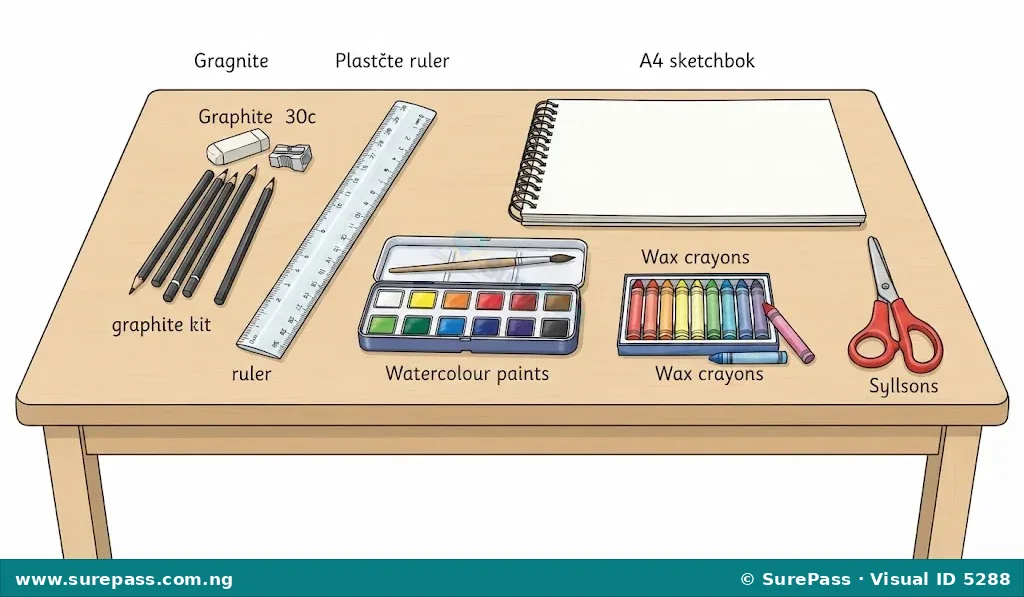
Types of Art Tools and Equipment
There are many different types of art tools and equipment, each designed for a specific purpose. These tools can be grouped based on the kind of art activity they support.
Some common types of art tools and equipment include:
- Drawing Tools: These are used for making lines, outlines, and shading.
- Colouring Tools: These add colour to artworks.
- Cutting Tools: These are used for shaping and trimming paper or other materials.
- Measuring and Shaping Tools: These help in creating accurate shapes and straight lines.
- Adhesive Tools: These are used to join different parts of an artwork.
Examples of Art Tools and Equipment and Their Uses
Understanding what each tool does helps in choosing the right one for an artwork. Here are some common art tools and their uses:
- Pencils: Pencils are used for drawing, sketching, outlining, and shading. They come in different hardness levels, but for JSS1, a general drawing pencil is sufficient.
- Erasers: Erasers are used to remove pencil marks and correct mistakes on paper. They help to keep the artwork clean and neat.
- Sharpeners: Sharpeners are used to sharpen pencils, keeping their tips pointed for clear and precise lines.
- Rulers: Rulers are used for drawing straight lines, measuring distances, and creating accurate geometric shapes.
- Drawing Paper/Sketchbook: This is the surface on which most drawings and paintings are made. A sketchbook is a collection of blank pages bound together for drawing.
- Crayons: Crayons are colouring tools made of wax. They are used to add bright, solid colours to drawings and can create different textures.
- Watercolours: Watercolours are paints that are mixed with water to create transparent colours. They are used for painting and can produce soft, blended effects.
- Paintbrushes: Paintbrushes are used to apply paint, such as watercolours, to paper or other surfaces. They come in different sizes and shapes for various painting techniques.
- Scissors: Scissors are cutting tools used to cut paper, fabric, and other thin materials into desired shapes.
- Glue/Adhesive: Glue is used to stick different pieces of paper or other materials together, especially in collage or craft projects.
Handling and Usage of Art Tools and Equipment
Proper handling and usage of art tools and equipment are important for safety, for making good artworks, and for making the tools last longer. Mishandling tools can lead to accidents or damage to the tools themselves.
General Guidelines for Handling Art Tools
When using any art tool, it is important to follow these guidelines:
- Use Tools for Their Intended Purpose: Each tool is designed for a specific task. For example, use scissors only for cutting paper or thin materials, not for opening cans.
- Hold Tools Correctly: Hold pencils, brushes, and other tools firmly but not too tightly. This gives better control and prevents hand fatigue.
- Work in a Clean Area: Keep your workspace tidy to avoid losing small tools or getting your artwork dirty.
- Clean Tools After Use: After using paintbrushes, wash them thoroughly with water. Clean pencils and rulers if they get dirty. This prevents damage and keeps them ready for next use.
- Store Tools Properly: Store tools in a designated box, tray, or container. Keep sharp objects like scissors in a safe place where they cannot cause injury.
- Handle Sharp Tools with Care: Scissors should be used carefully. Always cut away from your body and keep your fingers clear of the blades.
- Ask for Help: If you are unsure how to use a tool or if a tool is broken, ask an adult or your teacher for help.
How to Use Common Art Tools
Here are practical steps for using some common art tools:
-
Using a Pencil for Drawing:
- Hold the pencil comfortably between your thumb and first two fingers.
- Rest your hand lightly on the paper.
- Move your hand and wrist to draw lines and shapes.
- Apply light pressure for faint lines and more pressure for darker lines.
-
Using an Eraser:
- Hold the eraser firmly.
- Gently rub the eraser over the pencil mark you want to remove.
- Brush away the eraser shavings to keep your paper clean.
-
Using a Sharpener:
- Insert the pencil tip into the sharpener opening.
- Rotate the pencil gently until the tip is sharp.
- Empty the shavings from the sharpener regularly.
-
Using a Ruler for Straight Lines:
- Place the ruler firmly on the paper where you want to draw a line.
- Hold the ruler down with one hand to prevent it from moving.
- Draw your pencil along the edge of the ruler with the other hand.
-
Using Watercolours and a Paintbrush:
- Dip the paintbrush in clean water.
- Touch the wet brush to the watercolour cake to pick up colour.
- Apply the paint to your paper.
- Wash the brush in water when changing colours or when finished.
-
Using Scissors for Cutting Paper:
- Hold the scissors with your thumb in one handle and your middle finger in the other.
- Place the paper between the blades.
- Open and close the blades to cut along the desired line.
- Always cut away from your body and keep your fingers clear of the blades.





0 comments
Open the discussion when you need it. Comments stay collapsed until requested so the initial article remains light.