



ARTICLE CONTENTSOn this page 8 sections
Rubuta Labari
Performance Objectives
By the end of the lesson, students should be able to:
- rubuta labari;
- zaɓen kalmomi;
- isar da saƙo.
Introduction to Story Writing (Rubutun Labari)
A story is a written or spoken account of real or imaginary events told in an interesting way to entertain, educate, or inform an audience.
In Hausa culture and language, story writing (rubutun labari) is an important way of preserving history, teaching morals, and sharing experiences. A good story must be structured in a way that the reader can follow the events easily from the beginning to the end.
Observe the image below.
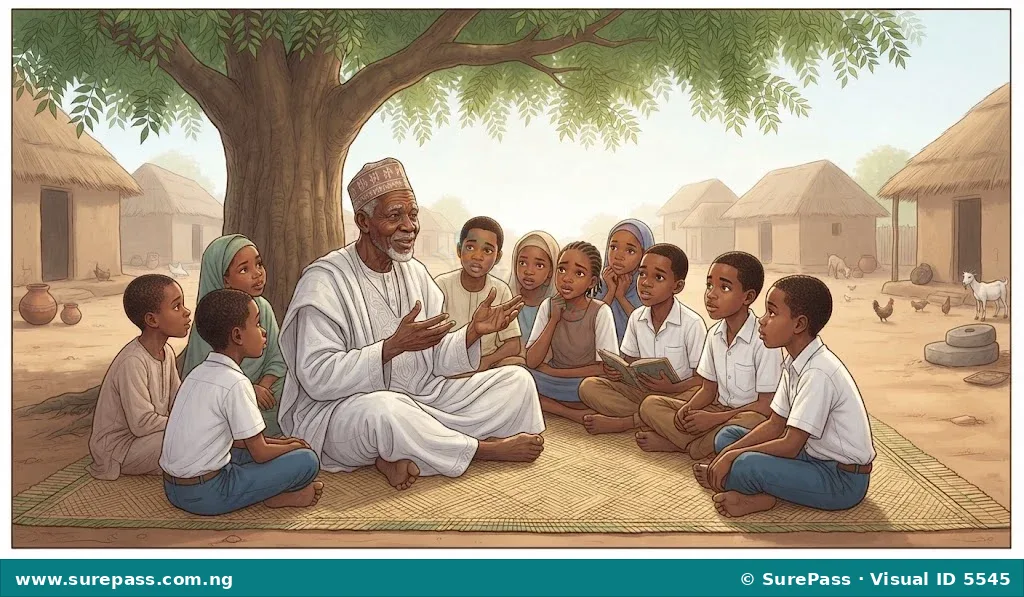
The key elements of a story in Hausa include:
- Mazauna ko Jarumai (Characters): These are the people, animals, or objects that perform the actions in the story. For example, Gizo (the spider) and Zaki (the lion) are common characters in Hausa folktales.
- Wuri da Lokaci (Setting): This refers to where and when the events in the story take place, such as a forest (daji), a palace (fada), or a village (ƙauye).
- Abubuwan da Suka Faru (Plot/Events): This is the sequence of actions that happen from the start of the story to the climax and the resolution.
- Saƙo (Message/Moral): This is the central lesson or information that the writer wants the readers to learn from the story.
Word Choice in Hausa (Zaɓen Kalmomin da Suka Dace)
Word choice is the careful selection of words to make a story clear, vivid, and appropriate for the target audience.
When writing a story in Hausa, using the right words helps to paint a clear picture in the mind of the reader. Writers often use synonyms (madadin kalmomi) to avoid repeating the same words and to make the narrative more engaging. Choosing the correct words also ensures that the tone of the story matches the emotions of the characters, whether they are happy, sad, angry, or frightened.
The table below shows common Hausa words and their appropriate synonyms (madadin kalmomi) that can be used during story writing:
| Tsohuwar Kalma (Original Word) | Madadin Kalma (Synonym / Alternative Word) | English Meaning |
|---|---|---|
| Murna | Farin ciki | Joy / Happiness |
| Tsoro | Firgici / Razana | Fear / Terror |
| Dabara | Wayo / Hikima | Cleverness / Wisdom |
| Gida | Muhalli / Matsuguni | House / Dwelling |
| Sarki | Mai martaba | King / Ruler |
| Tafiya | Ziyara / Bulaguro | Journey / Travel |
| Aboki | Amini | Friend / Close friend |
| Kyau | Siffa mai kyau | Beauty / Goodness |
| Gudu | Sassarfa | Running / Hurrying |
Conveying a Message (Isar da Saƙo)
A message is the moral lesson, advice, or core information that a writer intends to pass to the audience through a story or a written text.
Every written story or message must have a clear purpose. In Hausa writing, the message (saƙo) is often placed at the end of the story as a moral lesson (darasi). To convey a message effectively, the writer must use simple, direct, and polite language. The choice of words must align with the message so that the reader does not misunderstand the writer’s intention.
The steps to ensure a message is delivered clearly include:
- Identifying the main point of the message before writing.
- Using precise words that directly address the topic.
- Structuring the sentences logically so that one idea leads naturally to the next.
- Reviewing the written text to ensure that the tone is appropriate for the recipient.
Practical Demonstration: Rewriting a Story with Alternative Words
To understand how word choice affects story writing and how the message is preserved, observe the two versions of the short story below.
Version A: The Original Story (Tsohon Labari)
“Wata rana, yunwa ta kama Zaki a daji. Ya fita neman abinci amma bai sami komai ba. Kwatsam, sai ya haɗu da Gizo. Zaki ya yi murna ƙwarai, ya ce zai cinye Gizo. Gizo ya ji tsoro sosai, amma ya yi dabara. Ya ce wa Zaki, ‘Idan ka bar ni, zan nuna maka inda babban rago yake.’ Zaki ya yarda, suka tafi tare. Da suka isa kusa da ramin tura, Gizo ya gudu ya shiga rami, ya bar Zaki da yunwa.”
Key Words Identified for Replacement
The key words selected from the original story and their alternatives are:
- Yunwa (hunger) can be replaced with rashin abinci (lack of food).
- Murna (joy) can be replaced with farin ciki (happiness).
- Tsoro (fear) can be replaced with firgici (panic/terror).
- Dabara (trick/cleverness) can be replaced with hikima (wisdom/intelligence).
- Gudu (run) can be replaced with sassarfa (hurried movement).
Version B: The Rewritten Story (Sabon Labari)
“Wata rana, rashin abinci ya addabi Zaki a daji. Ya fita neman abin da zai ci amma bai sami komai ba. Kwatsam, sai ya haɗu da Gizo. Zaki ya yi farin ciki ƙwarai, ya ce zai cinye Gizo. Gizo ya ji firgici sosai, amma ya yi hikima. Ya ce wa Zaki, ‘Idan ka bar ni, zan nuna maka inda babban rago yake.’ Zaki ya yarda, suka tafi tare. Da suka isa kusa da ramin tura, Gizo ya sassarfa ya shiga rami, ya bar Zaki da yunwa.”
Comparing the Message (Saƙo) of Both Versions
The message in Version A is: “Wayo da hikima suna iya ceton rai daga babban haɗari” (Cleverness and wisdom can save a life from great danger).
The message in Version B is: “Wayo da hikima suna iya ceton rai daga babban haɗari” (Cleverness and wisdom can save a life from great danger).
This demonstration shows that even though several words were replaced with their synonyms, the core message of the story remained exactly the same. This is the power of appropriate word choice in writing.
Summary
Story writing requires a clear structure consisting of characters, setting, plot, and a message. Choosing the right words and using synonyms helps to make the story more interesting while keeping the original meaning intact. Whether writing a story or a short message, the ultimate goal is to ensure that the receiver understands the exact message being conveyed.
Questions for Evaluation
Use the short story below to answer the questions that follow:
“Akwai wani sarki mai kirki da yake mulki a wani gari. Mutanen garin suna murna da mulkinsa domin yana taimaka musu. Wata rana, sarki ya yi tafiya zuwa wani gari mai nisa. Kafin ya dawo, mutane sun yi kewarsa sosai.”
The evaluation exercises are:
- Identify three key words from the story above.
- Provide suitable synonyms (madadin kalmomi) for the three key words identified.
- Rewrite the short story using the new synonyms you provided.
- Explain the main message (saƙo) contained in both the original story and your rewritten version.
- Write a short message of three sentences in Hausa advising a friend to be hardworking in school.



0 comments
Open the discussion when you need it. Comments stay collapsed until requested so the initial article remains light.