



ARTICLE CONTENTSOn this page 7 sections
Sunayen Dangi, Dangantaka da Muhimmancinsu
Performance Objectives
By the end of the lesson, students should be able to:
- bayanin ma’anar dangi;
- kawo sunayen dangi;
- tantance sunayen dangi;
- muhimmancin dangi da sunayen dangi.
Ma’anar Dangi
Dangi refers to a group of people who are related to one another by blood, marriage, or adoption.
In Hausa culture, the concept of family extends far beyond the nuclear family of parents and children. It encompasses a wide network of relatives, including grandparents, uncles, aunts, cousins, and in-laws. This extended family system forms the foundation of social organization, mutual support, and cultural identity in Hausa society.
Sunayen Dangi da Dangantaka
Hausa language has specific names used to identify different relatives and the relationships between them. These kinship terms are divided based on immediate family, paternal relatives (from the father’s side), and maternal relatives (from the mother’s side).
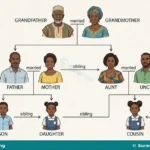
Observe the diagram below to understand how these relationships are structured.
The primary terms for immediate family members include:
- Uba: Father.
- Uwa: Mother.
- Miji: Husband.
- Mata: Wife.
- Ɗa: Son.
- Ɗiya: Daughter.
- Wa: Elder brother.
- Ƙane: Younger brother.
- Ya: Elder sister.
- Ƙanwa: Younger sister.
The terms for grandparents and grandchildren include:
- Kaka: Grandparent (either grandfather or grandmother).
- Kaka Namiji: Grandfather.
- Kaka Mace: Grandmother.
- Jika: Grandchild.
- Taba-kunne: Great-grandchild.
The terms for paternal relatives (dangin uba) include:
- Baba or Baban-kani: Paternal uncle (father’s brother).
- Gwaggo: Paternal aunt (father’s sister).
The terms for maternal relatives (dangin uwa) include:
- Kawu: Maternal uncle (mother’s brother).
- Inna: Maternal aunt (mother’s sister).
Tantance Sunayen Dangi
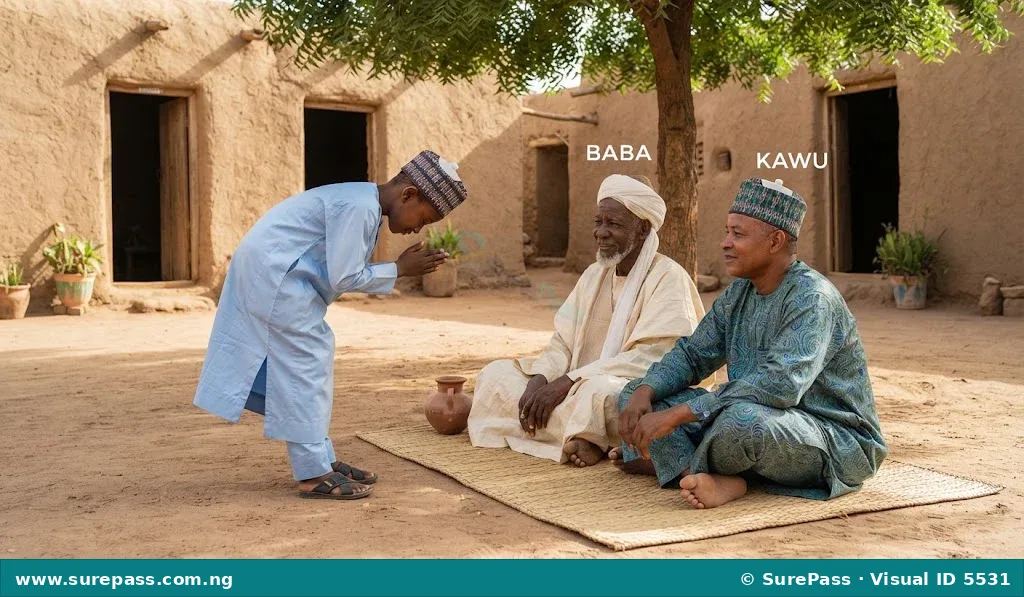
Distinguishing between different kinship terms is important in Hausa culture to avoid confusion and to show proper respect. While some languages use general terms like “uncle” or “aunt” for both sides of the family, Hausa language makes a clear distinction between maternal and paternal relatives.
The key differences between these kinship terms are shown in the table below:
| Hausa Kinship Term | English Translation | Family Side / Description |
|---|---|---|
| Baba | Paternal Uncle | Father’s brother |
| Kawu | Maternal Uncle | Mother’s brother |
| Gwaggo | Paternal Aunt | Father’s sister |
| Inna | Maternal Aunt | Mother’s sister |
| Wa | Elder Brother | A male sibling who is older than the speaker |
| Ƙane | Younger Brother | A male sibling who is younger than the speaker |
| Ya | Elder Sister | A female sibling who is older than the speaker |
| Ƙanwa | Younger Sister | A female sibling who is younger than the speaker |
Observe the illustration below to see how these distinctions are applied in daily conversations.
Muhimmancin Dangi da Sunayen Dangi
Understanding family relationships and using the correct kinship terms is highly significant in Hausa society. This practice serves several cultural, social, and moral purposes.
The main reasons for the importance of family and kinship names are:
- Sada Zumunta (Maintaining Family Ties): Using correct kinship terms helps relatives identify their connection to one another, which strengthens unity, love, and frequent visitation among family members.
- Girmamawa (Showing Respect): In Hausa culture, addressing an elder relative by their direct name is considered disrespectful. Using titles like Kawu, Gwaggo, Wa, or Ya demonstrates proper manners and respect.
- Sanin Asali (Preserving Identity and Lineage): Kinship terms help children understand their family history, lineage, and ancestral roots from both the paternal and maternal sides.
- Taimakon Juna (Mutual Support): A clear understanding of family relationships ensures that members know who to support during ceremonies (such as weddings and naming ceremonies) and who to turn to during times of difficulty.
- Kariya ga Tarbiyya (Moral Upbringing): The extended family network shares the responsibility of raising children, teaching them good morals, and correcting bad behaviour.
How to Identify and Map Family Relationships
Creating a family chart is a practical way to identify relatives and understand how they are connected using Hausa kinship terms.
The procedure involves the following steps:
- Write down the names of the maternal grandparents (Kaka) and paternal grandparents.
- List the names of the father (Uba) and mother (Uwa).
- Identify the brothers and sisters of the father, labeling them as Baba or Gwaggo.
- Identify the brothers and sisters of the mother, labeling them as Kawu or Inna.
- List all siblings, distinguishing them as Wa, Ya, Ƙane, or Ƙanwa based on their age relative to the person making the chart.


0 comments
Open the discussion when you need it. Comments stay collapsed until requested so the initial article remains light.