


ARTICLE CONTENTSOn this page 11 sections
Feet and Hands
Performance Objectives
By the end of the lesson, students should be able to:
- state ways of caring for the feet and hand;
- state reasons for wearing good shoes;
- practice the complete massaging of feet and toes;
- list nail diseases and nail disorders;
- explain how nail disorders may be treated;
- state the advantages of regular washing of hands.
Meaning of Manicure and Pedicure
A manicure is a cosmetic beauty treatment for the fingernails and hands.
This treatment involves shaping the nails, caring for the cuticles, softening the skin, and applying nail polish if desired.
A pedicure is a cosmetic beauty treatment for the feet and toenails.
This treatment focuses on cleaning the feet, exfoliating dead skin cells from the soles, trimming and shaping toenails, and massaging the feet and lower legs.
Ways of Caring for the Feet and Hands
The hands and feet are subjected to constant physical activity, environmental exposure, and friction. Proper daily care is essential to maintain skin elasticity, prevent infections, and ensure nail health.
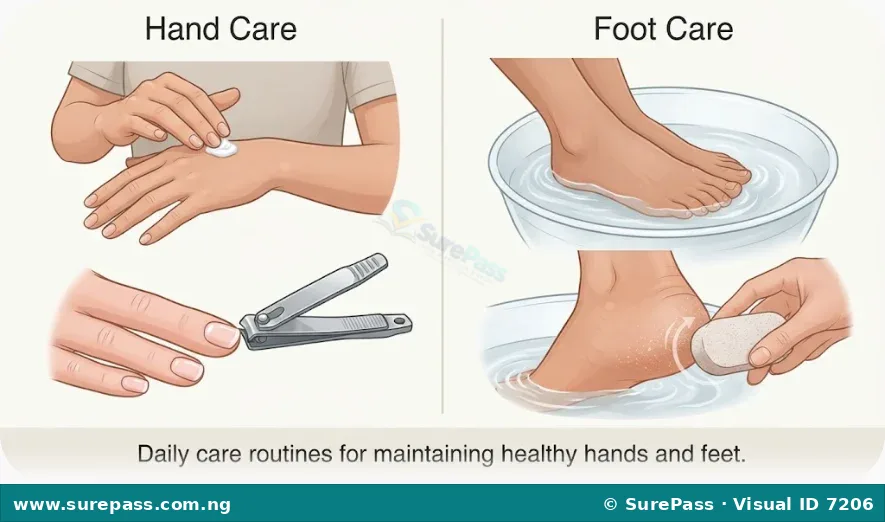
Effective methods for caring for the feet and hands include:
- Daily Washing: Wash the hands and feet daily with mild soap and warm water to remove dirt, sweat, and bacteria.
- Thorough Drying: Dry the skin completely after washing, paying close attention to the spaces between the toes and fingers to prevent fungal growth.
- Moisturizing: Apply a rich hand cream or foot lotion daily to lock in moisture, prevent cracking, and keep the skin soft.
- Exfoliation: Use a pumice stone or foot scrub on the soles of the feet to gently remove hardened skin and calluses.
- Proper Nail Trimming: Cut fingernails into a slightly rounded shape and toenails straight across to prevent painful ingrown nails.
- Protection: Wear protective gloves when performing household chores, washing dishes, or handling harsh chemicals to prevent skin dryness and nail damage.
Reasons for Wearing Good Shoes
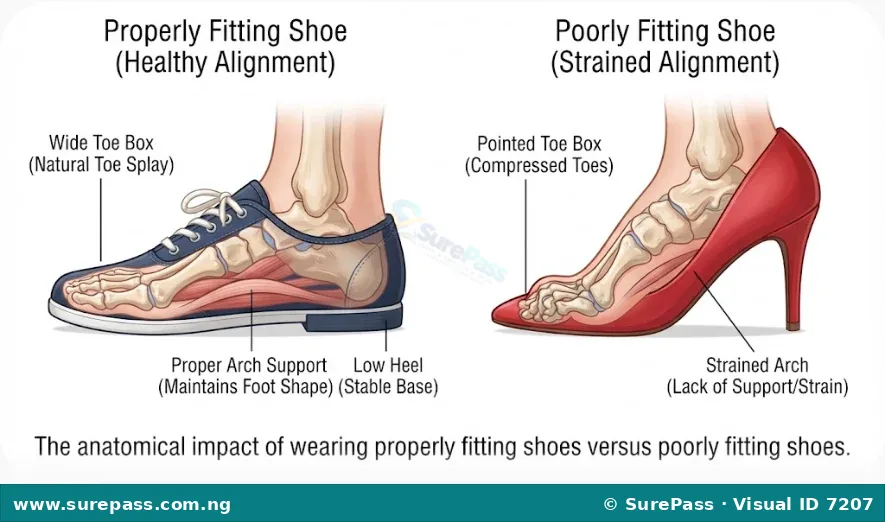
A good shoe is one that fits the foot properly, provides adequate support, allows the skin to breathe, and does not cause pain or friction during movement.
The primary reasons for wearing good shoes include:
- Prevention of Foot Deformities: Properly fitting shoes prevent the development of structural issues such as bunions, hammertoes, and corns.
- Protection from Physical Injury: Sturdy shoes protect the feet from sharp objects, rough terrain, extreme temperatures, and accidental impacts.
- Support for Body Posture: Good shoes provide arch support, which helps align the ankles, knees, hips, and spine, reducing lower back pain.
- Prevention of Fungal Infections: Shoes made from breathable materials prevent excessive sweating, which reduces the risk of fungal infections like athlete’s foot.
- Reduction of Pain and Fatigue: Cushioned soles absorb shock during walking or running, preventing joint strain and foot fatigue.
Nail Diseases and Nail Disorders
In cosmetology, a clear distinction must be made between nail diseases and nail disorders. This distinction determines whether a client can receive salon services or must be referred to a medical professional.
Nail Diseases
A nail disease is an infectious condition of the nail or surrounding tissue caused by fungi, bacteria, or viruses.
Nail diseases are highly contagious. Cosmetologists must never perform services on a client exhibiting signs of a nail disease. The client must be referred to a physician.
Common nail diseases include:
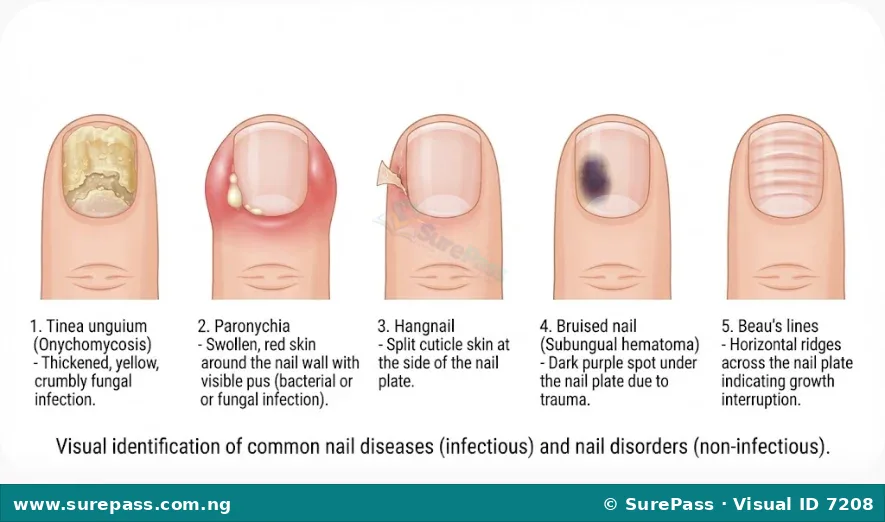
- Tinea Unguium (Onychomycosis): A fungal infection of the nail plate. The nail becomes thick, brittle, lusterless, and discolored, often turning yellow or white.
- Paronychia: A bacterial infection of the skin surrounding the nail. It is characterized by redness, swelling, tenderness, and sometimes pus formation.
- Onychia: An inflammation of the nail matrix, usually caused by bacterial infection from unsanitary tools. It leads to pus formation and can cause the nail plate to detach.
Nail Disorders
A nail disorder is a non-infectious condition of the nail caused by physical injury, hereditary factors, or systemic nutritional deficiencies.
Nail disorders are not contagious. Cosmetologists can perform services on clients with mild nail disorders, provided the skin is not broken or inflamed.
Common nail disorders include:
- Hangnails (Agnails): A condition where the cuticle splits or tears around the nail plate. It is caused by extreme dryness of the skin or improper cutting of the cuticles.
- Bruised Nails: Dark purplish spots under the nail plate. This condition is caused by physical trauma or injury to the nail bed, which ruptures small blood vessels.
- Onychorrhexis: Split or brittle nails that exhibit lengthwise ridges. It is caused by injury to the matrix, excessive exposure to harsh soaps, or nutritional deficiencies.
- Beau’s Lines: Visible horizontal depressions or ridges running across the nail plate. These occur when nail growth is temporarily interrupted by severe illness, systemic infection, or major physical trauma.
- Ingrown Nails (Onychocryptosis): A condition where the edge of the nail grows into the surrounding skin fold. It is commonly caused by wearing tight shoes or trimming toenails too short at the corners.
How Nail Disorders May Be Treated
Nail disorders can be managed through proper cosmetic care, lifestyle adjustments, and protective measures. If a disorder becomes infected, it must be treated medically.
Methods for treating and managing common nail disorders include:
- Treatment for Hangnails: Soften the cuticle with warm water and cuticle oil. Carefully trim the loose skin with sterilized cuticle nippers. Avoid biting, pulling, or tearing the skin.
- Treatment for Bruised Nails: Avoid applying pressure or artificial nails to the affected finger. Allow the nail plate to grow out naturally. The bruised area will gradually move forward and can be trimmed away.
- Treatment for Onychorrhexis: Apply penetrating nail oils or moisturizers daily to restore flexibility. Avoid using harsh nail hardeners, and wear gloves when handling water or detergents. File the nails gently with a fine-grit emery board.
- Treatment for Beau’s Lines: Address the underlying systemic health issue. As the body recovers, healthy nail growth resumes, and the horizontal ridges will eventually grow out and be trimmed away.
- Treatment for Ingrown Nails: Soak the foot in warm water to soften the nail. Trim the toenail straight across without rounding the corners. Wear shoes with a wide toe box to relieve pressure. If infection occurs, refer the client to a podiatrist.
Advantages of Regular Washing of Hands
The hands are the primary tools used for daily activities, making them highly susceptible to gathering pathogens and chemical residues.
The main advantages of regular handwashing include:
- Prevention of Infectious Diseases: Handwashing removes viruses, bacteria, and parasites, significantly reducing the transmission of gastrointestinal infections like cholera and respiratory infections like influenza.
- Removal of Dirt and Chemical Residues: Washing cleanses the skin of grease, dust, pesticides, and cosmetic chemicals that could cause contact dermatitis.
- Prevention of Self-Contamination: Clean hands prevent the transfer of pathogens from contaminated surfaces to the eyes, nose, and mouth.
- Maintenance of Salon Hygiene: In cosmetology, regular handwashing prevents cross-contamination between the beauty therapist and the client, ensuring a safe, sterile service environment.
How to Massage Feet and Toes
Foot and toe massage is a key component of a professional pedicure. It stimulates blood circulation, relaxes tense muscles, and helps the skin absorb moisturizing creams.
The required materials are:
- Massaging cream, lotion, or oil
- Warm water in a foot basin
- Clean towels
The procedure involves the following steps:
- Cleanse the feet thoroughly by soaking them in warm water, then dry them completely with a clean towel.
- Apply a generous amount of massaging cream or oil to the hands and warm it by rubbing the palms together.
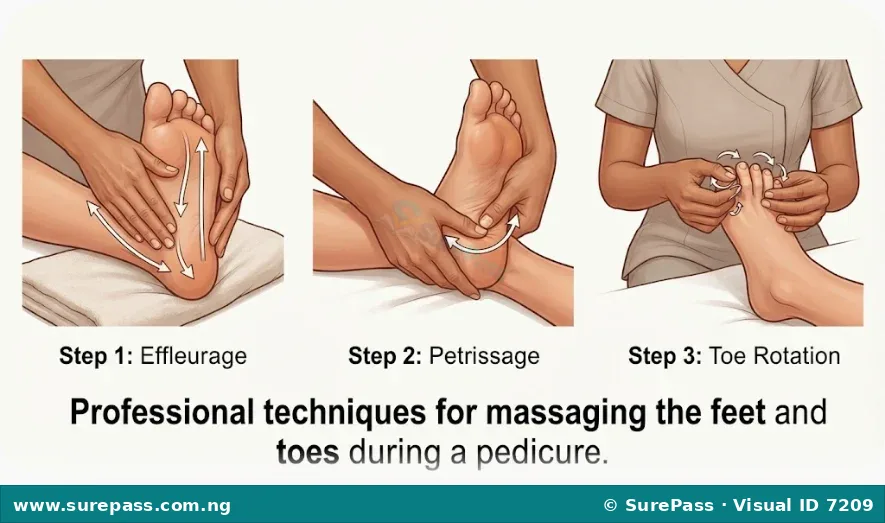
- Apply the cream evenly over the client’s foot and ankle using long, smooth strokes from the toes toward the ankle. This movement is called effleurage.
- Hold the foot firmly with one hand. Use the thumb of the other hand to apply firm, circular pressure along the sole of the foot, moving from the heel up to the ball of the foot.
- Gently grasp each toe individually at the base. Pull slightly and rotate the toe in a gentle circular motion to relieve joint tension.
- Use a kneading motion, known as petrissage, along the sides of the foot and around the ankle bone to relieve muscle tightness.
- Finish the massage with light, soothing strokes over the entire foot. Use a clean towel to wipe away any excess cream or oil before proceeding with nail polishing.
How to Wash Hands Properly
Proper handwashing requires a systematic approach to ensure all surfaces of the hands, fingers, and wrists are thoroughly cleaned.
The required materials are:
- Clean running water
- Liquid soap
- A clean towel or single-use paper towel
The procedure involves the following steps:
- Wet the hands thoroughly under clean, running water.
- Apply enough liquid soap to cover all hand surfaces.
- Rub the palms together to create a rich lather.
- Rub the right palm over the back of the left hand with interlaced fingers, and repeat with the left palm over the back of the right hand.
- Interlace the fingers palm-to-palm and rub them together to clean the spaces between the fingers.
- Clasp the fingers of each hand together and rub the backs of the fingers against the opposing palms.
- Grasp the left thumb with the right hand and rub rotationally, then repeat the process for the right thumb.
- Rub the fingertips of the right hand rotationally in the left palm to clean under the fingernails, then repeat with the left fingertips in the right palm.
- Rinse the hands thoroughly under clean, running water to remove all soap residues.
- Dry the hands completely using a clean towel or single-use paper towel. Use the paper towel to turn off the tap to avoid recontaminating the hands.
Summary and Review Questions
Review Questions
- Define manicure and pedicure.
- State four ways of caring for the feet and hands.
- Outline three reasons why wearing good shoes is important for physical health.
- Explain the difference between a nail disease and a nail disorder.
- List three nail diseases and three nail disorders.
- Describe how a cosmetologist should manage a client with a hangnail.
- Enumerate four advantages of regular handwashing.




0 comments
Open the discussion when you need it. Comments stay collapsed until requested so the initial article remains light.