



ARTICLE CONTENTSOn this page 8 sections
Cosmetics Tools, Equipment and Materials
Performance Objectives
By the end of the lesson, students should be able to:
- identify cosmetic tools, equipment and materials;
- classify cosmetic tools, equipment and materials based on their uses;
- use cosmetic tools, equipment and materials, to beautify a dummy.
Meaning of Cosmetic Tools, Equipment and Materials
Cosmetic tools are handheld, non-electrical instruments used by a cosmetologist to perform manual styling, cutting, detangling, or grooming tasks on the hair or scalp.
Cosmetic equipment consists of larger, often electrical or mechanical appliances and salon furniture used to facilitate hair treatments, drying, styling, or processing.
Cosmetic materials are consumable products, chemical substances, or liquids applied directly to the hair, scalp, or skin to clean, treat, alter, or style it.
Understanding the differences between these three categories is essential for maintaining an organized, safe, and professional salon environment.
Cosmetic Tools and Their Uses
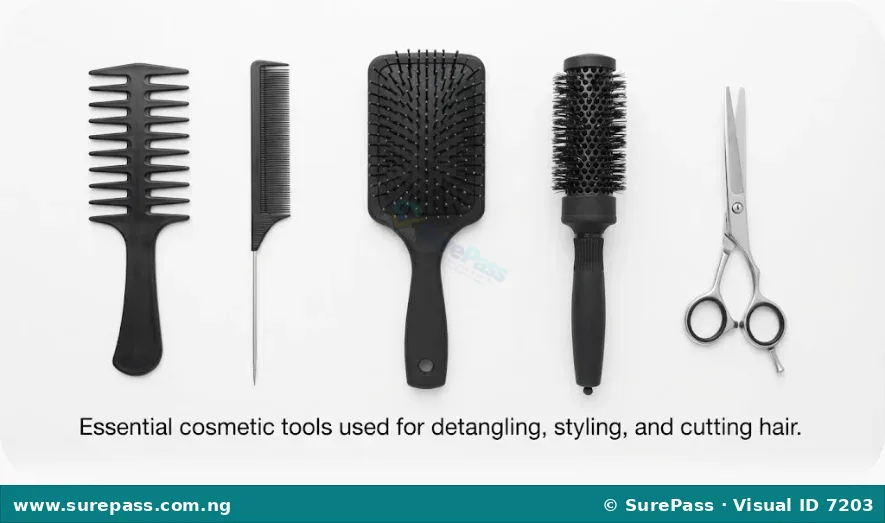
Cosmetic tools are the basic instruments that a stylist holds to manipulate hair. They do not require electricity to function. The primary tools used in hair care and styling include:
- Combs: These are flat, toothed instruments. Wide-tooth combs are used to detangle wet or thick hair safely without causing breakage. Fine-tooth combs and tail combs are used for parting, sectioning, and styling hair precisely.
- Brushes: These consist of bristles set into a handle. Paddle brushes are used for smoothing and detangling dry hair, while round brushes are used during blow-drying to create volume, waves, and curls.
- Scissors: These are sharp cutting instruments, also known as shears, designed specifically for trimming, cutting, and shaping hair strands to desired lengths.
Observe the image below to identify common cosmetic tools.
Cosmetic Equipment and Their Uses
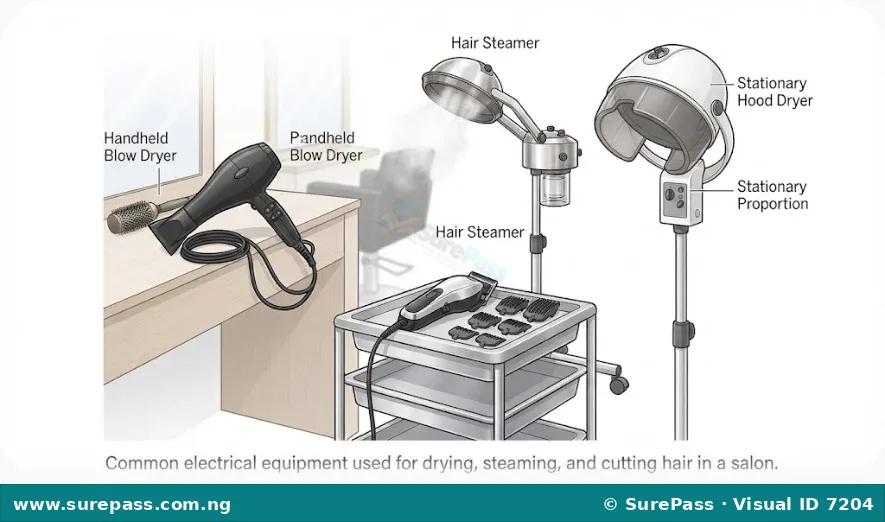
Cosmetic equipment includes electrical appliances that assist the cosmetologist in drying, styling, or treating hair. These items require electrical power to operate. The main equipment used in cosmetology includes:
- Hand Dryers: These are portable, handheld electrical appliances that blow hot or cool air. They are used to dry wet hair quickly and to assist in stretching or styling hair.
- Hair Dryers (Hood Dryers): These are large, stationary electrical appliances with a dome-shaped hood that fits over the client’s head. They are used to dry hair evenly, set rollers, or process deep conditioning treatments.
- Steamers: These are electrical appliances that generate warm, moist steam. They are used to open the hair cuticles, infuse moisture into dry hair, and enhance the absorption of deep conditioning treatments.
- Clippers: These are electrical cutting devices with vibrating blades. They are used to cut hair very close to the scalp, perform short haircuts, or trim hair edges neatly.
Observe the image below to identify common salon equipment.
Cosmetic Materials and Their Uses
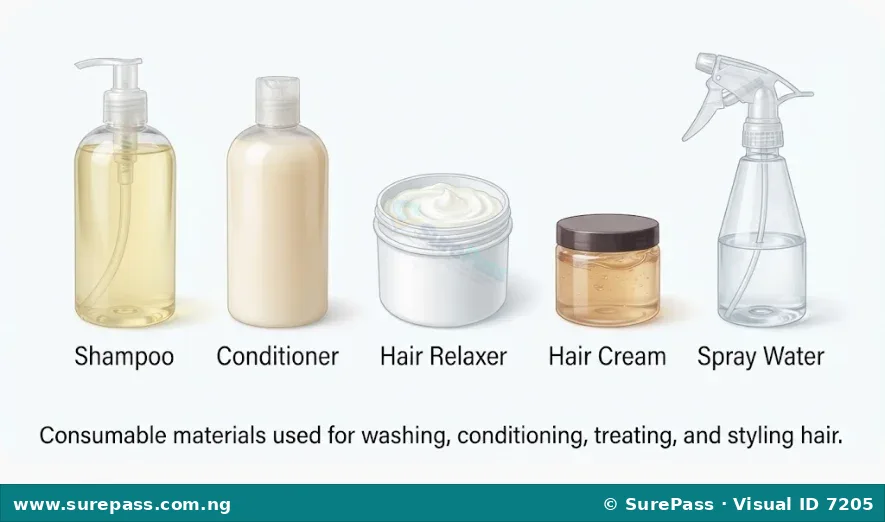
Cosmetic materials are the consumable products used during hair care procedures. They are used up over time and must be replenished. The essential materials used in cosmetology include:
- Shampoo: This is a liquid cleansing agent formulated to wash the hair and scalp. It removes dirt, sweat, excess oil, and styling product buildup.
- Hair Conditioner: This is a moisturizing product applied to the hair after shampooing. It restores moisture, softens the hair shafts, improves elasticity, and makes detangling easier.
- Relaxer: This is a strong chemical cream used to permanently straighten curly or coily hair by altering the chemical structure of the hair fibers.
- Hair Cream: This is a semi-solid emulsion used to moisturize the hair, add shine, lubricate the scalp, and hold hairstyles in place.
- Water: This is a natural liquid solvent. It is used to wet the hair, activate shampoos, rinse out chemical products, and provide essential moisture during styling.
Observe the image below to identify common cosmetic materials.
Classification of Cosmetic Resources
To ensure efficiency in the salon, cosmetic resources are classified based on their specific uses in hair care and styling. The table below shows how tools, equipment, and materials are categorized:
| Category | Primary Purpose | Items Included |
|---|---|---|
| Cleansing and Preparation | Removing dirt, oil, and preparing the hair for styling. | Shampoo, Water |
| Conditioning and Treatment | Restoring moisture, softening, or chemically altering hair texture. | Hair conditioner, Relaxer, Hair cream, Steamers |
| Styling and Shaping | Detangling, parting, cutting, and arranging the hair into styles. | Combs, Brushes, Scissors, Clippers |
| Drying and Setting | Removing moisture from wet hair and setting styles in place. | Hand dryers, Hair dryers (Hood dryers) |
How to Use Cosmetic Tools, Equipment and Materials to Beautify a Dummy
Beautifying a dummy (mannequin head) is a practical way to master hair care techniques before working on human clients. This procedure involves washing, conditioning, drying, and styling the dummy’s hair.
The required tools, equipment, and materials are:
- A dummy head with hair
- A mannequin stand or table clamp
- Shampoo and hair conditioner
- Water and a clean towel
- A wide-tooth comb and a styling brush
- A hand dryer
- Hair cream
The procedure involves the following steps:
- Mount the dummy head securely onto the mannequin stand or table clamp to keep it steady.
- Wet the hair thoroughly with clean water, ensuring all strands are damp.
- Apply a small amount of shampoo to the hair and gently massage it to create a lather, cleaning the hair from the roots to the ends.
- Rinse the shampoo out completely with clean water until no soap bubbles remain.
- Apply hair conditioner evenly throughout the damp hair, focusing on the mid-lengths and ends.
- Use a wide-tooth comb to gently detangle the hair, starting from the ends and working up to the roots to prevent shedding.
- Rinse the conditioner out thoroughly with clean water.
- Blot the hair gently with a clean towel to remove excess water without tangling the hair.
- Apply a small amount of hair cream to moisturize the damp hair.
- Use a hand dryer on a medium heat setting, along with a styling brush, to dry and smooth the hair sections.
- Style the hair into a desired look, such as a neat braid, ponytail, or smooth press, using a comb and brush.
Important safety and maintenance tips include:
- Keep all electrical equipment, such as hand dryers, away from standing water to prevent electrical shock.
- Clean and sanitize combs and brushes after use to maintain hygiene.
- Store scissors and clippers in a dry, safe place to prevent rusting and accidental cuts.
- Avoid using excessive heat on the dummy hair to prevent melting or damaging the synthetic or human hair fibers.





0 comments
Open the discussion when you need it. Comments stay collapsed until requested so the initial article remains light.