



ARTICLE CONTENTSOn this page 9 sections
Professional Ethics
Performance Objectives
By the end of the lesson, students should be able to:
- identify, professional and desirable ethics in beauty and cosmetology;
- demonstrate qualities of a good cosmetologist.
Meaning of Cosmetology
Cosmetology is the study and practice of beauty treatments, including hair styling, skincare, cosmetics, manicures and pedicures.
A person who practices cosmetology professionally is known as a cosmetologist. To succeed in this field, a practitioner must combine technical skills with high ethical standards.
Meaning of Professional Ethics
Professional ethics are the formal rules, standards and codes of conduct that govern the behavior of individuals within a specific profession.
In the beauty industry, these rules ensure that practitioners maintain high standards of safety, honesty and respect. Professional ethics are often established by professional bodies, salon managements or regulatory authorities to protect both the practitioner and the client.
Meaning of Desirable Ethics
Desirable ethics are the positive personal values, attitudes and moral behaviors that individuals choose to practice to enhance their professional relationships and service delivery.
While professional ethics are mandatory rules, desirable ethics are personal qualities that make a practitioner pleasant, reliable and highly sought after by clients. These ethics are driven by personal character and a commitment to excellence.
Differences Between Professional and Desirable Ethics
Understanding the distinction between professional and desirable ethics helps a cosmetologist maintain a balanced and successful career. The table below outlines the key differences:
| Feature | Professional Ethics | Desirable Ethics |
|---|---|---|
| Nature | Mandatory rules and standards set by the industry or salon. | Personal values and voluntary behaviors of the practitioner. |
| Source | Derived from professional codes of conduct, laws and salon policies. | Derived from personal upbringing, character and moral choices. |
| Consequence of Breach | Can lead to legal action, loss of license or termination of employment. | Can lead to poor client relationships, loss of trust or a bad reputation. |
| Examples | Sanitation regulations, client confidentiality and fair pricing. | Patience, friendliness, empathy and a cheerful attitude. |
Importance of Professional and Desirable Ethics
Practicing high ethical standards is essential for success in the beauty and cosmetology industry. The main reasons for maintaining these ethics include:
- Building Client Trust: Clients feel safe and valued when a cosmetologist behaves professionally and honestly.
- Ensuring Health and Safety: Adhering to professional sanitation rules prevents the spread of infections and skin diseases in the salon.
- Enhancing Business Reputation: A salon known for ethical practices attracts more clients and retains existing ones.
- Preventing Legal Issues: Following industry regulations protects the cosmetologist from lawsuits, fines and loss of practice licenses.
- Promoting a Harmonious Workplace: Respectful behavior among staff members creates a peaceful and productive working environment.
Qualities of a Good Cosmetologist
A successful cosmetologist must possess a combination of technical skills and personal attributes. The key qualities of a good cosmetologist include:
- Excellent Personal Hygiene and Neat Appearance: A cosmetologist is a representative of the beauty industry. Clean hair, neat nails, fresh breath and clean clothing build client confidence.
- Strong Communication Skills: Active listening helps the cosmetologist understand exactly what the client wants, while clear speaking helps explain treatments and manage expectations.
- Technical Competence: Continuous learning and mastery of hair styling, skincare, makeup application and tool handling ensure high-quality service.
- Confidentiality: Respecting client privacy by keeping personal conversations and client records confidential builds deep trust.
- Punctuality and Time Management: Arriving early and keeping to scheduled appointment times shows respect for the client’s time.
- Patience and Emotional Stability: Remaining calm, polite and professional when dealing with difficult, demanding or dissatisfied clients is essential.
- Honesty and Integrity: Recommending only necessary treatments, using genuine products and charging fair prices reflect high integrity.
- Creativity and Adaptability: Keeping up with modern beauty trends and adapting styles to suit different client features and preferences.
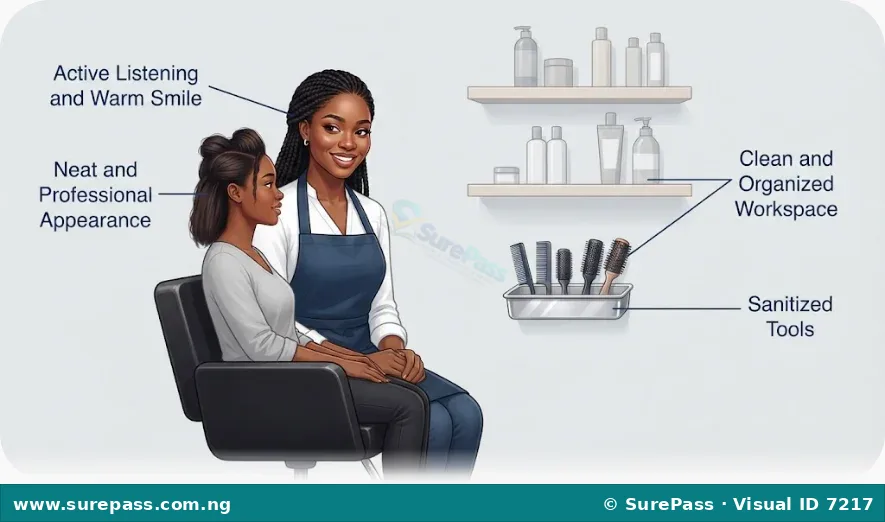
How to Demonstrate Professional Qualities During a Client Consultation
This practical activity helps learners develop and display the essential qualities of a good cosmetologist, such as active listening, professional communication, neatness and respect, during a simulated client interaction.
The required materials for this activity are:
- A clean salon chair or standard chair
- A clean client drape or cape
- A consultation card or notepad and pen
- A hand mirror
- A clean comb or hairbrush
The procedure involves the following steps:
- Prepare the Workspace: Ensure the chair is clean, the tools are sanitized and arranged neatly, and personal appearance is neat and professional.
- Welcome the Client: Greet the client warmly with a smile, maintain eye contact, introduce yourself politely and invite the client to sit comfortably.
- Drape the Client: Place the clean drape or cape gently around the client’s shoulders to protect their clothing.
- Conduct the Consultation: Ask open-ended questions to understand the client’s hair or skin needs, such as asking about their preferred style or any skin sensitivities.
- Practice Active Listening: Listen attentively without interrupting, nod to show understanding, and take brief notes on the consultation card.
- Analyze and Recommend: Examine the client’s hair or skin gently, explain the suitable treatment options clearly, and state the cost and duration of the service honestly.
- Confirm the Agreement: Repeat the agreed-upon service back to the client to ensure complete agreement before beginning any treatment.
- Conclude the Interaction: Thank the client politely for their time and cooperation.
Important professional tips during the demonstration include:
- Maintain a polite and calm tone of voice throughout the interaction.
- Avoid using personal mobile phones or distracting devices while attending to the client.
- Respect personal space and handle the client’s hair or skin with gentle movements.





0 comments
Open the discussion when you need it. Comments stay collapsed until requested so the initial article remains light.