



ARTICLE CONTENTSOn this page 9 sections
Scalp Treatment
Performance Objectives
By the end of the lesson, students should be able to:
- identify some scalp problems;
- identify and differentiate different scalp treatment;
- list tools and materials for scalp treatment;
- carry out practical scalp treatment on a volunteer;
- mention tips on the prevention of scalp problems.
Meaning of the Scalp
The scalp is the anatomical area of the head bordered by the face at the front and the neck at the sides and back, containing hair follicles, blood vessels and sebaceous glands.
A healthy scalp is essential for the growth of strong, healthy hair. The sebaceous glands in the scalp produce sebum, a natural oil that lubricates the hair shaft and protects the skin from moisture loss. When the scalp is neglected, infected or poorly maintained, various scalp problems can arise, affecting both the skin and hair growth.
Common Scalp Problems
Scalp problems are abnormal conditions that affect the skin on the head, often causing discomfort, itching, flaking, inflammation or hair loss.
Cosmetologists must be able to recognize these conditions to recommend the correct treatment or refer clients to a dermatologist when necessary. The most common scalp problems include:
1. Dandruff (Pityriasis Capitis)
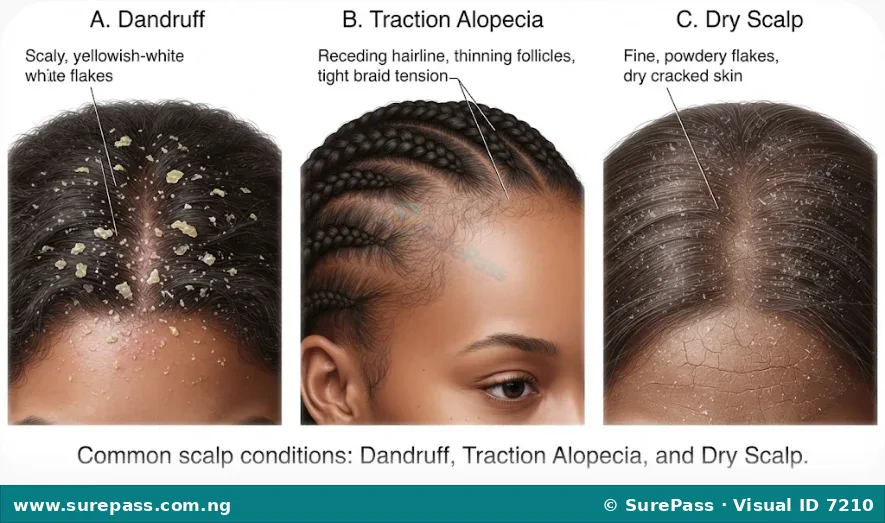
Dandruff is a common scalp condition characterized by the excessive shedding of dead skin cells in the form of white or greyish flakes.
It is often accompanied by itching and can be caused by an overproduction of scalp oil, stress, poor hygiene or the overgrowth of a naturally occurring yeast-like fungus called Malassezia. In Nigeria, environmental factors such as dust during the harmattan season or excessive sweat during hot, humid periods can worsen dandruff symptoms.
2. Hair Loss and Alopecia
Alopecia is the medical term for hair loss or baldness, which can occur in localized patches or across the entire scalp.
There are different forms of alopecia that cosmetologists encounter:
- Traction Alopecia: This is hair loss caused by repetitive, excessive pulling or tension on the hair follicles. It is highly common in Nigeria due to tight hairstyling practices such as tight braiding, weaving, cornrows and heavy hair extensions. It usually occurs along the hairline and temples.
- Alopecia Areata: This is an autoimmune condition where the immune system attacks the hair follicles, leading to sudden, patchy hair loss in round or oval shapes.
- Androgenetic Alopecia: This is hereditary hair loss, commonly known as male-pattern or female-pattern baldness, caused by genetic factors and hormonal changes.
3. Dry Scalp
Dry scalp is a condition where the skin on the head lacks sufficient moisture and natural oils, leading to tightness, mild itching and small, dry flakes.
Unlike dandruff flakes, which are oily and large, dry scalp flakes are small, dry and translucent. This condition is often triggered by dry weather, harsh chemical relaxers, hot water washes or using shampoos with high sulfate content.
4. Oily Scalp (Seborrhea)
Oily scalp is a condition caused by the overactivity of the sebaceous glands, resulting in an excessive accumulation of sebum on the skin and hair.
An oily scalp makes the hair appear greasy, heavy and dirty. It can trap dirt and environmental pollutants, creating a breeding ground for fungi and bacteria that cause dandruff and scalp infections.
Types of Scalp Treatments
Scalp treatments are therapeutic procedures designed to cleanse, nourish, balance and restore the health of the scalp skin and hair follicles.
These treatments are categorized based on their approach and the materials used. The two primary categories are nutritional treatments and chemical/topical treatments.
1. Nutritional Scalp Treatments
Nutritional scalp treatments focus on feeding the hair follicles from within the body and applying natural, nutrient-rich substances directly to the scalp.
Hair growth is highly dependent on the nutrients delivered to the hair bulb through the bloodstream. Nutritional treatments include:
- Balanced Diet: Consuming foods rich in proteins, essential fatty acids, vitamins and minerals. Hair is made of a protein called keratin, making adequate protein intake vital.
- Food Supplements: Taking dietary supplements such as Biotin (Vitamin B7), Zinc, Iron, Vitamin E, Vitamin C and Omega-3 fatty acids to support hair growth and scalp cell regeneration.
- Natural Oils and Butter: Applying nutrient-dense natural oils like coconut oil, shea butter, castor oil and jojoba oil. These substances moisturize the scalp, deliver essential fatty acids and strengthen the hair roots.
2. Chemical and Topical Scalp Treatments
Chemical and topical scalp treatments involve the application of formulated cosmetic products containing active chemical ingredients to address specific scalp disorders.
These treatments act directly on the surface of the scalp to cleanse, disinfect or stimulate blood circulation. Examples include:
- Medicated Shampoos: Shampoos containing active chemical agents such as zinc pyrithione, selenium sulfide, ketoconazole or salicylic acid. These chemicals target the fungi responsible for dandruff and help exfoliate dead skin cells.
- Scalp Tonics and Serums: Topical leave-on liquids containing active ingredients like minoxidil (for hair regrowth), tea tree oil (for antimicrobial action) or menthol (to soothe itching and stimulate blood flow).
- Deep Conditioning Treatments: Formulated creams applied to the scalp and hair to restore moisture balance, repair chemical damage from relaxers and soothe irritated skin.
Tools and Materials for Scalp Treatment
To perform a professional scalp treatment, a cosmetologist must select and prepare the appropriate tools and materials. Using the correct items ensures safety, hygiene and effective results.
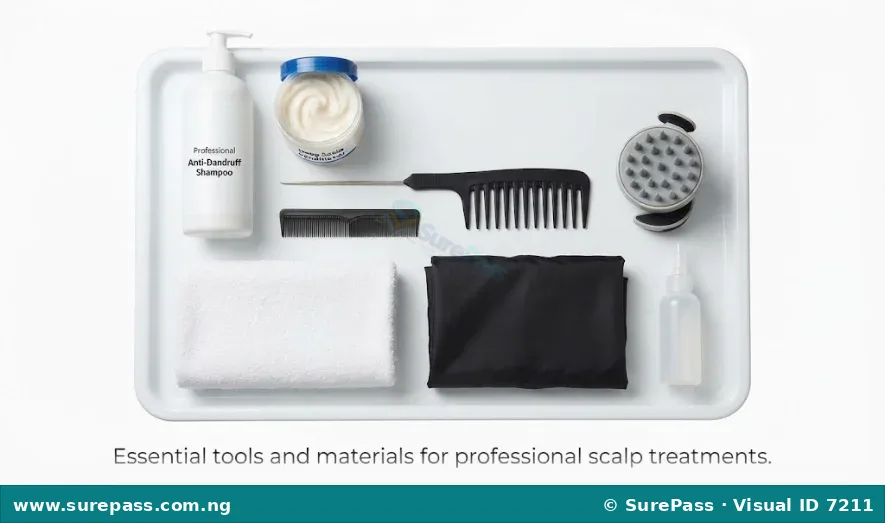
The essential tools and materials include:
- Anti-Dandruff and Clarifying Shampoos: Formulated liquids used to cleanse the scalp, remove product buildup and treat fungal infections.
- Conditioners and Hair Creams: Emulsions applied to restore moisture, soften the hair and lubricate the scalp.
- Scalp Steamer: An electrical device that produces warm steam to open up the scalp pores, soften dead skin cells and enhance the penetration of treatment products.
- Combs and Brushes: Wide-tooth combs for detangling, tail combs for parting the hair into sections, and scalp massage brushes to stimulate blood circulation.
- Towels and Capes: Protective fabrics used to dry the hair and protect the client’s clothing from water and chemical products.
- Protective Gloves: Disposable gloves worn by the cosmetologist to maintain hygiene and prevent direct skin contact with strong chemical treatments.
- Scalp Applicator Bottles: Squeeze bottles with narrow nozzles used to apply liquid treatments directly to the scalp sections.
How to Carry Out a Scalp Treatment
Performing a scalp treatment requires a systematic, professional procedure to ensure the client’s safety and achieve the desired therapeutic outcome.
The procedure for carrying out a standard scalp treatment on a volunteer involves the following steps:
- Preparation and Client Consultation: Drape the volunteer with a clean salon cape and towel. Examine the scalp carefully to identify the specific problem (such as dandruff, dryness or hair thinning). Ask the volunteer about any scalp sensitivity or allergies.
- Detangling and Sectioning: Use a wide-tooth comb to gently detangle the hair, starting from the ends and moving up to the roots. Part the hair into four clean sections using a tail comb to expose the scalp.
- Cleansing (Shampooing): Wash the hair and scalp thoroughly using a suitable shampoo. If the volunteer has dandruff, use an anti-dandruff shampoo. Massage the scalp gently with the pads of the fingers (not the fingernails) to loosen dirt and dead skin cells. Rinse thoroughly with lukewarm water.
- Application of Treatment: Towel-dry the hair slightly so it remains damp. Apply the chosen scalp treatment cream, oil or medicated serum directly to the exposed scalp lines using an applicator bottle or brush. Ensure even distribution across all sections.
- Scalp Massage: Massage the scalp using firm, circular motions with the fingertips. Start from the hairline and move towards the crown and nape of the neck. This stimulates blood circulation, relaxes the volunteer and helps the treatment penetrate the skin.
- Steaming: Place the volunteer under a hair steamer for 10 to 15 minutes. The warm steam opens the pores and allows the treatment nutrients to be absorbed deeply into the scalp.
- Rinsing and Conditioning: Allow the scalp to cool down for a few minutes, then rinse the hair thoroughly with cool or lukewarm water to close the pores. Apply a rinse-out conditioner to the hair shafts, avoid applying heavy conditioner directly to the scalp, and rinse again.
- Drying and Styling: Dry the hair gently with a clean towel or a blow dryer on a cool setting. Apply a light, nourishing hair cream to the scalp and style the hair into a loose, protective style.
Prevention of Scalp Problems
Preventing scalp problems is easier and more cost-effective than treating them after they have developed. Maintaining proper hair care habits and lifestyle choices keeps the scalp healthy.
The table below outlines key prevention tips for maintaining a healthy scalp:
| Prevention Category | Action and Best Practices | Scalp Problem Prevented |
|---|---|---|
| Hygiene Practices | Wash the hair and scalp regularly (at least once a week or once every two weeks depending on hair type) using mild, sulfate-free shampoos. Clean combs and brushes weekly. | Dandruff, oily scalp, fungal and bacterial infections. |
| Hairstyling Habits | Avoid extremely tight braids, heavy weaves, cornrows and tight ponytails. Do not leave protective styles in the hair for more than six to eight weeks. | Traction alopecia, scalp soreness, hair breakage. |
| Chemical Safety | Limit the use of harsh chemical relaxers, hair dyes and bleaching agents. Always apply a scalp protector before chemical treatments. | Chemical burns, dry scalp, contact dermatitis, hair thinning. |
| Nutritional Habits | Drink plenty of water daily. Eat a balanced diet rich in leafy green vegetables, eggs, fish, nuts and fruits. | Dry scalp, slow hair growth, nutritional hair loss. |
| Environmental Protection | Wear a satin or silk scarf at night to reduce friction. Protect the scalp from harsh sun and harmattan dust by wearing hats or protective headwraps. | Moisture loss, dry scalp, hair breakage. |
Review Questions
Answer the following questions to test your understanding of the lesson:
- Define the term “scalp” and explain its importance to hair growth.
- Identify and describe three common scalp problems found among clients in Nigeria.
- Differentiate between nutritional scalp treatments and chemical scalp treatments, giving two examples of each.
- List five essential tools and materials required to perform a professional scalp treatment.
- Outline the step-by-step procedure for carrying out a scalp treatment on a volunteer.
- State four preventive measures that can be taken to avoid scalp problems.




0 comments
Open the discussion when you need it. Comments stay collapsed until requested so the initial article remains light.