



ARTICLE CONTENTSOn this page 9 sections
Professional/ Client Safety
Performance Objectives
By the end of the lesson, students should be able to:
- define the term bacteriology in relation to cosmetology;
- identify types of bacteria;
- describe bacterial infections and their preventions;
- explain the term safety in beauty and cosmetology;
- identify professional/ client safety measures in beauty and cosmetology.
Bacteriology in Cosmetology
Bacteriology is the scientific study of bacteria, their structures, functions, and activities, especially in relation to health, hygiene, and disease prevention in cosmetology.
Understanding bacteriology is essential for beauty practitioners. Salons, spas, and nail clinics are environments where close physical contact occurs daily. Without a solid scientific understanding of microscopic organisms, beauty professionals can easily spread infections between clients or contract diseases themselves. Knowledge of bacteriology forms the foundation of all salon sanitation, disinfection, and sterilisation procedures.
Bacteria are microscopic, single-celled organisms that exist almost everywhere in the environment, including on the skin, in water, air, and on salon surfaces.
Most bacteria are invisible to the naked eye and can only be seen under a microscope. While some bacteria are beneficial, others pose severe health risks. In cosmetology, practitioners must be able to distinguish between harmless bacteria and those that cause infections on the skin, hair, and nails.
Types of Bacteria
Bacteria are broadly classified into two main groups based on whether they cause disease or not:
- Non-pathogenic bacteria: Harmless or beneficial organisms that do not cause disease. In fact, many perform useful functions, such as aiding digestion, protecting the skin surface from harmful microbes, and helping to decompose refuse. The majority of bacteria belong to this group.
- Pathogenic bacteria: Harmful microorganisms that cause disease, infection, or produce toxins when they invade living plant or animal tissue. These are the primary concern of beauty professionals, as they can lead to infections that ruin skin, hair, and nails.
Classification of Pathogenic Bacteria
Pathogenic bacteria are classified by their distinct shapes. The three primary shapes of pathogenic bacteria are:
- Cocci: Spherical or round-shaped bacteria that appear singly or in groups.
- Bacilli: Short, rod-shaped bacteria. They are the most common type of bacteria and produce diseases such as tetanus (lockjaw), tuberculosis, and typhoid fever.
- Spirilla: Spiral, curved, or corkscrew-shaped bacteria. They are highly mobile and cause diseases such as syphilis and Lyme disease.
Cocci bacteria are further subdivided into three groups based on how they arrange themselves:
- Staphylococci: Pus-forming bacteria that grow in clusters resembling bunches of grapes. They cause abscesses, pustules, boils, and are responsible for food poisoning and toxic shock syndrome.
- Streptococci: Pus-forming bacteria arranged in curved lines resembling a string of beads. They cause infections such as strep throat and blood poisoning.
- Diplococci: Spherical bacteria that grow in pairs and cause diseases such as pneumonia.
Observe the diagram below to study the different shapes and groupings of bacteria.
Bacterial Infections and Preventions
A bacterial infection occurs when pathogenic bacteria successfully invade body tissues, multiply, and cause damage. In a beauty salon, infections can spread rapidly if tools such as clippers, combs, tweezers, nail files, and scissors are not properly cleaned between clients.
Common Bacterial Infections in Cosmetology
Cosmetologists frequently encounter or must prevent the spread of several common bacterial infections, which include:
- Folliculitis: An infection of the hair follicles, often caused by Staphylococci. It is commonly known as barber’s itch and appears as small, pus-filled pimples around hair follicles on the scalp, face, or neck.
- Impetigo: A highly contagious bacterial skin infection characterized by superficial pustules that rupture and form thick, honey-coloured crusts. It is common among children but can spread in salons through shared towels or unsterilised tools.
- Pseudomonas aeruginosa: A bacterium that can cause infections in nail salons. It often presents as a green, yellow, or black discoloration under acrylic nails or nail extensions when moisture becomes trapped between the natural nail and the artificial nail.
- Boils and Abscesses: Localised staphylococcal infections of the skin that are painful, swollen, and filled with pus. Cosmetologists must never drain or perform services on skin with active boils.
Methods of Preventing Bacterial Infections
Infection control in cosmetology is divided into three distinct levels of decontamination. These prevention methods are:
- Cleaning and Sanitisation: The lowest level of decontamination. It involves washing surfaces or tools with warm water and soap to remove visible dirt, debris, and many microbes. Sanitisation does not kill all bacteria, but it reduces their numbers to safe levels.
- Disinfection: The second level of decontamination. It involves using chemical products (disinfectants) to destroy pathogenic bacteria, fungi, and viruses on non-porous surfaces such as plastic combs, metal shears, and countertops. Disinfectants do not kill bacterial spores. Common salon disinfectants include quaternary ammonium compounds (quats) and bleach solutions.
- Sterilisation: The highest level of decontamination. It completely destroys all microbial life, including highly resistant bacterial spores. Sterilisation is achieved using high-pressure steam in an autoclave or dry heat sterilizers. It is used for metal implements that penetrate or have the potential to cut the skin, such as cuticle nippers, tweezers, and comedone extractors.
Safety in Beauty and Cosmetology
Safety in beauty and cosmetology is the practice of preventing accidents, injuries, infections, and exposure to hazardous substances during beauty treatments and salon operations.
A professional salon must maintain high safety standards to protect both the workers and the clients. Safety involves the correct handling of electrical appliances, proper storage of chemical products, maintaining clean floors to prevent slips, and ensuring that all treatments are performed without causing harm.
Differentiating Professional Safety from Client Safety
While safety is a single broad goal, it is divided into two distinct areas of responsibility in a professional beauty environment:
Professional safety is the protection of the cosmetologist or beauty practitioner from occupational hazards, injuries, infections, and chemical exposure during the discharge of beauty services.
Client safety is the protection of the customer or client from physical injuries, infections, chemical burns, or allergic reactions during beauty treatments and salon procedures.
The table below highlights the key differences between professional safety and client safety:
| Feature | Professional Safety | Client Safety |
|---|---|---|
| Primary Focus | The health and well-being of the cosmetologist/stylist. | The health and comfort of the customer receiving the service. |
| Key Hazards | Repetitive strain injuries, inhalation of chemical fumes, cuts from sharp tools, skin irritation from constant washing. | Chemical burns from relaxers or hair dyes, cuts from unsterilised nail tools, scalp burns from hot styling irons. |
| Control Measures | Ergonomic chairs, wearing face masks and gloves, proper ventilation, slip-resistant shoes. | Patch testing before chemical application, sanitised capes, testing water temperature, sterilising all metal tools. |
Professional and Client Safety Measures
To maintain a safe and hygienic salon environment, specific safety measures must be strictly followed by every beauty practitioner.
Professional Safety Measures
Measures designed to protect the beauty professional include:
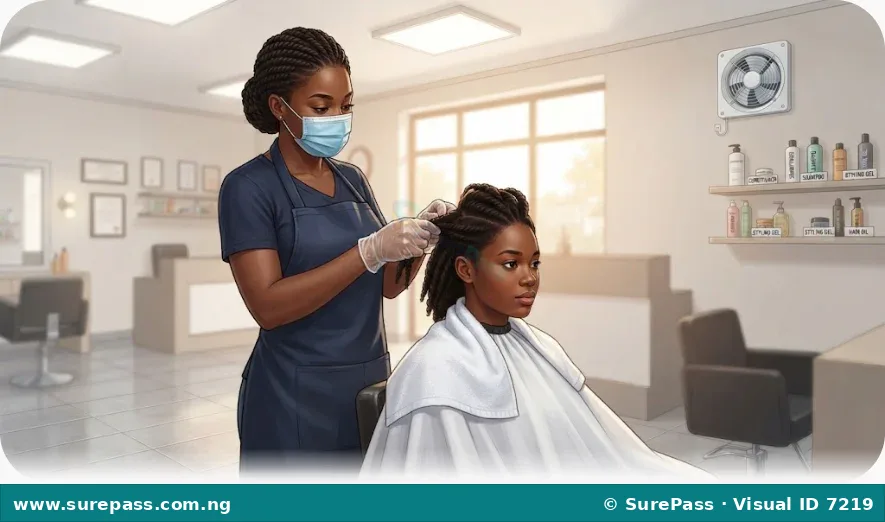
- Wearing Personal Protective Equipment (PPE): Practitioners should wear disposable gloves when handling chemicals like hair relaxers, dyes, or acrylic nail monomers. Face masks should be worn to avoid inhaling dust from nail filing or chemical fumes.
- Ergonomic Practices: Maintaining correct posture while cutting hair, styling, or performing manicures prevents backaches and repetitive strain injuries. Adjustable chairs should be used to keep the client at a comfortable working height.
- Proper Ventilation: Salons must have active ventilation systems, such as exhaust fans, to continuously remove chemical vapours and dust from the air.
- Safe Chemical Handling: All chemical products must be stored in their original, clearly labelled containers. Practitioners must read and follow the Safety Data Sheets (SDS) provided by manufacturers.
- Safe Tool Handling: Shears, clippers, and razors must be held correctly and stored in protective cases when not in use to prevent accidental cuts.
Client Safety Measures
Measures designed to protect the client include:
- Client Consultation and Skin Analysis: Before performing any chemical service, the practitioner must examine the client’s scalp, skin, or nails for signs of inflammation, open wounds, or infections. Services must be refused if an active infection is present.
- Patch Testing: A predisposition test (patch test) must be conducted 24 to 48 hours before applying hair dye or strong chemicals to check for allergic reactions.
- Temperature Control: The temperature of water for shampooing, wax for hair removal, and thermal styling irons must be tested before applying them to the client’s body.
- Sanitation of Capes and Towels: A clean, freshly laundered towel or neck strip must be placed between the client’s neck and the styling cape to prevent the cape from touching the client’s skin directly.
- Workspace Maintenance: Floors must be swept immediately after hair cutting to prevent slips, and spilled liquids or oils must be wiped up instantly.
Look at the illustration below to see how safety measures are applied in a professional salon setting.
Practical Skills and Applications
Identifying Bacterial Infections on Charts
In cosmetology, visual recognition of infections is critical to prevent cross-contamination. Practitioners use medical and dermatological charts to identify infections that require a referral to a physician.
The procedure for identifying bacterial infections on charts involves the following steps:
- Examine the chart under clear, bright lighting to observe the details of the skin or nail condition.
- Look for primary signs of bacterial infection, which include localized redness (erythema), swelling (edema), and the presence of pus or yellow crusts.
- Identify folliculitis by looking for small, red pustules centered around hair follicles, often clustered in shaved areas.
- Identify impetigo by recognizing weeping, fluid-filled lesions that dry into distinct honey-coloured crusts.
- Identify nail infections (Pseudomonas) by looking for a characteristic greenish-black discoloration beneath or around the nail plate, often accompanied by inflammation of the surrounding skin fold (paronychia).
- Record the observed characteristics of each infection on an identification sheet, noting the shape, colour, and typical location on the body.
Applying Professional and Client Safety Measures on a Client
This practical exercise demonstrates how to set up a workstation and prepare a client safely before beginning a hair or skin treatment.
The required materials are:
- An adjustable salon chair
- A clean, sanitised styling cape
- Freshly laundered towels
- Disposable neck strips
- An EPA-registered disinfectant solution
- Disposable gloves and a face mask
- A spray bottle containing 70% isopropyl alcohol
The procedure involves the following steps:
- Wash hands thoroughly with warm water and antibacterial soap for at least 20 seconds before touching the client.
- Put on a clean face mask and disposable gloves to protect against chemical exposure and micro-organisms.
- Wipe down the styling chair, armrests, and mirror station with a disinfectant wipe or spray.
- Invite the client to sit comfortably in the adjustable chair and adjust the height to maintain proper working posture.
- Place a clean, disposable neck strip around the client’s neck to prevent the styling cape from directly touching the skin.
- Secure the clean styling cape over the neck strip, ensuring it is snug but comfortable.
- Perform a thorough visual analysis of the client’s scalp and hair, gently parting the hair to check for redness, open sores, or signs of bacterial infection.
- If any skin abnormality or infection is detected, politely inform the client, halt the service, and recommend that they consult a medical professional.
Writing and Presenting Reports on Safety Measures
Beauty professionals must be able to document safety protocols and present them to salon staff or health inspectors to ensure compliance with local hygiene regulations.
The procedure for writing and presenting a safety report involves the following steps:
- Select a specific salon procedure, such as a manicure or chemical hair relaxing.
- Draft the report using a standard professional layout, which must include:
- Title: Clearly stating the procedure and safety focus.
- Introduction: Explaining the importance of safety for that specific service.
- Hazards Identified: Listing potential risks to both the professional and the client.
- Safety Measures: Detailing the step-by-step sanitisation, disinfection, and PPE requirements.
- Conclusion: Summarising how these measures prevent bacterial infections and injuries.
- Review the written report to ensure all technical terms, such as bacteriology, pathogens, and disinfection, are used correctly.
- Prepare a visual aid, such as a poster or slide presentation, highlighting the key safety steps.
- Present the report orally to the class or salon team, demonstrating a clear understanding of how professional safety and client safety work together to create a healthy beauty environment.
Summary Study Questions
The following questions are designed to test understanding of the concepts covered in this unit:
- Define the term bacteriology and explain why it is a critical area of study for a professional cosmetologist.
- Classify pathogenic bacteria into their three main groups based on shape, and describe the sub-types of Cocci.
- Differentiate between professional safety and client safety, providing two practical examples of safety measures for each category.
- Describe the three levels of decontamination used in infection prevention, and state when sterilisation is required instead of disinfection.
- A client arrives at a salon with a greenish-black discoloration on their thumbnail. Identify the likely bacterial cause of this condition and explain the immediate safety measures the cosmetologist must take.





0 comments
Open the discussion when you need it. Comments stay collapsed until requested so the initial article remains light.