



ARTICLE CONTENTSOn this page 6 sections
Personal Hygiene
Performance Objectives
By the end of the lesson, students should be able to:
- explain the term personal hygiene;
- identify personal hygiene materials;
- identify the rules of personal hygiene and cleanliness;
- demonstrate personal hygiene.
Meaning of Personal Hygiene
Personal hygiene is the practice of maintaining cleanliness and grooming of the external body to preserve health, prevent the spread of diseases, and project a professional image.
In the beauty and cosmetology industry, personal hygiene is of utmost importance. Cosmetologists, beauty therapists, and hair stylists work in close physical contact with clients. Maintaining high standards of cleanliness prevents the transmission of pathogens, such as bacteria, viruses, and fungi, between the practitioner and the client. A clean and well-groomed professional builds trust, ensures safety, and upholds the reputation of the beauty salon.
Personal Hygiene Materials
To maintain proper cleanliness, specific tools and substances are required. These materials help eliminate dirt, sweat, and harmful microorganisms from the body and protective wear.
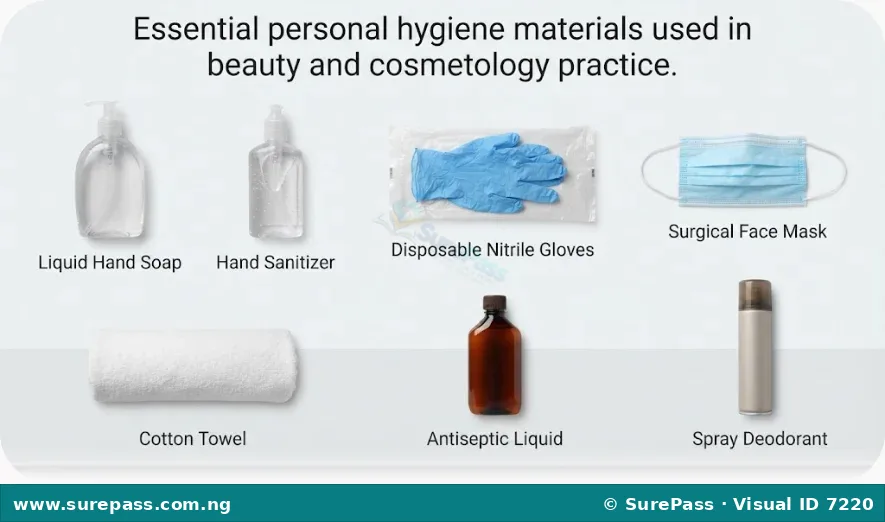
The essential materials required for maintaining personal hygiene in beauty and cosmetology include:
- Water: The universal solvent used for washing, rinsing, and removing dirt and cleansing agents from the skin and hair.
- Soap: A cleansing agent used with water to emulsify oils, break down dirt, and wash away microbes from the skin.
- Detergents: Stronger cleaning agents used to wash salon linens, towels, aprons, and other protective clothing to ensure they are sterile for client use.
- Sanitizers: Alcohol-based liquids or gels applied to the hands to rapidly reduce the number of microorganisms when water and soap are not immediately available.
- Disinfectants: Chemical agents used to destroy or inhibit the growth of harmful microorganisms on non-living surfaces, tools, and equipment.
- Gloves: Disposable protective barriers worn on the hands to prevent direct skin contact with bodily fluids, chemicals, or infections during beauty treatments.
- Face Masks: Protective coverings worn over the nose and mouth to prevent the inhalation of chemical fumes or the spread of respiratory droplets.
- Towels: Clean, dry, and sanitized cotton cloths used to dry the hands, face, or body after washing.
- Antiseptics: Mild chemical agents safe for application on living tissue, such as the skin, to prevent infection by inhibiting the growth of pathogens.
- Deodorants: Substances applied to the body to prevent or mask body odour caused by the bacterial breakdown of perspiration.
- Perfumes: Scented liquids applied moderately to project a pleasant and professional fragrance.
Rules of Personal Hygiene and Cleanliness
Professional beauty practitioners must adhere to strict rules of cleanliness to maintain a safe and healthy salon environment. These rules govern daily habits and professional presentation.
The fundamental rules of personal hygiene and cleanliness for beauty practitioners include:
- Daily Bathing: Bathing at least once daily with clean water and soap to remove sweat, dirt, and body odour.
- Oral Hygiene: Brushing the teeth at least twice daily, using dental floss, and utilizing mouthwash to ensure fresh breath during close-contact services.
- Hair Care: Keeping the hair clean, washed, and neatly styled. Long hair must be tied back securely to prevent it from touching the client or interfering with beauty procedures.
- Nail Care: Keeping fingernails short, clean, and free of dirt. Long or dirty nails can harbor bacteria and may scratch or injure a client during skin or scalp treatments.
- Clean Uniforms and Apparel: Wearing clean, well-ironed uniforms or professional clothes daily. Protective aprons or gowns should be washed regularly to avoid cross-contamination.
- Frequent Hand Washing: Washing hands thoroughly before and after attending to each client, after using the restroom, after eating, and after handling money or dirty tools.
- Proper Use of Protective Gear: Wearing fresh disposable gloves and face masks when performing extractions, chemical applications, or when dealing with broken skin.
- Odour Control: Applying deodorants or antiperspirants to control body odour. Strong perfumes should be avoided, as some clients may have respiratory sensitivities or allergies to intense scents.
- Wound Management: Covering any cuts, scratches, or open wounds on the hands or arms with waterproof, sterile plasters before performing any beauty services.
How to Perform Hand Washing and Sanitization
Hand hygiene is the single most effective measure to prevent the spread of infections in cosmetology. This practical procedure demonstrates the correct method for washing and sanitizing hands to ensure professional safety.
The required materials for this demonstration are:
- Clean running water
- Liquid soap or mild detergent
- Clean, dry towel or disposable paper towels
- Alcohol-based hand sanitizer
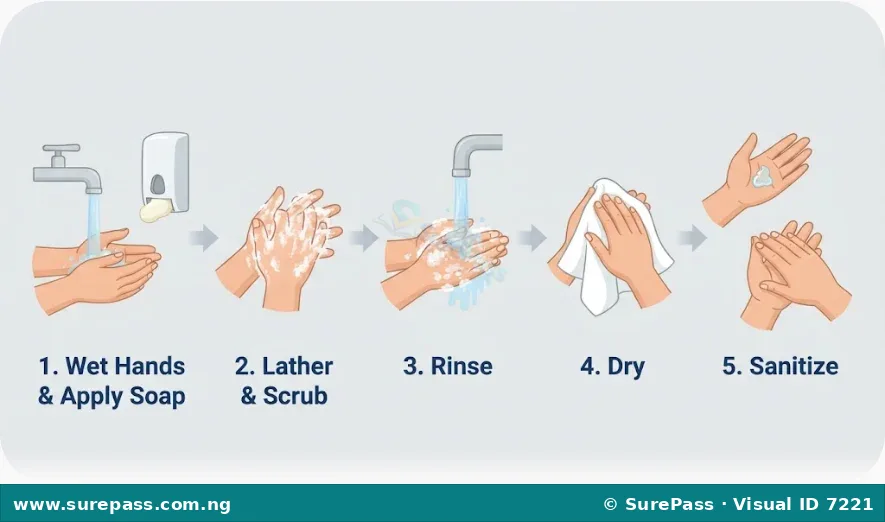
The procedure for thorough hand washing and sanitization involves the following steps:
- Wet the hands thoroughly under clean, running water.
- Apply a sufficient amount of liquid soap or detergent to cover all surfaces of the hands.
- Rub the palms together vigorously to create a rich, thick lather.
- Place the right palm over the back of the left hand, interlace the fingers, and rub thoroughly. Repeat this step with the left palm over the back of the right hand.
- Rub palm to palm with the fingers interlaced to clean the spaces between the fingers.
- Interlock the fingers and rub the backs of the fingers against the opposing palms.
- Clasp the left thumb in the right palm and rub rotationally. Repeat this step for the right thumb using the left palm.
- Rub the fingertips of the right hand in a circular motion against the left palm to clean under the fingernails. Repeat this step with the left fingertips against the right palm.
- Rinse the hands thoroughly under running water to remove all traces of soap and loosened dirt.
- Dry the hands completely using a clean, dry towel or a disposable paper towel.
- Dispense a small, coin-sized amount of hand sanitizer into the palm of one hand.
- Rub the hands together, covering all surfaces, including the backs of the hands, between the fingers, and around the wrists, until the sanitizer evaporates and the hands are completely dry.




0 comments
Open the discussion when you need it. Comments stay collapsed until requested so the initial article remains light.