



ARTICLE CONTENTSOn this page 8 sections
Introduction to Beauty and Cosmetology
Performance Objectives
By the end of the lesson, students should be able to:
- explain the concept of beauty;
- differentiate amongst, cosmetology, cosmetics, cosmetologist and cosmetician;
- describe the history of Cosmetology;
- identify the different aspects of cosmetology;
- enumerate aspects of cosmetology.
The Concept of Beauty
Beauty is a combination of qualities, such as shape, colour, or form, that pleases the aesthetic senses, especially the sight.
The concept of beauty is both subjective and objective. It is often said that beauty lies in the eye of the beholder, meaning that what one person finds beautiful, another may not. However, across different cultures and societies, there are shared standards of beauty that relate to health, symmetry, cleanliness, and grooming. In Nigeria and many other African societies, beauty is not merely about facial features; it also encompasses neatness, posture, skin health, and how a person carries themselves.
In the study of beauty and cosmetology, beauty is viewed as a state of physical well-being and aesthetic harmony. Enhancing beauty involves maintaining the health of the skin, hair, and nails through proper hygiene, nutrition, and the safe application of cosmetic products. Grooming practices help individuals present themselves in a neat, professional, and culturally acceptable manner, which in turn boosts self-esteem and personal confidence.
Key Terms in Cosmetology
To understand the beauty industry, it is essential to define and distinguish several closely related terms. These terms include cosmetology, cosmetics, cosmetologist, and cosmetician.
Cosmetology
Cosmetology is the study and application of beauty treatments, including hair styling, skin care, cosmetics, manicures, pedicures, and non-permanent hair removal.
It is a broad professional field that combines scientific knowledge of the human body, particularly the skin, hair, and nails, with artistic skills to improve a person’s physical appearance.
Cosmetics
Cosmetics are substances or products used to enhance or alter the appearance of the face or the texture and appearance of the body.
These products include creams, powders, lipsticks, eye makeup, shampoos, hair relaxers, and nail polishes. Cosmetics can be chemical-based or derived from natural sources.
Cosmetologist
A cosmetologist is a licensed professional who provides beauty services, including hair styling, skin care, nail treatments, and makeup application.
Cosmetologists undergo formal training to understand the anatomy of the skin and hair, chemical compositions of beauty products, and safe application techniques to prevent infections or injuries.
Cosmetician
A cosmetician is a person who manufactures, sells, or applies cosmetics as a career, often focusing primarily on makeup application and skin care products rather than hair styling.
Cosmeticians are frequently found in retail environments, beauty supply stores, or cosmetic manufacturing companies, where they advise clients on product selection and application techniques.
Distinctions Among the Key Terms
While these terms are related, they represent different aspects of the beauty industry. The table below highlights the key differences among them:
| Term | Primary Focus | Key Responsibility |
|---|---|---|
| Cosmetology | The entire professional field and study of beauty treatments. | Academic and practical framework of beauty care. |
| Cosmetics | The physical products and substances used. | Enhancing or altering physical appearance. |
| Cosmetologist | The licensed professional practitioner. | Providing hands-on services like hair, skin, and nail care. |
| Cosmetician | The product specialist, seller, or makeup applicator. | Recommending, selling, or applying cosmetic products. |
History of Cosmetology
The practice of enhancing physical appearance is as old as human civilisation. Throughout history, different societies have used natural resources to groom themselves, protect their bodies from harsh weather, and signal social status, royalty, or spiritual devotion.
Ancient Civilisations
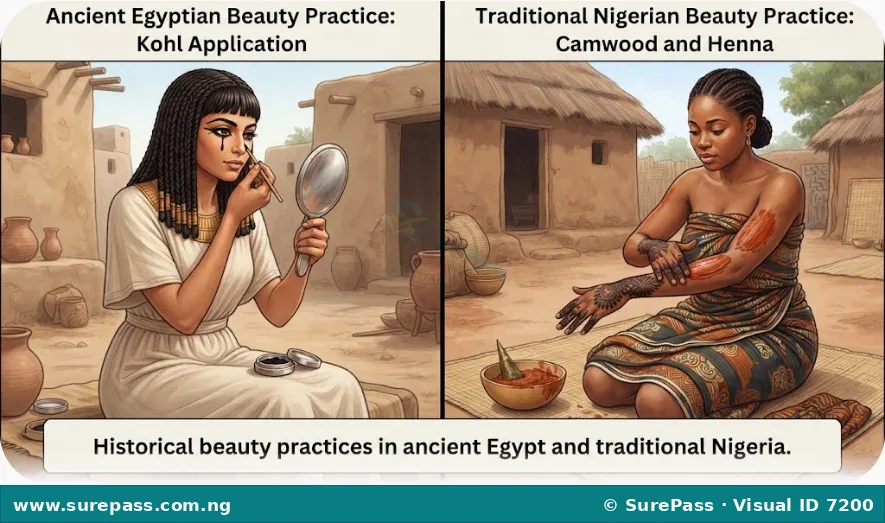
Ancient Egypt is widely regarded as the cradle of cosmetology. Around 3000 BC, Egyptians used minerals, insects, and berries to create makeup. They applied kohl, a black powder made from galena, to outline their eyes. This served both an aesthetic purpose and a practical one, as it protected their eyes from the glare of the desert sun and kept flies away. Queen Cleopatra and Queen Nefertiti were famous for using henna to stain their nails and hair, and they bathed in milk and honey to keep their skin soft.
In ancient China, during the Zhou Dynasty, nail polish was a symbol of social class. Royal family members wore gold, silver, red, or black nail stains made from gum arabic, gelatin, beeswax, and egg whites. Commoners were forbidden from wearing these colours on their nails.
In ancient Greece and Rome, women used white lead to whiten their faces, vermilion (a red clay) on their cheeks and lips, and coal to darken their eyebrows. They also used olive oil to moisturise their skin and protect it from the sun.
Traditional African Cosmetology
Long before the introduction of modern synthetic cosmetics, African societies had highly developed systems of beauty and grooming. These practices relied entirely on natural resources harvested from the local environment.
The main traditional African cosmetic materials include:
- Camwood (Osun): A red powder obtained from the heartwood of the camwood tree. It was mixed with water or palm oil to form a paste used to smooth the skin, treat skin rashes, and beautify brides and newborn babies.
- Uli (Indigo Dye): A natural liquid extract used by women in southeastern Nigeria to draw intricate, temporary decorative patterns on the skin. It served as a form of body art for special festivals and ceremonies.
- Henna (Lali): A dye prepared from the plant Lawsonia inermis, commonly used in Northern Nigeria. It is applied to the hands and feet to create beautiful, dark reddish-brown patterns, and is also used to dye hair.
- Shea Butter (Ori): A fat extracted from the nut of the African shea tree. It was, and still is, widely used as a natural moisturiser to protect the skin and promote hair growth.
- Palm Kernel Oil (Adin dudu): A dark oil extracted from palm kernels, used to soothe the skin, treat minor skin ailments, and soften hair.
Modern Evolution of Cosmetology
The turn of the twentieth century marked the beginning of modern cosmetology as an organized, scientific industry. The invention of motion pictures and the growth of the fashion industry created a high demand for professional makeup and hair care.
Pioneers like Madam C.J. Walker, an African-American entrepreneur, revolutionised the industry by developing and marketing hair care products specifically designed for black women. She established beauty schools and trained thousands of sales agents, creating economic opportunities for women. At the same time, Max Factor developed makeup specifically for film and television, popularising terms like “makeup” and making cosmetics accessible to the general public.
Today, cosmetology is a multi-billion-dollar global industry. It incorporates advanced scientific research, dermatology, and strict safety regulations to ensure that products are safe for human use.
Aspects of Cosmetology
Cosmetology is a diverse field divided into several specialised areas. Each aspect requires specific skills, tools, and knowledge of human anatomy.
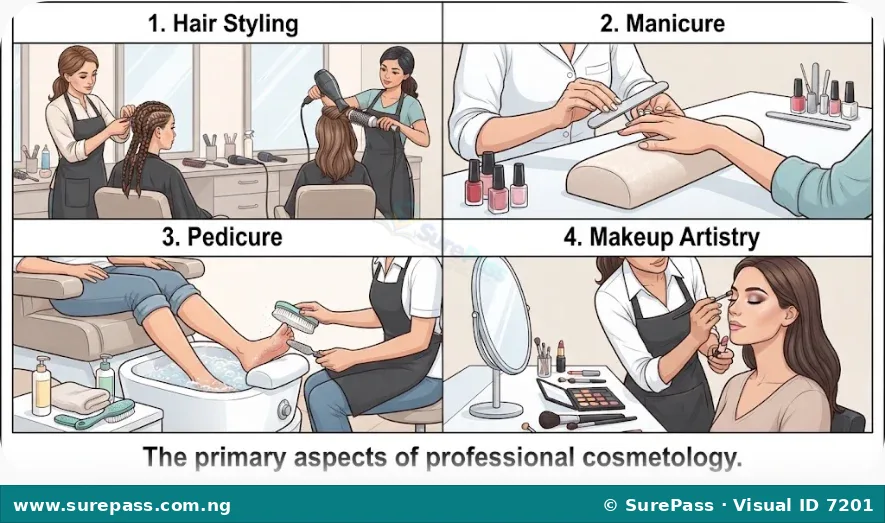
The main aspects of cosmetology are:
- Hairdressing and Hair Styling: This involves the care, cutting, chemical treatment (relaxing, perming), colouring, braiding, weaving, and styling of hair. It also includes scalp treatments to maintain healthy hair growth.
- Manicure: This is the cosmetic treatment of the hands and fingernails. It involves cleaning, shaping, filing, cuticle care, hand massage, and the application of nail polish.
- Pedicure: This is the cosmetic treatment of the feet and toenails. It includes soaking the feet, scrubbing dead skin cells, shaping toenails, cuticle care, foot massage, and polishing.
- Skin Care (Esthetics): This aspect focuses on maintaining skin health and treating non-medical skin conditions. It includes facials, skin cleansing, exfoliation, toning, moisturising, and hair removal techniques like waxing or threading.
- Makeup Artistry: This involves the application of cosmetics to the face to enhance features, conceal imperfections, or create specific artistic looks for weddings, photography, theatre, and television.
Identification of Cosmetics
Developing the skill to identify different types of cosmetics is essential for safety and professional practice. Cosmetics are classified based on their area of application and their physical form (such as creams, liquids, powders, or gels).
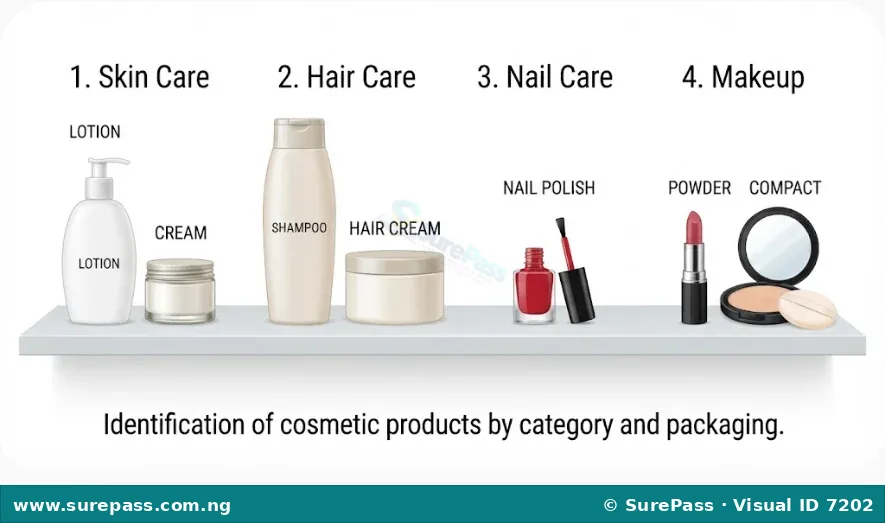
The primary categories of cosmetics include:
- Skin Care Cosmetics: These are products formulated to cleanse, protect, and nourish the skin. Examples include body lotions, facial cleansers, toners, moisturisers, sunscreens, and body scrubs. They are usually packaged in bottles, jars, or tubes.
- Hair Care Cosmetics: These products are designed to clean, condition, style, or alter the structure of the hair. Examples include shampoos, conditioners, hair creams, hair oils, hair gels, and chemical relaxers. They are commonly packaged in squeeze bottles, tubs, or spray cans.
- Nail Care Cosmetics: These are substances used to beautify and protect nails. Examples include nail polishes, base coats, top coats, cuticle oils, and nail polish removers. They are typically packaged in small glass bottles with built-in brush applicators.
- Decorative Cosmetics (Makeup): These are products applied to the face to enhance features. Examples include foundations, face powders, concealers, lipsticks, lip glosses, eye shadows, eyeliners, and mascaras. They are packaged in compacts, tubes, palettes, and pencils.
To identify cosmetics correctly, a person should observe the packaging shape, read the product label for ingredients and instructions, and note the physical texture of the substance.
Summary
The study of beauty and cosmetology connects ancient traditions with modern science. Beauty is the aesthetic harmony of the body, which is enhanced through cosmetology. While cosmetics are the products used, cosmetologists and cosmeticians are the professionals who apply and sell them. From the ancient use of kohl in Egypt and camwood in Nigeria to modern hair and skin salons, cosmetology remains an essential part of human culture, health, and self-expression.





0 comments
Open the discussion when you need it. Comments stay collapsed until requested so the initial article remains light.