


ARTICLE CONTENTSOn this page 9 sections
Beauty through Nutrition
Performance Objectives
By the end of the lesson, students should be able to:
- list the classes of food;
- state the importance of balanced diet to beauty;
- explain the importance of balanced diet on skin, hair, nails, eyes, etc.
Meaning of Food and Nutrition
Food is any substance consumed by living organisms to provide nutritional support, energy, and growth.
Without food, the body cannot perform its daily biological functions, and cellular repair becomes impossible.
Nutrition is the process by which living organisms obtain and use food necessary for growth, health, and tissue repair.
In beauty and cosmetology, nutrition is considered the foundation of physical appearance. The nutrients absorbed by the body directly influence the structure, strength, and appearance of external features such as the skin, hair, nails, and eyes.
Classes of Food
To maintain health and enhance physical beauty, the body requires different types of nutrients. These nutrients are grouped into six distinct classes of food.
The six classes of food are:
- Carbohydrates
- Proteins
- Fats and Oils
- Vitamins
- Minerals
- Water
1. Carbohydrates
Carbohydrates are the primary source of energy for the body. They provide the fuel required for cellular metabolism, tissue regeneration, and daily physical activities.
Common Nigerian examples of carbohydrates include:
- Yam
- Cassava (garri and fufu)
- Rice
- Maize
- Sweet potatoes
In relation to beauty, carbohydrates ensure that skin cells have the energy required to constantly renew themselves. A severe lack of carbohydrates can lead to physical fatigue, which manifests externally as dull, tired-looking skin.
2. Proteins
Proteins are the building blocks of the body. They are essential for the growth, repair, and maintenance of all body tissues, including the skin, hair, and nails.
Common examples of protein-rich foods include:
- Beef and chicken
- Fish
- Eggs
- Beans and soybeans
- Milk and cheese
Proteins are highly critical for beauty. The hair and nails are made of a tough protein called keratin. The skin relies on proteins like collagen and elastin to maintain its firmness, elasticity, and youthful structure. A deficiency in protein leads to thinning hair, brittle nails, and sagging skin.
3. Fats and Oils
Fats and oils provide concentrated energy, support cell growth, protect internal organs, and help the body absorb fat-soluble vitamins such as Vitamins A, D, E, and K.
Common examples of fats and oils include:
- Palm oil
- Groundnut oil
- Butter and margarine
- Coconut oil
- Fish oil
Fats and oils are essential for maintaining the natural lipid barrier of the skin. This barrier prevents moisture loss, keeping the skin hydrated, soft, and supple. Healthy fats also give the hair a natural shine and prevent the scalp from becoming dry and itchy.
4. Vitamins
Vitamins are organic compounds required in small quantities to regulate body processes, boost the immune system, and protect cells from damage.
Common examples of vitamin sources include:
- Green leafy vegetables (such as ugwu, waterleaf, and spinach)
- Carrots
- Citrus fruits (such as oranges, lemons, and grapefruits)
- Pawpaw and mangoes
- Tomatoes
Vitamins are powerful antioxidants that fight free radicals, which cause premature aging. Vitamin A promotes skin cell turnover; Vitamin C is essential for collagen production and brightens the skin; Vitamin E protects the skin from sun damage and retains moisture.
5. Minerals
Minerals are inorganic elements that help the body develop, function, and maintain structural strength. Key minerals for beauty include iron, zinc, calcium, and selenium.
Common sources of minerals include:
- Animal liver and kidney
- Seafood (such as periwinkles, crabs, and fish)
- Whole grains
- Nuts and seeds
- Milk
Iron is necessary for the formation of red blood cells, which carry oxygen to the skin and hair follicles, giving the skin a healthy, rosy glow. Zinc helps control oil production in the skin, heals acne scars, and prevents hair loss. Calcium keeps the nails strong and prevents them from peeling.
6. Water
Water is a vital substance that makes up a large percentage of the human body. It is responsible for transporting nutrients, regulating body temperature, and flushing out metabolic wastes.
Sources of water include:
- Clean drinking water
- Watermelon
- Cucumber
- Pineapple
- Soups and broths
Water is the ultimate natural moisturiser. It hydrates the skin from within, making it plump, smooth, and less prone to wrinkles. Dehydration causes the skin to look dry, flaky, and sunken, while making the eyes appear dull and tired.
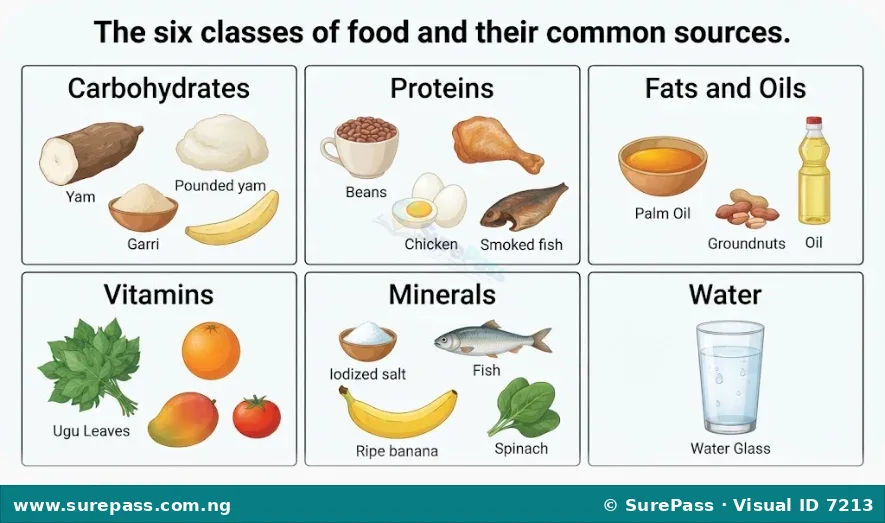
Observe the chart below showing the different classes of food and their common sources.
Meaning of a Balanced Diet
A balanced diet is a meal that contains all the six classes of food in the correct proportions required by the body.
Eating a balanced diet ensures that the body receives the exact amount of nutrients needed to function optimally without overconsuming any single nutrient. A diet that lacks balance can lead to malnutrition, which negatively affects both health and physical appearance.
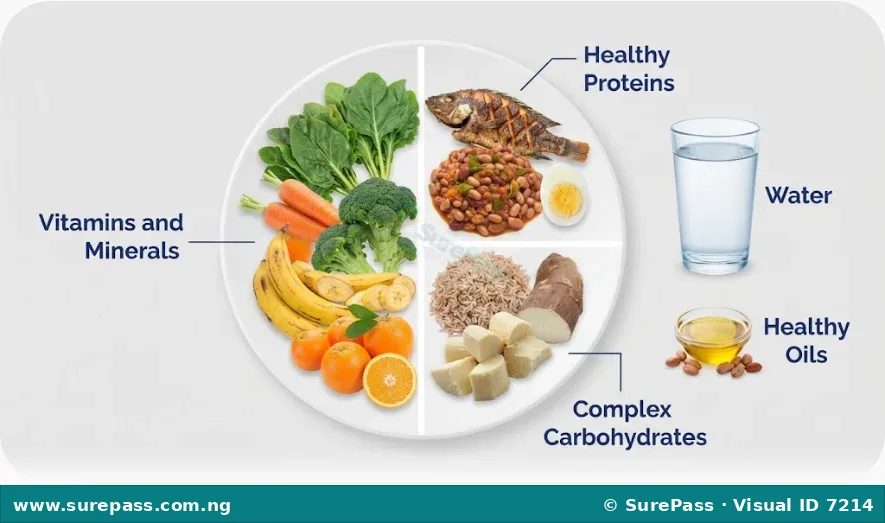
Look at the diagram below showing the proportions of a balanced diet plate.
Importance of a Balanced Diet to Beauty
The concept of “beauty from within” emphasizes that external beauty is a direct reflection of internal health. While topical cosmetics like creams, lotions, and hair conditioners can temporarily improve appearance, true and lasting beauty depends on the nutrients supplied to the body through a balanced diet.
The general importance of a balanced diet to beauty includes:
- Cellular Regeneration: The body constantly sheds dead skin cells, hair strands, and nail tissues. A balanced diet provides the raw materials needed to grow new, healthy cells to replace the old ones.
- Prevention of Premature Aging: Nutrients like vitamins and minerals protect the skin from environmental damage, preventing the early appearance of wrinkles, fine lines, and age spots.
- Natural Glow and Radiance: Proper nutrition improves blood circulation, ensuring that oxygen and essential nutrients reach the surface of the skin and the roots of the hair, resulting in a natural, healthy glow.
- Prevention of Nutritional Deficiencies: Poor nutrition leads to deficiency diseases that ruin physical appearance. For example, a lack of protein and iron causes severe hair breakage and pale, dry skin.
Importance of a Balanced Diet on Specific Beauty Organs
A balanced diet has specific, visible benefits on key beauty organs, including the skin, hair, nails, and eyes.
1. The Skin
The skin is the largest organ of the body and the most visible indicator of nutritional status. A balanced diet affects the skin in the following ways:
- Maintains Elasticity: Proteins and Vitamin C help produce collagen, which keeps the skin firm, smooth, and elastic.
- Regulates Moisture: Healthy fats and oils prevent dry, rough, and flaky skin by locking in moisture.
- Controls Acne and Blemishes: Zinc and Vitamin A help regulate sebum (oil) production, reducing the occurrence of pimples and promoting faster healing of skin blemishes.
2. The Hair
Hair health is highly sensitive to nutritional intake. The benefits of a balanced diet on the hair include:
- Promotes Hair Growth: Since hair is made of protein, adequate protein intake ensures steady hair growth and prevents excessive shedding.
- Improves Shine and Texture: Essential fatty acids from fats and oils lubricate the hair follicles, giving the hair a natural shine and preventing dry, brittle strands.
- Prevents Scalp Dryness: Vitamins and water keep the scalp hydrated, preventing dandruff and itching.
3. The Nails
Nails are composed of keratinized cells. A balanced diet affects the nails in the following ways:
- Prevents Brittleness: Calcium and proteins strengthen the nail plate, preventing the nails from cracking, splitting, or peeling easily.
- Promotes Smooth Growth: Vitamins (especially B-vitamins like biotin) and minerals prevent the formation of vertical ridges and white spots on the nails.
- Improves Nail Bed Health: Iron ensures that the nail bed receives enough oxygen, keeping the nails looking healthy and naturally pink.
4. The Eyes
Bright, clear eyes are a key component of facial beauty. A balanced diet supports eye beauty in the following ways:
- Maintains Brightness and Clarity: Vitamin A and antioxidants keep the sclera (the white part of the eye) clear and bright.
- Prevents Dark Circles: Proper hydration and iron intake prevent the skin under the eyes from looking dark, sunken, and tired.
- Prevents Dryness and Redness: Water and essential fatty acids keep the eyes lubricated, preventing redness, irritation, and dullness.
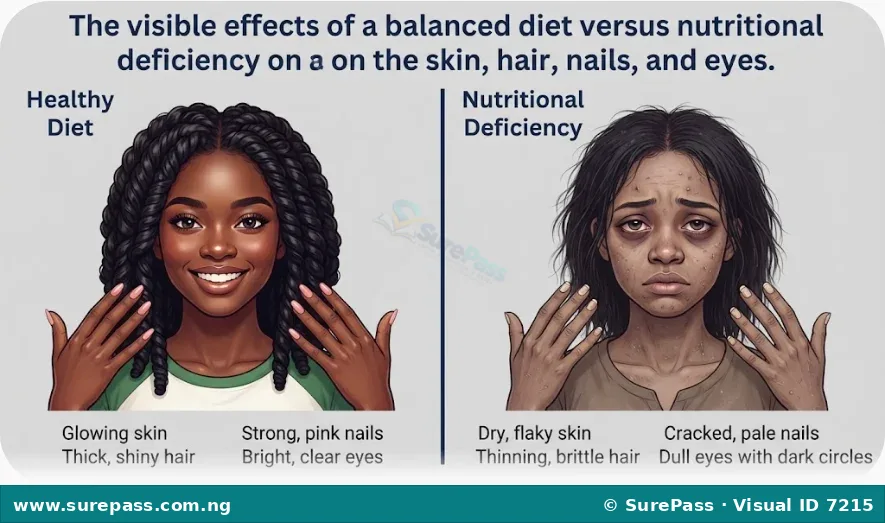
Observe the comparison below showing the physical effects of proper nutrition versus nutritional deficiency on beauty organs.
Identifying Classes of Food and Balanced Diets
Developing the skill to identify different classes of food is essential for planning meals that promote health and beauty. This practical skill involves examining food items, categorizing them based on their primary nutrients, and combining them to form a balanced diet.
How to Identify and Group Food Items
The process of identifying and grouping food items involves the following steps:
- Gather the Food Items: Collect various local food items such as raw rice, boiled eggs, fresh beef, palm oil, green vegetables (ugwu), carrots, and a bottle of water.
- Examine the Physical Characteristics: Observe the texture, source, and type of each food item. For example, oily substances represent fats, while animal products generally represent proteins.
- Classify the Items: Group each food item into its correct class of food based on its primary nutrient content.
- Evaluate the Meal Balance: Arrange a portion of the classified foods on a plate to ensure that all six classes of food are represented in the correct proportions.
The table below shows a practical guide for grouping common Nigerian food items into their respective classes of food:
| Food Item | Primary Nutrient Class | Primary Beauty Benefit |
|---|---|---|
| Rice / Yam / Cassava | Carbohydrates | Provides energy for skin cell renewal |
| Egg / Beef / Fish / Beans | Proteins | Builds keratin for strong hair and nails; produces collagen for firm skin |
| Palm Oil / Groundnut Oil | Fats and Oils | Moisturises the skin and adds shine to hair |
| Ugwu / Waterleaf / Carrots | Vitamins and Minerals | Protects skin from aging; heals blemishes; brightens eyes |
| Clean Drinking Water | Water | Hydrates skin cells and flushes out toxins |
Evaluation Exercises
Answer the following questions to review the lesson:
- List the six classes of food and provide two local Nigerian examples for each class.
- Define a balanced diet.
- State three general reasons why a balanced diet is important to physical beauty.
- Explain how a deficiency in protein can affect the hair and nails.
- Describe the specific importance of Vitamin A and water to the appearance of the eyes.
- Identify the class of food that is primary in each of the following items: palm oil, beans, yam, and ugwu.



0 comments
Open the discussion when you need it. Comments stay collapsed until requested so the initial article remains light.