




ARTICLE CONTENTSOn this page 9 sections
Vocabulary Associated with Various Fields or Contexts
Performance Objectives
By the end of the lesson, students should be able to:
- Identify vocabulary associated with given fields or contexts.
- Construct sentences using vocabulary associated with given fields or contexts.
Understanding Vocabulary
Vocabulary refers to the collection of words that a person knows and uses. Learning new words helps people to understand others better and express themselves clearly. Different words are used when talking about different topics or situations.
This unit explores words commonly used in various contexts such as family, school, sports, health, weather, and social media. Knowing these words helps in discussing these topics accurately.
Vocabulary for Family
A family is a group of people related by blood, marriage, or adoption. Families provide love, support, and a sense of belonging. There are different types of families.

The words associated with family include:
- Nuclear family: This refers to a family unit consisting of a father, a mother, and their children.
- Extended family: This includes the nuclear family plus other relatives like grandparents, aunts, uncles, and cousins.
- Father: A male parent.
- Mother: A female parent.
- Sister: A female sibling.
- Brother: A male sibling.
- Niece: The daughter of one’s brother or sister.
- Nephew: The son of one’s brother or sister.
- Cousin: The child of one’s aunt or uncle.
- Grandfather: The father of one’s father or mother.
- Grandmother: The mother of one’s father or mother.
- Mother-in-law: The mother of one’s husband or wife.
- Step-mother: A woman who is married to one’s father but is not one’s biological mother.
Example: My nuclear family lives in a small house in Lagos.
Example: During holidays, our extended family gathers at our village house.
Example: My father works as an engineer.
Example: My mother bakes delicious cakes.
Example: My older sister helps me with my homework.
Example: My younger brother loves playing football.
Example: My aunt’s daughter is my niece.
Example: My uncle’s son is my nephew.
Example: My cousin and I attend the same school.
Example: My grandfather tells interesting stories.
Example: My grandmother cooks tasty jollof rice.
Example: My father’s wife’s mother is his mother-in-law.
Example: My step-mother is kind and caring.
Vocabulary for School
School is a place where children go to learn. Many activities take place in school, and specific words are used to describe them.
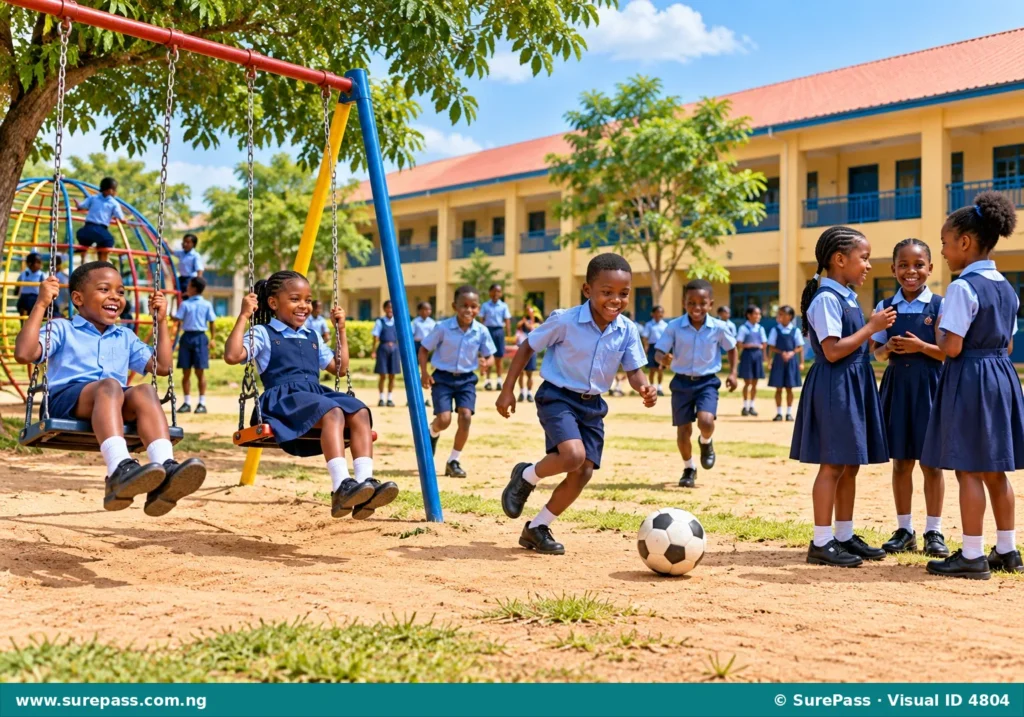
The words associated with school include:
- Uniform: A special set of clothes worn by students to school.
- Library: A room or building where books, magazines, and other learning materials are kept for reading or borrowing.
- Lessons: Periods of teaching or instruction in a subject.
- Exams: Formal tests to check what students have learned.
- School bag: A bag used by students to carry books and other school items.
- Playground: An outdoor area for children to play, often with swings and slides.
- Assembly: A gathering of all students and teachers, usually in the morning, for prayers, announcements, and talks.
- Sports: Physical activities or games played for enjoyment or competition.
- Writing: The act of forming letters, words, and sentences on paper or a screen.
Example: All pupils must wear their school uniform every day.
Example: We visit the school library to read storybooks.
Example: Our English lessons are always fun and interactive.
Example: We prepare well for our end-of-term exams.
Example: I packed my textbooks and notebooks into my school bag.
Example: We play football and run around in the playground during break time.
Example: The head teacher gave an important speech at the morning assembly.
Example: Our school holds inter-house sports competitions every year.
Example: We practice our creative writing skills in English class.
Vocabulary for Sports
Sports involve physical activities and games played by individuals or teams. There are many words used to describe the people, actions, and outcomes in sports.
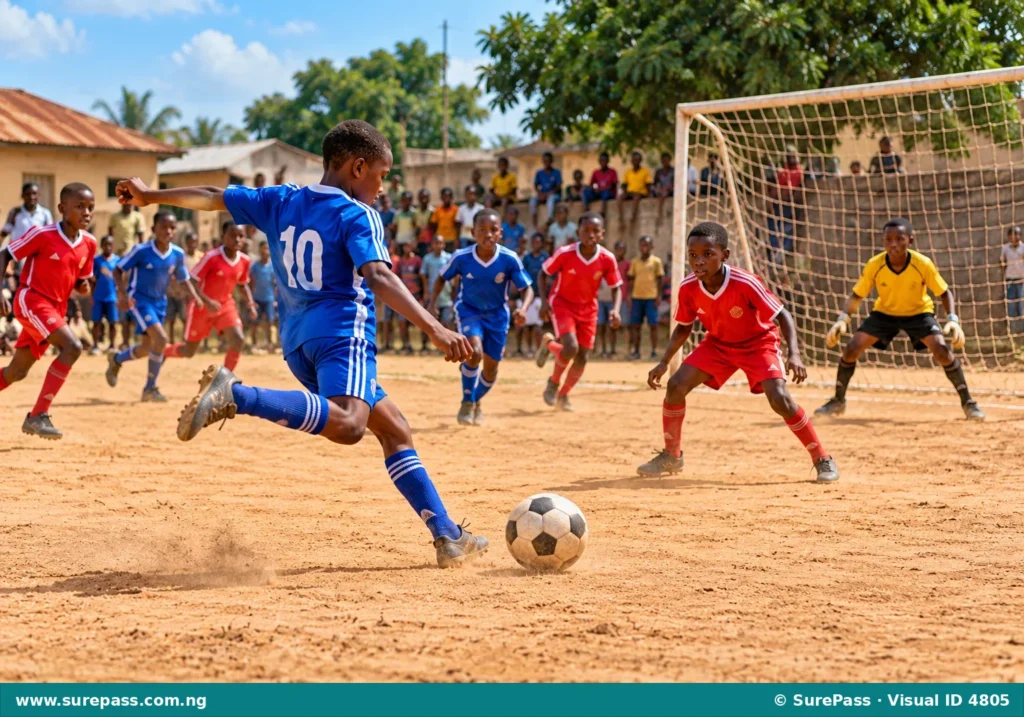
The words associated with sports include:
- Team: A group of players working together in a game or competition.
- Coach: A person who trains and guides a sports team or athlete.
- Player: A person who takes part in a game or sport.
- Goal: The act of scoring in games like football or hockey, or the structure into which the ball is aimed.
- Score: The number of points, goals, or runs achieved by a player or team.
- Win: To be successful in a competition or game.
- Brace: In football, when a player scores two goals in a single match.
- Lose: To be defeated in a competition or game.
- Draw: A game or match in which both teams or players have the same score.
- Game: A form of play or sport, especially a competitive one played according to rules.
- Referee: The official who controls a sports match and ensures the rules are followed.
- Kick: To hit something with the foot.
Example: Our school football team won the championship.
Example: The coach taught us new football strategies.
Example: Every player on the team tried their best.
Example: The striker scored a fantastic goal in the last minute.
Example: The final score was 3-1 in favour of our team.
Example: We hope to win the next match.
Example: The forward scored a brace, helping his team to victory.
Example: It is important to learn even when you lose a game.
Example: The football match ended in a 2-2 draw.
Example: Chess is a board game that requires a lot of thinking.
Example: The referee blew the whistle to signal the end of the game.
Example: The player tried to kick the ball into the net.
Vocabulary for Health
Health refers to the state of being free from illness or injury. Many words are used to talk about staying healthy, getting well, and preventing sickness.
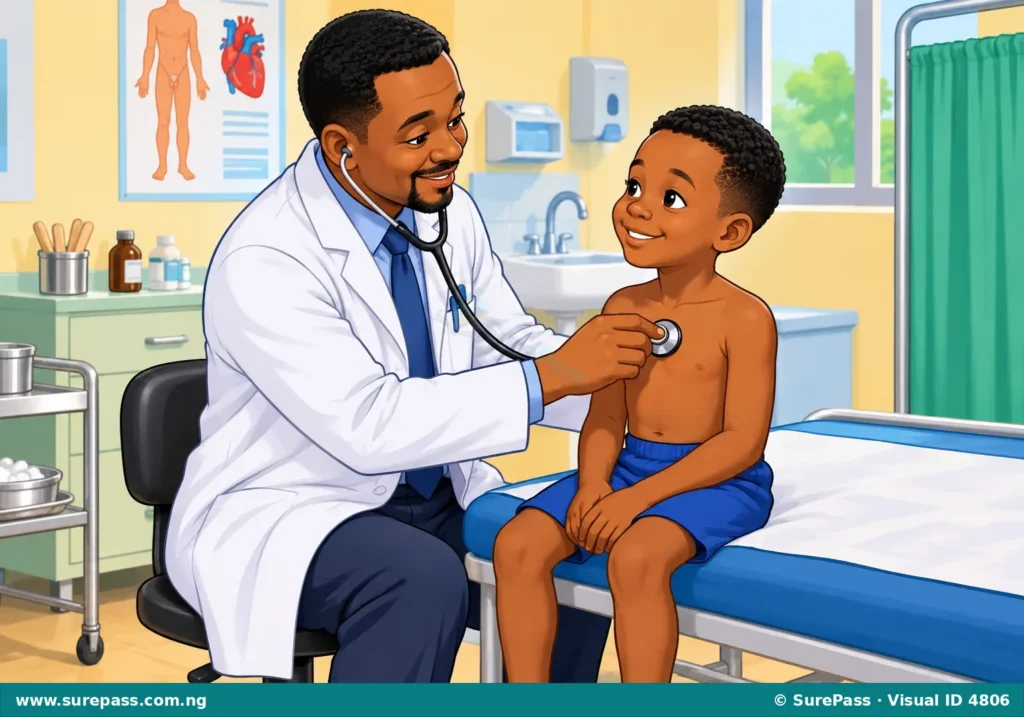
The words associated with health include:
- Medicine: Substances used for treating illness or pain.
- Checkup: A general medical examination to see if a person is healthy.
- Illness: A disease or period of sickness affecting the body or mind.
- Recovery: The process of getting better after an illness or injury.
- Injury: Harm or damage to the body.
- Vaccination: An injection given to protect against a particular disease.
- Sanitation: The process of keeping places clean and healthy, especially by providing good drainage and clean water.
- Hydration: The process of providing water to the body.
- Mental health: A person’s emotional, psychological, and social well-being.
- Prevention: The action of stopping something from happening or arising.
- Treatment: Medical care given to a patient for an illness or injury.
Example: The doctor prescribed medicine for my cough.
Example: It is good to have a regular health checkup.
Example: She stayed home from school due to a minor illness.
Example: After the surgery, his recovery was quick.
Example: The footballer had a knee injury during the match.
Example: Children receive vaccination to prevent diseases like polio.
Example: Good sanitation helps prevent the spread of germs.
Example: Drinking enough water is important for good hydration.
Example: Talking about feelings can help improve mental health.
Example: Washing hands is a simple prevention method against sickness.
Example: The doctor started a new treatment for her fever.
Vocabulary for Weather
Weather describes the condition of the atmosphere at a particular place and time. It includes elements like temperature, wind, and rain.

The words associated with weather include:
- Temperature: The degree of hotness or coldness of a place.
- Clouds: Visible masses of water droplets or ice crystals floating in the atmosphere.
- Wind: The natural movement of air.
- Storm: A violent disturbance of the atmosphere with strong winds and usually rain, thunder, lightning, or snow.
- Snow: Soft, white flakes of ice that fall from the sky in cold regions. (This is rare in Nigeria, but important vocabulary.)
- Thunder: The loud noise that accompanies lightning during a storm.
- Lightning: A sudden flash of light in the sky during a thunderstorm.
- Humidity: The amount of water vapour in the air.
- Fog: A thick cloud of tiny water droplets suspended in the atmosphere at or near the earth’s surface, reducing visibility.
- Breeze: A gentle wind.
- Hail: Pellets of frozen rain that fall during a thunderstorm.
- Drizzle: Light rain falling in very fine drops.
- Forecast: A prediction or estimate of future weather conditions.
Example: The temperature today is very high, making it a hot day.
Example: Dark clouds often mean it will rain soon.
Example: The strong wind blew leaves off the trees.
Example: We stayed indoors during the heavy storm.
Example: In some countries, children play in the snow during winter.
Example: The loud thunder made the baby cry.
Example: We saw bright lightning before the rain started.
Example: The high humidity made the air feel sticky.
Example: The fog was so thick that drivers could barely see the road.
Example: A cool breeze blew through the window on a hot afternoon.
Example: The hail damaged some of the crops in the field.
Example: It was just a light drizzle, so we didn’t need an umbrella.
Example: The weather forecast predicted rain for tomorrow.
Vocabulary for Social Media
Social media refers to websites and applications that allow users to create and share content or to participate in social networking. Many specific words are used when talking about social media activities.

The words associated with social media include:
- Post: To publish content, such as text, photos, or videos, on a social media platform.
- Like: To show approval or enjoyment of a post by clicking a button, often a heart or a thumbs-up icon.
- Follow: To subscribe to a person’s social media updates so that their posts appear in one’s feed.
- Share: To pass on a post or content from one person to another or to a wider audience on social media.
- Comment: To write a response or remark on someone’s post.
- Hashtag: A word or phrase preceded by a hash symbol (#), used on social media to identify messages about a specific topic.
- Profile: A page on a social media platform that contains information about a user, including their photos and posts.
- Feed: A stream of content, such as posts, photos, and updates, from people or pages one follows on social media.
- Timeline: A chronological list of posts or events on a social media profile.
- Tag: To link a person’s social media account to a photo or post, often notifying them.
Example: My uncle likes to post pictures of his travels online.
Example: Many people liked her beautiful drawing.
Example: I follow my favourite football club to get their latest news.
Example: She decided to share the funny video with her friends.
Example: I left a positive comment on my friend’s birthday post.
Example: We used the hashtag #NigeriaAt60 to celebrate Independence Day.
Example: My sister updated her profile picture on her social media account.
Example: I scroll through my feed to see what my friends are doing.
Example: His timeline showed all the posts he had made over the year.
Example: She tagged her friends in the group photo from the party.




0 comments
Open the discussion when you need it. Comments stay collapsed until requested so the initial article remains light.