



ARTICLE CONTENTSOn this page 6 sections
Homophones and homograph
Performance Objectives
By the end of the lesson, students should be able to:
- Explain the meaning of common homophones and homographs;
- give examples of homophones and homographs;
- Write sentences demonstrating different meanings of homophones and homographs.
Understanding Tricky Words
The English language has many words that can sometimes be confusing. Some words sound exactly the same but have different meanings and spellings. Other words are spelled exactly the same but have different meanings and sometimes different pronunciations. These special words are called homophones and homographs.
What Are Homophones?
Homophones are words that sound the same but have different meanings and different spellings.
When you hear a homophone, you need to think about the context of the sentence to understand which word is being used. For example, the words “to,” “too,” and “two” all sound alike but mean different things.
Examples of Homophones
Here are some common homophones and their meanings:
-
To / Too / Two:
To: Shows direction or purpose. Example: “I am going to the market.”
Too: Means “also” or “more than enough.” Example: “It is too hot outside,” or “I want to come too.”
Two: The number after one. Example: “I have two books.”
-
Their / There / They’re:
Their: Shows possession, meaning “belonging to them.” Example: “The children love their new toys.”
There: Refers to a place. Example: “Please put the book over there.”
They’re: A short form (contraction) of “they are.” Example: “They’re playing football.”
-
Bare / Bear:
Bare: Means uncovered or empty. Example: “The tree branches were bare in winter.”
Bear: Can be an animal or mean to carry/endure. Example: “A brown bear lives in the forest,” or “I cannot bear the loud noise.”
-
Fair / Fare:
Fair: Means just, light in colour, or a fun event. Example: “The judge was fair,” or “She has fair skin,” or “We went to the village fair.”
Fare: The money paid for a journey. Example: “The bus fare is N100.”
-
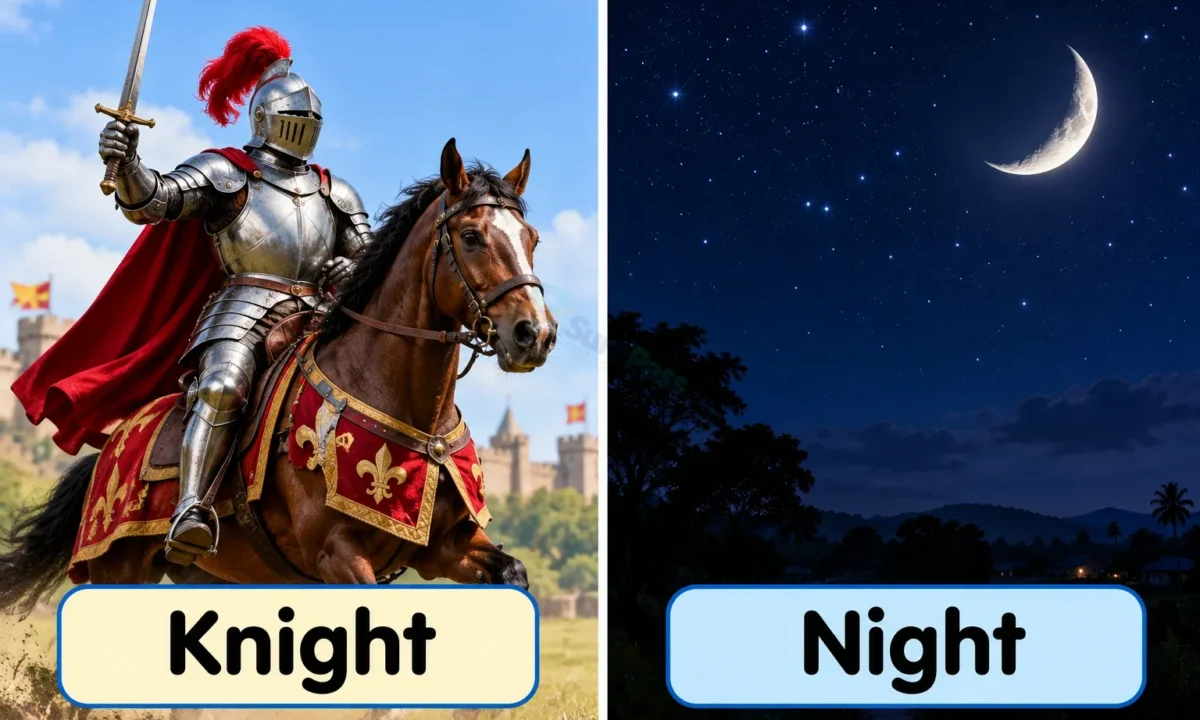
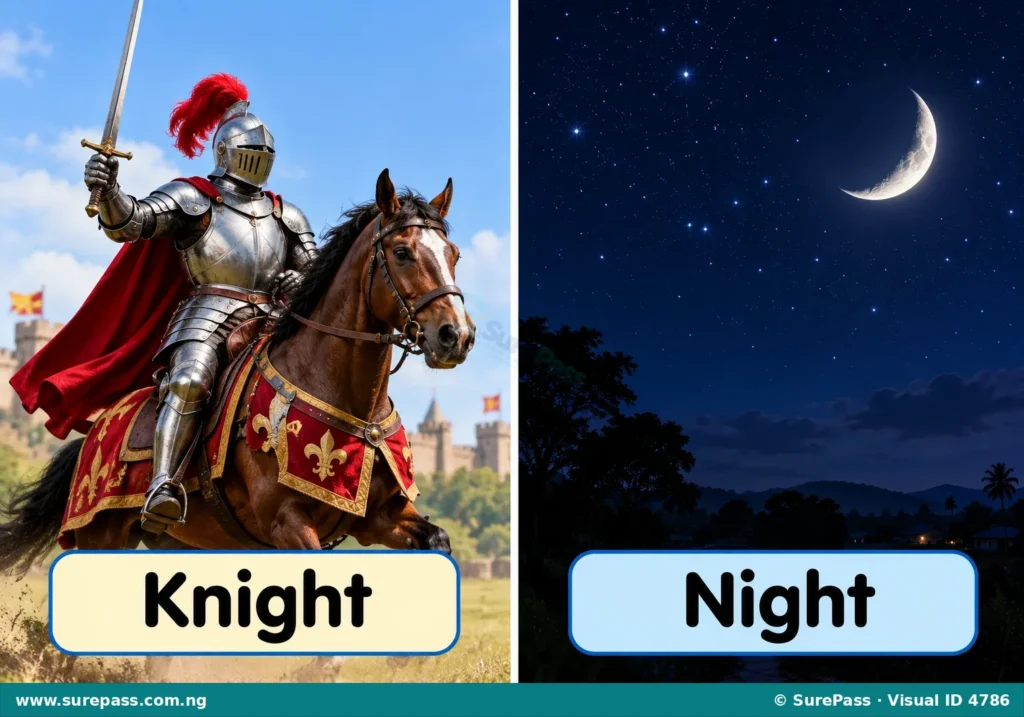
Knight / Night:
Knight: A warrior in shining armour. Example: “The brave knight rode a horse.”
Night: The time of darkness between sunset and sunrise. Example: “The stars shine brightly at night.”
What Are Homographs?
Homographs are words that have the same spelling but different meanings.
Sometimes, homographs are pronounced differently, but often they are pronounced the same. Just like with homophones, the context of the sentence helps to understand the correct meaning of a homograph.
Examples of Homographs
Here are some common homographs and their different meanings:
-
Bank:
Bank (financial institution): A place where people keep their money. Example: “I went to the bank to withdraw money.”
Bank (riverbank): The land along the side of a river. Example: “The children played by the river bank.”
-
Bat:
Bat (animal): A flying mammal that comes out at night. Example: “A fruit bat hangs upside down.”
Bat (sports equipment): A piece of equipment used in sports like baseball or cricket. Example: “He hit the ball with his wooden bat.”
-
Spring:
Spring (season): The season after winter when plants begin to grow. Example: “Flowers bloom beautifully in spring.”
Spring (coiled metal object): A coiled piece of metal that can be stretched or compressed. Example: “The toy car has a small spring inside it.”

Writing Sentences with Homophones and Homographs
To show that you understand homophones and homographs, it is important to be able to use them correctly in sentences. When you write, always choose the correct spelling for the meaning you want to convey.
How to Write Sentences Demonstrating Different Meanings
The procedure involves the following steps:
- Choose a set of homophones or a homograph. For example, “to,” “too,” “two.”
- Think about the meaning of each word.
- Write a clear sentence for each word, making sure the sentence shows its specific meaning.
- Read your sentences aloud to check if they make sense and if the correct word is used.
Here is an example using “fair” and “fare”:
-
Fair: The children enjoyed the fun rides at the village fair.
-
Fare: Please pay your bus fare before you sit down.
Here is an example using “bat” (animal) and “bat” (sports equipment):
-
Bat (animal): The bat flew out of the cave at dusk.
-
Bat (sports equipment): The cricketer held his bat tightly.
Practising with different words will help you become better at using homophones and homographs correctly in your writing and speaking.




0 comments
Open the discussion when you need it. Comments stay collapsed until requested so the initial article remains light.