



ARTICLE CONTENTSOn this page 5 sections
Vocabulary (Common Idioms)
Performance Objectives
By the end of the lesson, students should be able to:
- explain the meaning of idioms.
- use common idioms in sentences.
What Are Idioms?
An idiom is a group of words whose meaning is not easily understood from the meanings of the individual words. The words together have a special, hidden meaning that is different from what they literally say.
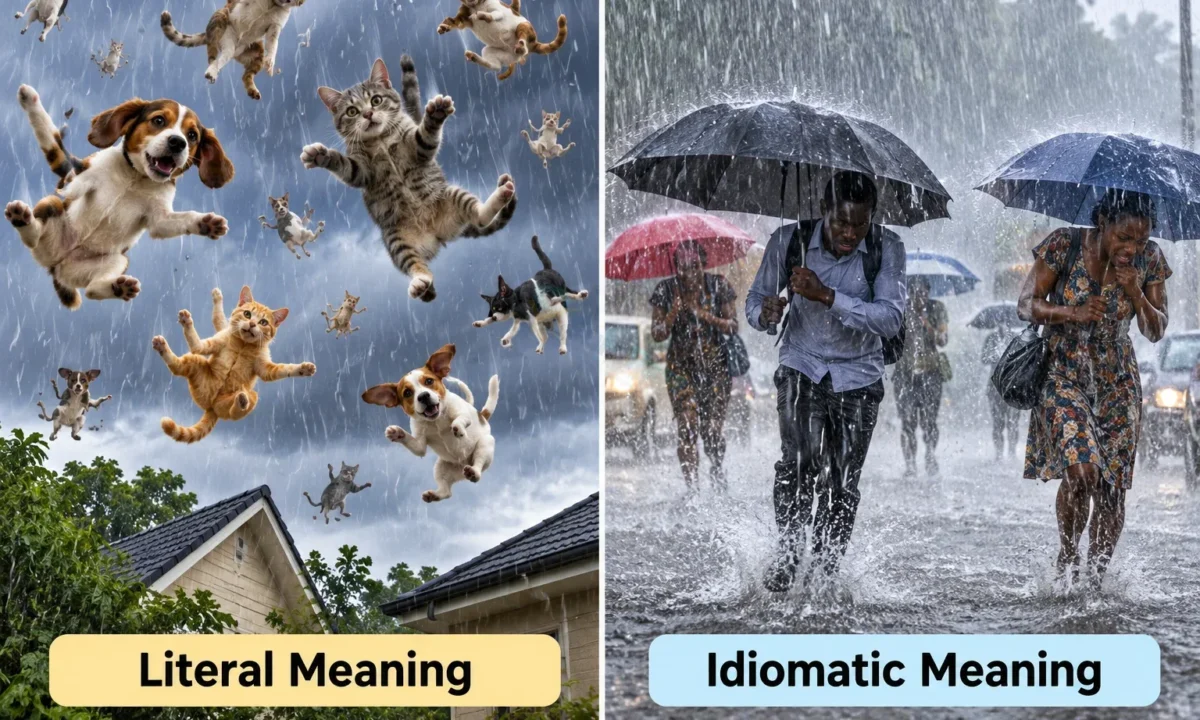
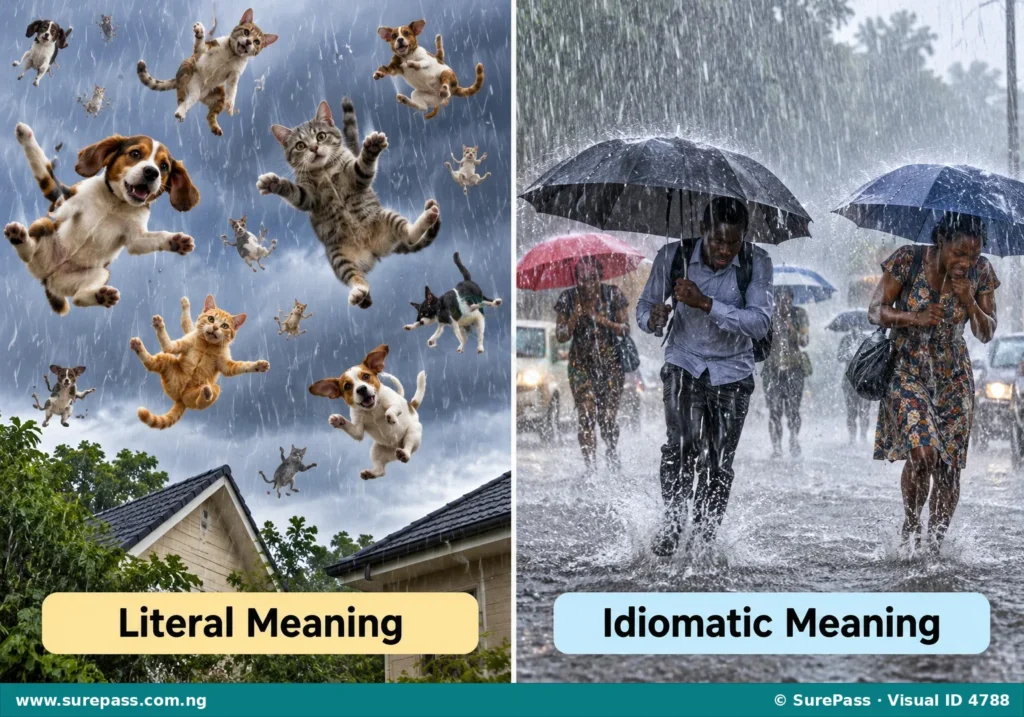
Imagine someone says, “It’s raining cats and dogs!” If you take the words literally, you might think actual cats and dogs are falling from the sky. But that is not what the person means. The special meaning of this idiom is that it is raining very heavily.
Idioms make our language more colourful and interesting. People use them often in everyday conversations and in stories.
Common Idioms and Their Meanings
Many idioms are used in English. Understanding them helps in understanding what people say and write. Here are some common idioms and their meanings:
- Raining cats and dogs: This means it is raining very heavily.
- Under the weather: This means someone is feeling sick or unwell.
- A piece of cake: This means something is very easy to do.
- Hit the books: This means to study very hard.
- Cost an arm and a leg: This means something is very expensive.
- Keep an eye on: This means to watch someone or something carefully.
- Spill the beans: This means to reveal a secret or tell something that was supposed to be kept hidden.
Using Idioms in Sentences
To use idioms correctly, it is important to know their special meanings. Here are examples of how to use the common idioms in sentences:
- Raining cats and dogs:
We could not go out to play because it was raining cats and dogs all afternoon.
The football match was cancelled because it started raining cats and dogs.
- Under the weather:
My sister is feeling a bit under the weather today, so she stayed home from school.
The teacher looked under the weather and had to rest during break time.
- A piece of cake:
The maths test was a piece of cake for me because I studied hard.
Learning to ride a bicycle was a piece of cake after my father taught me.
- Hit the books:
If you want to pass your exams, you need to hit the books every evening.
Before the competition, the students decided to hit the books for extra practice.
- Cost an arm and a leg:
That new car must have cost an arm and a leg; it looks very fancy.
Buying a house in the city can cost an arm and a leg.
- Keep an eye on:
Please keep an eye on my bag while I go to the restroom.
The security guard was asked to keep an eye on the entrance.
- Spill the beans:
Don’t spill the beans about the surprise party for Mummy!
My friend accidentally spilled the beans about my birthday present.




0 comments
Open the discussion when you need it. Comments stay collapsed until requested so the initial article remains light.