



ARTICLE CONTENTSOn this page 6 sections
Narrative and Descriptive Composition
Performance Objectives
By the end of the lesson, students should be able to:
- differentiate between narrative and descriptive compositions;
- write a narrative composition;
- write a descriptive composition.
Understanding Composition
Composition is the art of writing to express thoughts, ideas, and experiences clearly. It allows a writer to share stories, describe things, or explain how something works. There are different types of compositions, and in Primary 4, learners focus on two important types: narrative and descriptive compositions.
What is Narrative Composition?
A narrative composition tells a story. It describes a series of events in a sequence, usually with a beginning, a middle, and an end. Narrative compositions often include characters, a setting, and a plot or what happens in the story.
Features of Narrative Composition
Narrative compositions have special features that make them stories. These features help the reader follow the events and understand what happened:
- Tells a Story: The main purpose is to recount an event or a series of events.
- Sequence of Events: Events are presented in the order they happened, often using words like “first,” “next,” “then,” “after that,” and “finally.”
- Characters: There are people or animals who are part of the story.
- Setting: The story takes place in a particular time and location.
- Plot: This is the main event or problem in the story and how it is solved.
- Personal Experience: Many narrative compositions are based on a writer’s own experiences or imagination.
Imagine reading a story about a child who found a lost puppy. The story would tell you where the child was, what happened when they saw the puppy, how they helped it, and what happened next. This is a narrative.
Writing a Narrative Composition
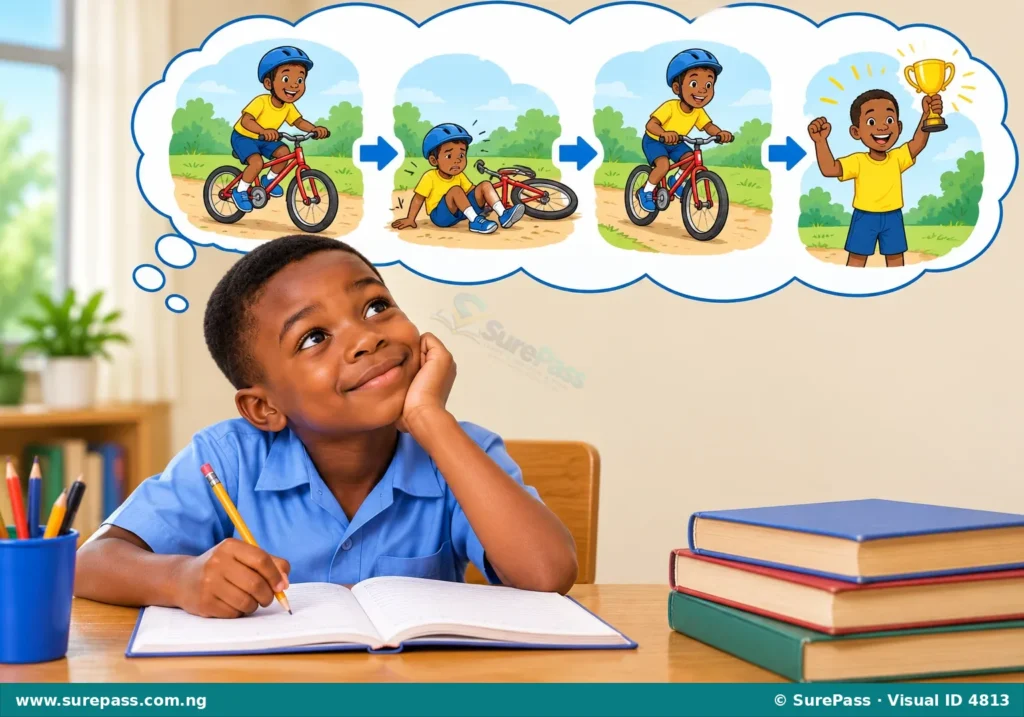
Writing a good narrative composition involves several steps:
- Choose a Topic: Select an interesting event or experience to write about.
- Brainstorm Ideas: Think about the main characters, the setting, what happened first, next, and last.
- Outline Your Story: Plan the beginning, middle, and end.
- Beginning: Introduce the characters and setting. What was the situation at the start?
- Middle: Describe the main events in order. What happened to the characters? What was the problem or exciting part?
- End: Explain how the story concluded. What was the result of the events?
- Draft Your Composition: Write your story following your outline. Use clear sentences and paragraphs.
- Use Time Words: Include words that show the order of events, such as “first,” “then,” “next,” “after that,” “suddenly,” “meanwhile,” and “finally.”
- Show Feelings: Describe how the characters felt during the events.
- Review and Revise: Read your story to check for mistakes in spelling, grammar, and punctuation. Make sure the story flows well and makes sense.
Here are some topics for narrative compositions:
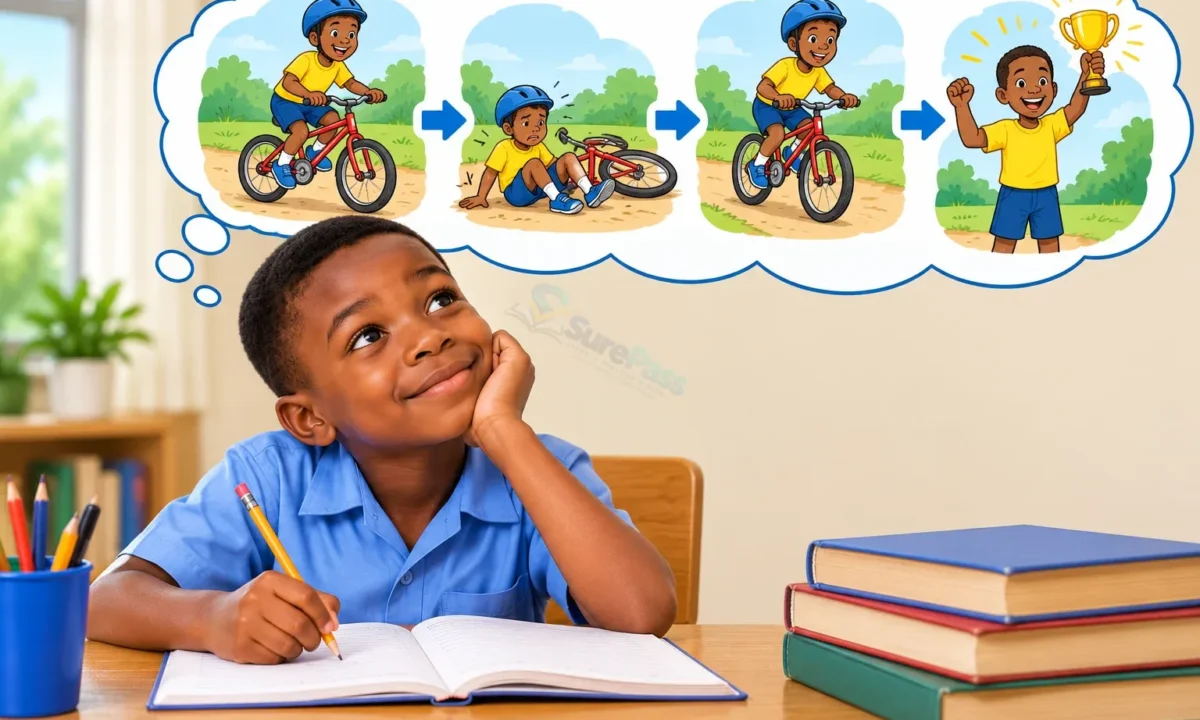
- The Day I Won a Prize
- The First Time I Rode a Bicycle
- How I Spent My Last Holiday
- My First Day at School
- A Day I Will Never Forget
- A Visit to My Village
- A Visit to the Market
Let us consider the topic “The Day I Won a Prize.”
To write about this, you would think about:
- Beginning: What was the competition or event? Where was it held? How did you feel before it started?
- Middle: What did you do during the competition? What challenges did you face? How did you perform?
- End: How did you feel when your name was called? What was the prize? Who congratulated you?
What is Descriptive Composition?
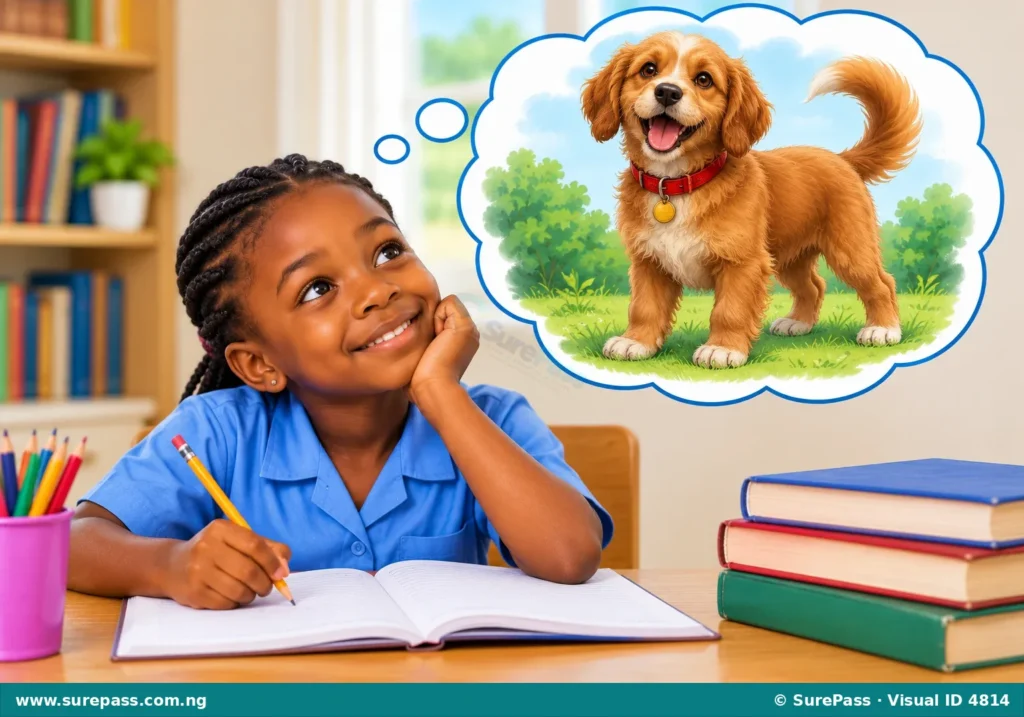
A descriptive composition paints a picture with words. It focuses on describing a person, place, animal, or thing in great detail, using the five senses (sight, sound, smell, touch, taste) to help the reader imagine it clearly.
Features of Descriptive Composition
Descriptive compositions have features that help them create vivid images in the reader’s mind:
- Paints a Picture: The main goal is to describe something so well that the reader can almost see, hear, smell, touch, or taste it.
- Sensory Details: It uses words that appeal to the five senses.
- Sight: Colours, shapes, sizes, appearance.
- Sound: Noises, voices, music.
- Smell: Scents, odours, fragrances.
- Touch: Textures (smooth, rough), temperature (hot, cold), feelings (soft, hard).
- Taste: Flavours (sweet, sour, bitter).
- Strong Adjectives and Adverbs: It uses many descriptive words to make the writing more interesting and detailed.
- Focus on One Subject: It usually concentrates on describing one main person, place, or thing.
Imagine reading about a beautiful garden. The description would tell you about the bright red flowers, the sweet smell of jasmine, the buzzing sound of bees, and the soft grass underfoot. This is a descriptive composition.
Writing a Descriptive Composition
Writing a good descriptive composition also involves steps:
- Choose a Subject: Select a person, place, animal, or thing you want to describe.
- Observe Carefully: If possible, look at your subject closely. What do you see, hear, smell, touch, or even taste?
- Brainstorm Details: List all the words that come to mind when you think about your subject. Think about its appearance, sounds, smells, and how it feels.
- Organise Your Description: Decide how you will present your details. You might start with a general overview and then move to specific parts, or describe from top to bottom, or from near to far.
- Draft Your Composition: Write your description, using the details you brainstormed.
- Use Sensory Words: Include words that appeal to the five senses. For example, instead of “a flower,” write “a bright yellow hibiscus flower with soft petals.”
- Use Adjectives and Adverbs: Use words that describe nouns (adjectives) and verbs (adverbs) to make your writing more vivid. For example, “The old, wooden door creaked loudly.”
- Review and Revise: Read your description to check for mistakes. Make sure the reader can clearly imagine what you are describing.
Here are some topics for descriptive compositions:
- My Best Friend
- My Favorite Animal
- The Village Where I Live
- How to use money wisely. (Note: This topic is more suited for an expository or argumentative essay, but if treated descriptively, it would focus on describing the process or characteristics of wise money use rather than telling a story or describing a physical entity. For Primary 4, it’s best to focus on describing people, places, and things as the core skill.)
- My School
- My Family
Let us consider the topic “My Best Friend.”
To write about your best friend, you would describe:
- Appearance: What do they look like? (e.g., tall, short, dark skin, bright eyes, long hair, always smiling).
- Personality: What kind of person are they? (e.g., kind, funny, helpful, quiet, energetic).
- Actions: What do they do? (e.g., plays football well, always helps with homework, tells funny jokes).
- Feelings: How do they make you feel? (e.g., happy, safe, understood).
Differentiating Between Narrative and Descriptive Compositions
It is important to know the difference between narrative and descriptive compositions. While both use words to create images, their main goals are different.
- Narrative Composition: Its main purpose is to tell a story. It focuses on a sequence of events, what happened, and when it happened. It answers the question “What happened?”
- Descriptive Composition: Its main purpose is to describe something. It focuses on details, sensory information, and how something looks, sounds, smells, feels, or tastes. It answers the question “What is it like?”
Sometimes, a good narrative composition can have descriptive parts, and a good descriptive composition might hint at a small story. However, one type will always be the main focus.




0 comments
Open the discussion when you need it. Comments stay collapsed until requested so the initial article remains light.