



ARTICLE CONTENTSOn this page 6 sections
Introduction to Intonation
Performance Objectives
By the end of the lesson, students should be able to:
- state the meaning of intonation;
- discuss the types of intonation;
- state when to use the falling and rising intonations.
- explain how intonation changes meaning.
What is Intonation?
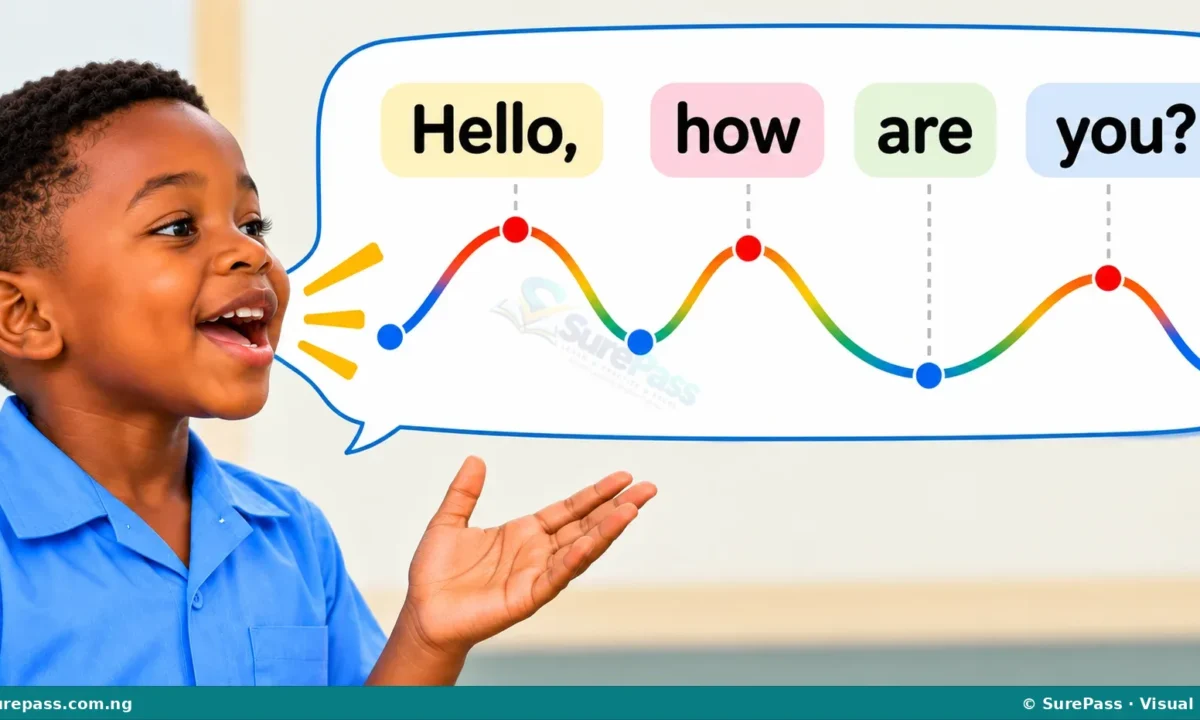
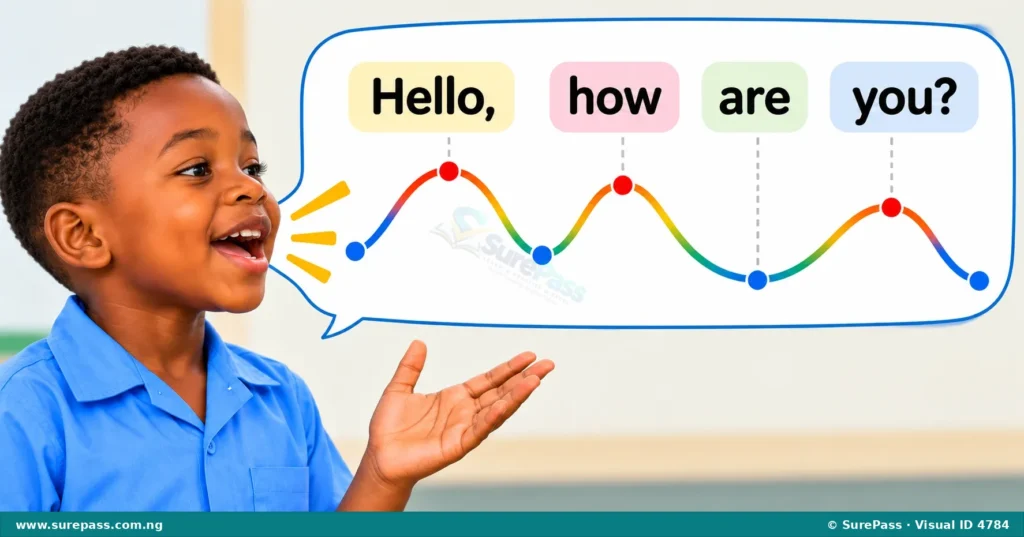
Intonation is the rise and fall of the voice when speaking. It is like the melody or song of speech. When people speak, their voices do not stay on one level. The voice goes up and down, making speech sound interesting and helping to convey meaning.
Imagine singing a song. The notes go high and low. In the same way, when a person speaks, their voice changes pitch. This change in pitch is what is called intonation.
Importance of Intonation
Intonation is very important in English because it helps listeners understand what a speaker means. It adds colour and clarity to speech. Without intonation, speech would sound flat and boring, and it would be difficult to understand the speaker’s true message.
The importance of intonation includes the following:
-
Helps express attitudes and emotions: Intonation shows how a speaker feels about what they are saying. The same words can sound happy, sad, angry, or excited just by changing the intonation.
For example, if someone says “Oh, really?” with a rising intonation, it might show surprise. If they say “Oh, really.” with a falling intonation, it might show doubt or disinterest.
-
Differentiates questions from statements: Intonation helps listeners know if a speaker is asking a question or making a statement. Often, questions have a different intonation pattern from statements.
For example, “You are going home.” (statement) sounds different from “You are going home?” (question).
-
Clarifies meaning in sentences: Intonation can change the entire meaning of a sentence, even if the words are exactly the same. It helps to show which part of a sentence is most important or what the speaker’s intention is.
For example, if someone says “I didn’t say he stole the money,” the meaning changes depending on which word is stressed by intonation.
Types of Intonation
There are two main types of intonation patterns in English:
- Rising intonation
- Falling intonation
Rising Intonation
Rising intonation means the pitch of the voice goes up at the end of a sentence or phrase. It makes the voice sound higher at the end.
Rising intonation is used in the following situations:
-
Yes/No Questions: When asking a question that can be answered with “yes” or “no”.
Examples:
- “Are you happy?” (The voice rises on “happy”.)
- “Is she coming?” (The voice rises on “coming”.)
- “Do you like oranges?” (The voice rises on “oranges”.)
-
Expressing doubt or uncertainty: When a speaker is not sure about something.
Example:
- “He passed the exam?” (The voice rises on “exam”, showing doubt.)
-
Incomplete thoughts or lists: When a speaker is listing items or has not finished speaking.
Example:
- “I bought bread, milk, and eggs.” (The voice rises on “bread” and “milk” but falls on “eggs”.)
Falling Intonation
Falling intonation means the pitch of the voice goes down at the end of a sentence or phrase. It makes the voice sound lower at the end.
Falling intonation is used in the following situations:
-
Statements: When making a normal statement or giving information.
Examples:
- “I am going to school.” (The voice falls on “school”.)
- “The sun is shining.” (The voice falls on “shining”.)
- “My name is Emeka.” (The voice falls on “Emeka”.)
-
Commands: When giving an instruction or order.
Examples:
- “Sit down.” (The voice falls on “down”.)
- “Close the door.” (The voice falls on “door”.)
- “Be quiet.” (The voice falls on “quiet”.)
-
WH-Questions: When asking questions that start with words like “who,” “what,” “where,” “when,” “why,” or “how.”
Examples:
- “What is your name?” (The voice falls on “name”.)
- “Where do you live?” (The voice falls on “live”.)
- “How old are you?” (The voice falls on “you”.)

Intonation and Meaning
Intonation plays a big role in changing the meaning of sentences. The same words can have different meanings depending on whether the voice rises or falls.
Consider the following examples:
-
“You’re coming.” (Statement)
When spoken with a falling intonation, this sentence is a simple statement of fact. The speaker is telling someone that they are coming.
-
“You’re coming?” (Question)
When spoken with a rising intonation, this sentence becomes a question. The speaker is asking if the person is indeed coming, perhaps expressing surprise or seeking confirmation.
Here are more examples:
-
“It’s raining.” (Statement)
With falling intonation, this is a simple report about the weather.
-
“It’s raining?” (Question)
With rising intonation, this shows surprise or disbelief that it is raining.
-
“He finished his homework.” (Statement)
With falling intonation, this is a simple statement of fact.
-
“He finished his homework?” (Question)
With rising intonation, this asks for confirmation or expresses surprise that he completed it.





0 comments
Open the discussion when you need it. Comments stay collapsed until requested so the initial article remains light.