



ARTICLE CONTENTSOn this page 8 sections
Economic Importance of Garment Making
Performance Objectives
By the end of the lesson, students should be able to:
- Discuss the economic importance of garment making to individuals, families, and the nation.
Meaning of Garment Making
Garment making is the process of designing, cutting, sewing, and finishing fabrics to create wearable clothing and accessories.
This field combines creative design skills with technical construction methods to meet the clothing needs of society. It ranges from small-scale custom tailoring to large-scale industrial apparel production.
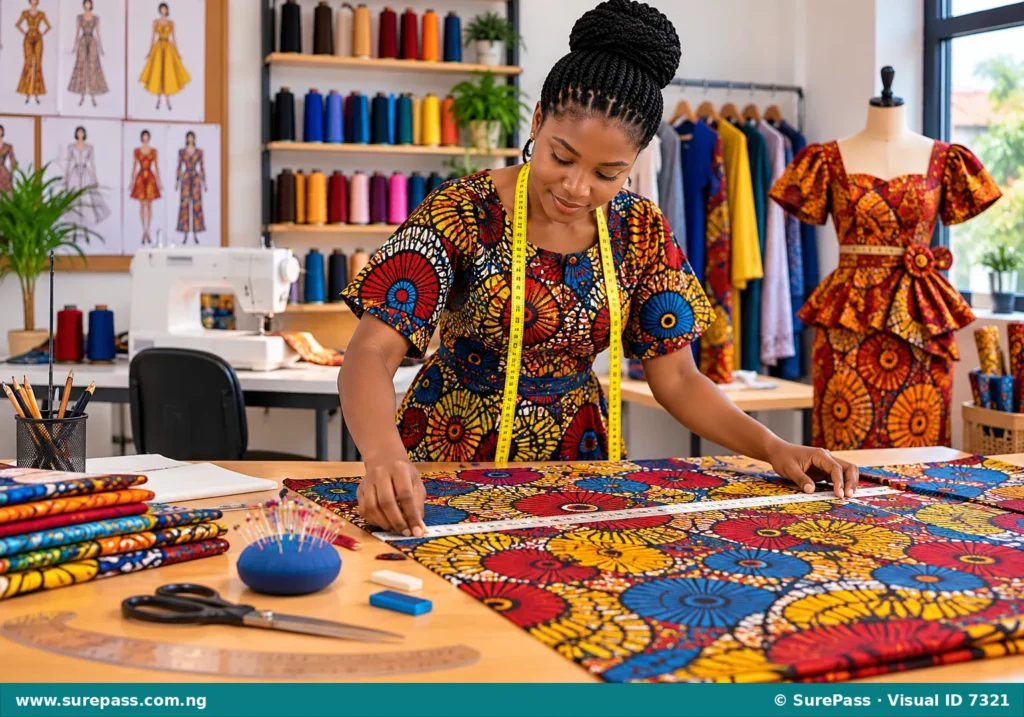
Observe the image below showing a professional garment making environment.
Economic Importance of Garment Making to Individuals
Garment making serves as a powerful tool for individual financial empowerment and career development. The specific economic benefits to individuals include:
- Job Creation and Employment: The fashion and apparel industry employs millions of people globally. Individuals can work as fashion designers, pattern draftspersons, tailors, cutting operators, quality control inspectors, or fashion illustrators.
- Income Generation: Establishing a fashion design enterprise allows individuals to earn steady income through custom dressmaking, garment alterations, and ready-to-wear sales. This income helps to secure personal financial stability.
- Skill Acquisition and Self-Reliance: Learning garment making equips an individual with practical, hands-on skills that are always in demand. This reduces dependency on formal white-collar employment and fosters self-reliance.
- Personal Savings: An individual who possesses garment-making skills can design, sew, and repair personal clothing. This eliminates the cost of hiring professional tailors, leading to significant personal savings.
Economic Importance of Garment Making to the Family
The family unit benefits directly from the garment-making industry in several ways. These benefits include:
- Reduction in Household Expenditure: Families with members who can sew can produce school uniforms, casual wear, and ceremonial outfits internally. This drastically reduces the household budget allocated to clothing.
- Family-Owned Businesses: Garment making is highly adaptable to home-based operations. A family can establish a small-scale tailoring workshop within the home, providing employment and collective income for family members.
- Wealth Transfer and Skill Inheritance: Garment-making skills can be passed down from parents to children. This intergenerational transfer of skills ensures that the family maintains a sustainable means of livelihood over time.
- Meeting Emergency Clothing Needs: Families can quickly address urgent clothing repairs or adjustments without spending money on external services, ensuring that resources are preserved for other essential needs like education and healthcare.
Observe the diagram below showing the flow of economic benefits from garment making.
Economic Importance of Garment Making to the Nation
On a macro-economic level, garment making is a key driver of industrialization and national development, particularly in developing economies like Nigeria. The contributions to the nation include:
- Contribution to Gross Domestic Product (GDP): The textile, apparel, and footwear sector contributes a notable percentage to Nigeria’s manufacturing GDP. The continuous production and sale of garments stimulate internal economic activities.
- Foreign Exchange Earnings: Exporting traditional Nigerian garments made from local fabrics such as Adire, Aso-Oke, and Ankara to international markets generates foreign exchange. This strengthens the national currency and improves the balance of trade.
- Reduction in Import Dependency: A robust local garment-making industry reduces the nation’s reliance on imported ready-to-wear clothing and second-hand garments. This preservation of capital keeps wealth circulating within the local economy.
- Development of the Agricultural and Industrial Sectors: The demand for garments drives the growth of cotton farming, ginning, spinning, weaving, and textile manufacturing. This linkage boosts the agricultural sector and encourages industrialization.
- Preservation and Commercialization of Culture: Garment making allows Nigeria to package and export its rich cultural heritage. Traditional designs are modernized and sold globally, turning cultural identity into a highly lucrative national economic asset.
The Garment Making Value Chain
The economic impact of garment making is felt across multiple industries. This interconnected network is known as the value chain.
The key stages of the garment making value chain are:
- Agricultural Production: Cultivating cotton and rearing silk worms to produce raw natural fibers.
- Textile Manufacturing: Processing raw fibers into yarns and weaving or knitting them into finished fabrics.
- Garment Design and Production: Designing, pattern drafting, cutting, and sewing fabrics into finished apparel.
- Marketing and Distribution: Transporting, wholesaling, retailing, and branding finished garments for consumers.
Review Questions
To assess understanding of this unit, answer the following questions:
- Define garment making.
- State three economic benefits of garment making to an individual.
- Explain how garment making can help a family reduce its monthly expenditure.
- Discuss three ways the garment-making industry contributes to the national economy of Nigeria.
- Identify the four major stages of the garment making value chain.




0 comments
Open the discussion when you need it. Comments stay collapsed until requested so the initial article remains light.