



ARTICLE CONTENTSOn this page 9 sections
Safety Precautions in Garment Making
Performance Objectives
By the end of the lesson, students should be able to:
- discuss the general safety precautions in garment making;
- list and explain the use of safety tools and equipment in garment workshop;
- describe first aid treatment suitable for victim of accidents such as electric shocks, cuts, sprains, and burns.
Importance of Safety Precautions in a Garment Workshop
Safety precautions are preventive measures taken to avoid accidents, injuries, and hazards in a specific environment.
A garment workshop is filled with various tools, equipment, and machinery that can pose significant risks if handled carelessly. Sharp cutting tools, high-speed sewing machines, hot pressing irons, and electrical connections are all potential sources of accidents. Understanding and implementing safety precautions is essential for several reasons.
The primary reasons why knowledge of safety precautions is necessary in a garment workshop include:
- Prevention of Physical Injuries: Proper safety knowledge prevents cuts from shears, needle punctures from sewing machines, and burns from pressing irons.
- Protection of Equipment and Materials: Safe handling of machinery prevents breakdowns, reduces wear and tear, and protects fabrics from damage caused by oil spills or scorching.
- Prevention of Fire Outbreaks: Garment workshops contain highly flammable materials such as fabrics, paper patterns, and thread. Safety knowledge helps prevent electrical overloads and improper storage of combustible materials.
- Creation of an Efficient Work Environment: A safe workshop reduces downtime caused by accidents, boosts the confidence of the workers, and increases overall productivity.
General Safety Precautions in Garment Making
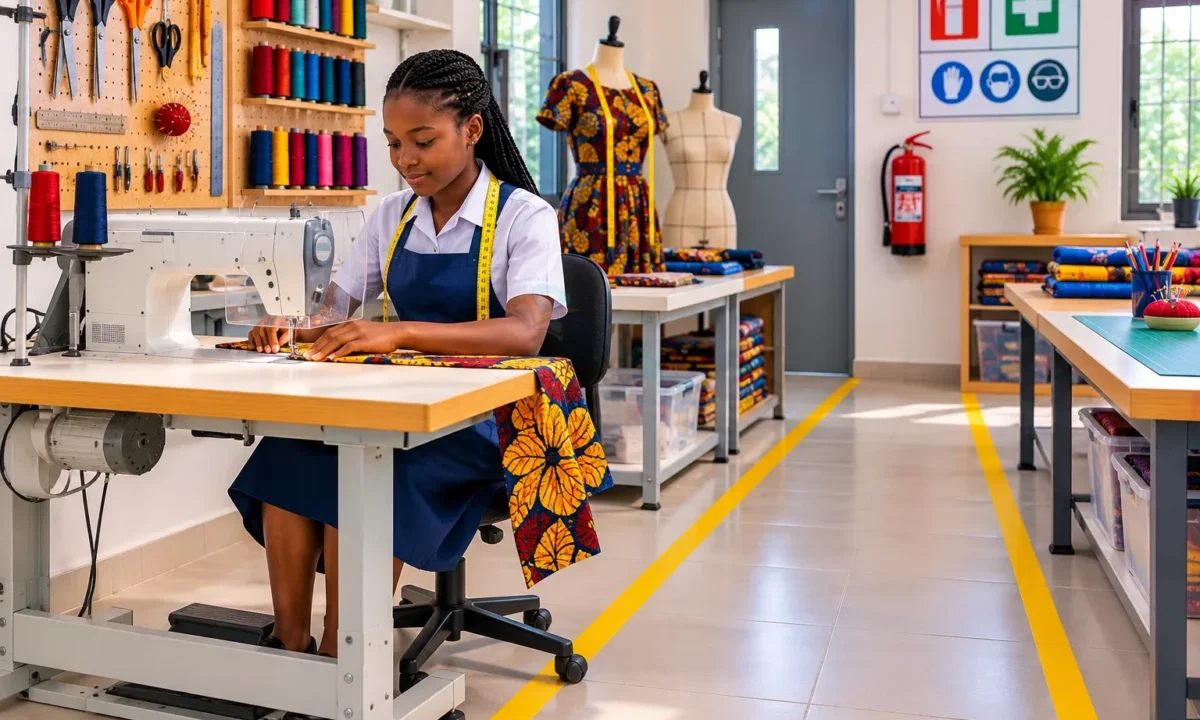
Safety precautions in a garment workshop can be categorized into personal safety, tool and machine safety, and environmental safety.
Personal Safety Precautions
Personal safety precautions focus on the habits and clothing of the individual working in the workshop. The guidelines for personal safety include:
- Avoid wearing loose clothing, dangling jewellery, or wide sleeves that can easily get caught in moving machine parts.
- Tie long hair back securely to prevent it from being drawn into the sewing machine motor or needle bar.
- Wear closed-toe shoes at all times to protect the feet from falling shears, pins, or heavy equipment.
- Avoid eating, drinking, or keeping liquids near sewing machines and cutting tables to prevent spills and electrical hazards.
- Maintain a correct sitting posture while sewing to prevent backaches, neck strain, and long-term spinal issues.
Machine and Tool Safety Precautions
Machinery and sharp tools require strict handling guidelines to prevent severe injuries. The precautions include:
- Always turn off and unplug the sewing machine before threading, changing the needle, or performing any maintenance.
- Keep fingers at a safe distance from the needle and use needle guards where available.
- Pass sharp tools, such as shears or seam rippers, to another person by holding the blades and presenting the handle first.
- Do not hold pins or needles in the mouth, as they can easily be swallowed or cause mouth injuries.
- Disconnect the pressing iron immediately after use and place it upright on its heel or on a designated heat-resistant stand.
Workshop Environment Safety Precautions
The physical layout and condition of the workshop must support safe operations. Environmental safety guidelines include:
- Keep the workshop floor clean and free of fabric scraps, thread, pins, and oil spills to prevent slips, trips, and falls.
- Ensure the workshop is well-ventilated and adequately illuminated to reduce eye strain and maintain fresh air circulation.
- Keep walkways, corridors, and emergency exits completely clear of boxes, tables, or sewing machines.
- Store all sharp tools in designated cases or magnetic pin cushions when they are not in active use.
- Inspect electrical cords regularly for fraying or damage, and avoid overloading electrical sockets with too many plugs.
Safety Tools and Equipment in a Garment Workshop
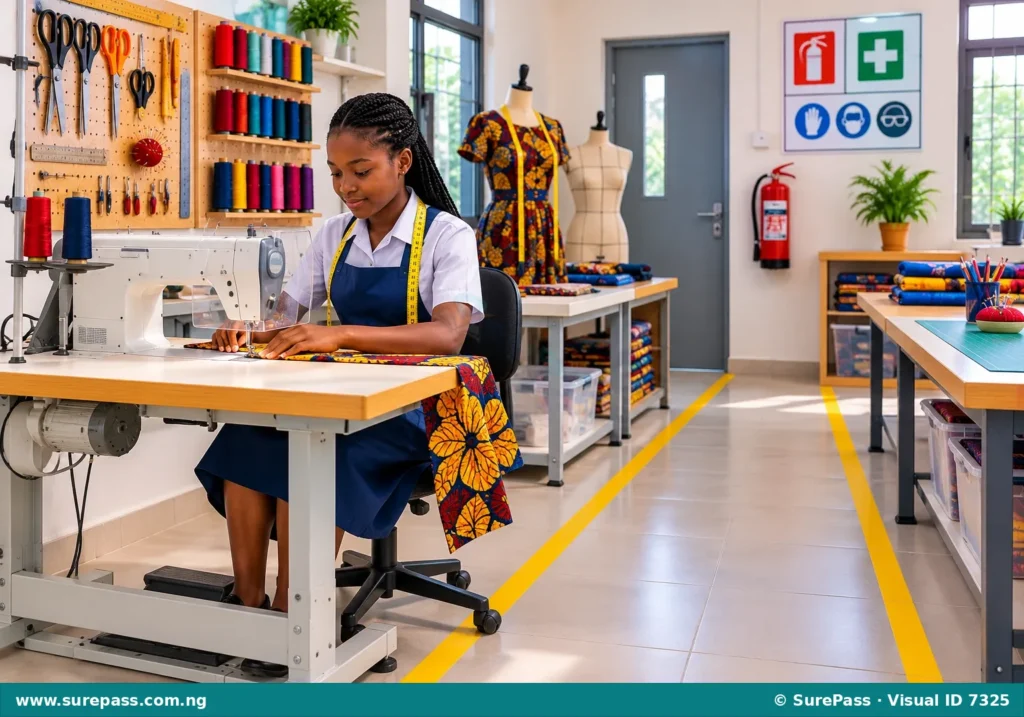
A garment workshop must be equipped with specific safety tools and equipment to prevent accidents and manage emergencies when they occur.
The essential safety tools and equipment in a garment workshop include:
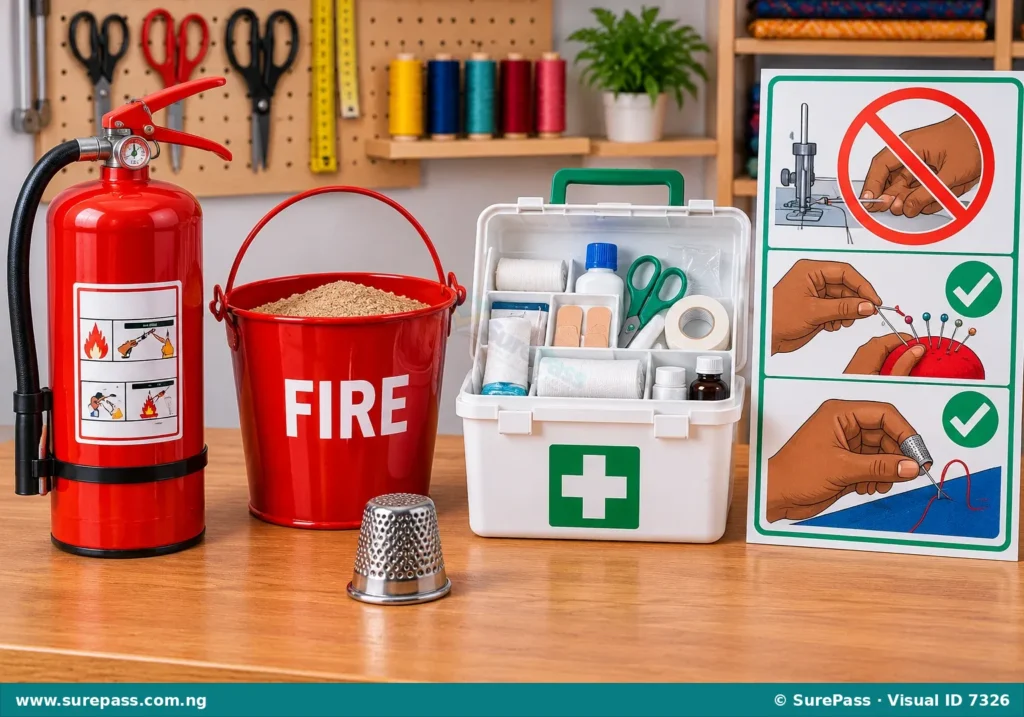
- Fire Extinguisher: This is a device used to put out small fires in an emergency. In a garment workshop, a dry chemical or carbon dioxide (CO2) extinguisher is suitable for tackling electrical fires and fires involving fabrics or paper.
- Sand Bucket: This is a bucket filled with dry sand, used to smother small fires, especially those caused by oil, grease, or electrical faults where water cannot be used.
- Safety Posters: These are visual displays placed on workshop walls to remind workers of safety rules, emergency exit routes, correct posture, and first aid procedures.
- First Aid Box: This is a container holding essential medical supplies used to give immediate treatment to an injured person before professional medical help is obtained.
- Thimble: This is a small metal or plastic cap worn on the finger to protect it from being pricked by a hand-sewing needle when pushing it through tough fabric.
- Finger Guards and Needle Guards: These are protective attachments fitted onto sewing machines to prevent the operator’s fingers from accidentally sliding under the moving needle.
- Safety Goggles: These are protective eyewear worn when operating heavy-cutting machinery or during machine maintenance to protect the eyes from flying needle fragments or fabric dust.
First Aid Treatment in Garment Making
First aid is the immediate and temporary care given to an injured or suddenly ill person before professional medical assistance arrives.
In a garment workshop, quick and correct application of first aid can prevent minor injuries from becoming major complications. Every workshop must have a fully stocked first aid box located in an easily accessible position.
The standard contents of a garment workshop first aid box include:
- Adhesive bandages (plasters) of various sizes for covering small cuts.
- Sterile gauze pads and bandages to dress larger wounds.
- Antiseptic liquid or wipes to clean wounds and prevent infection.
- Adhesive tape to secure dressings in place.
- A pair of tweezers to remove splinters or small debris.
- A pair of scissors to cut bandages and tape.
- Burn ointment or soothing gel for minor burns.
- Pain relief tablets (such as paracetamol).
- Disposable medical gloves to protect the first aider from contamination.
How to Apply First Aid for Specific Workshop Accidents
This section outlines the step-by-step procedures for treating common accidents that occur in a garment workshop, including electric shocks, cuts, sprains, and burns.
How to Treat Electric Shock
Electric shocks can occur from faulty sewing machine wiring, damaged iron cords, or overloaded sockets. Immediate and careful action is required to save the victim without putting the rescuer in danger.
The procedure for treating electric shock involves the following steps:
- Do not touch the victim if they are still in contact with the electrical source, as the current can pass through to the rescuer.
- Turn off the main power source or unplug the machine immediately.
- If the power source cannot be turned off quickly, use a dry, non-conducting object (such as a wooden broom handle, dry wooden stick, or plastic rod) to push the victim away from the electrical source.
- Once the victim is safe, check if they are breathing and conscious.
- If the victim is unconscious but breathing, place them in the recovery position (on their side) and call for medical help.
- If the victim is not breathing, perform Cardiopulmonary Resuscitation (CPR) immediately if trained to do so, and seek urgent medical assistance.
- Treat any visible electrical burns with cool water and cover them with a clean, dry cloth.
How to Treat Cuts and Needle Punctures
Cuts from shears, rotary cutters, or seam rippers, and punctures from sewing machine needles are common injuries in garment making.
The procedure for treating cuts and needle punctures involves the following steps:
- Wash hands thoroughly or put on disposable medical gloves before touching the wound.
- Apply gentle, direct pressure to the wound using a clean cloth or sterile gauze pad to stop the bleeding.
- Once the bleeding stops, clean the wound by rinsing it under cool, clean running water to remove dirt.
- Gently clean the skin around the wound with mild soap and water, avoiding getting soap directly in the wound.
- Apply a thin layer of antiseptic cream or ointment to prevent infection.
- Cover the wound with a sterile adhesive bandage or a sterile gauze pad secured with adhesive tape.
- If the cut is deep, will not stop bleeding, or contains embedded debris (such as a broken needle piece), seek professional medical treatment immediately.
How to Treat Sprains
Sprains occur when ligaments supporting a joint are stretched or torn, often due to tripping over cords, slipping on fabric scraps, or falling in the workshop.
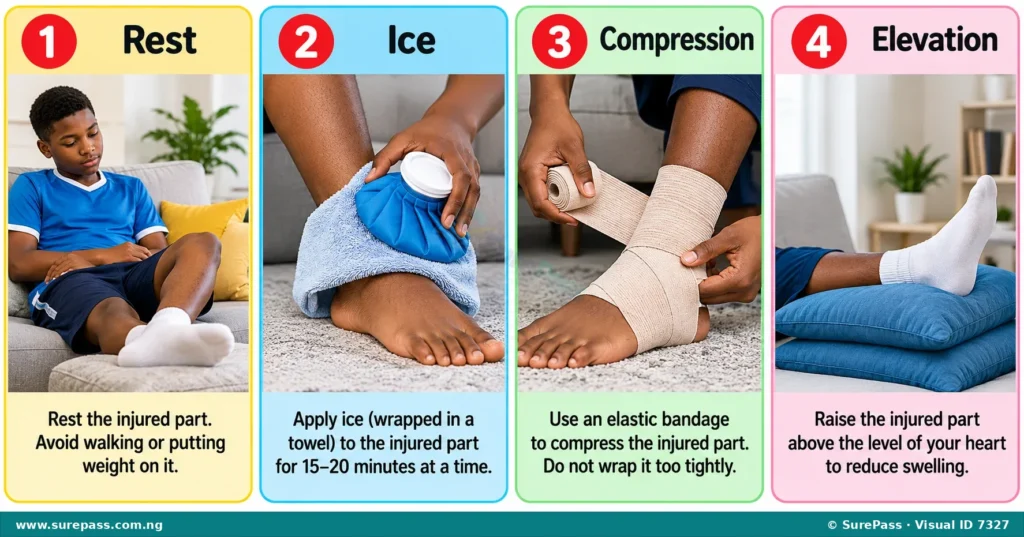
The procedure for treating a sprain follows the R.I.C.E. method, which involves the following steps:
- Rest: Keep the injured joint still and avoid putting weight or pressure on it.
- Ice: Apply a cold pack or ice wrapped in a clean towel to the injured area for 15 to 20 minutes at a time to reduce swelling. Do not apply ice directly to the skin.
- Compression: Wrap the injured joint firmly but gently with an elastic bandage to support it and limit swelling. Ensure the bandage is not wrapped too tightly, which could restrict blood flow.
- Elevation: Prop up the injured limb on a cushion or folded fabric so that it rests above the level of the heart to help drain fluid away from the injury.
How to Treat Burns and Scalds
Burns in a garment workshop are usually caused by touching hot pressing irons, steam from steam irons, or hot glue guns.
The procedure for treating minor burns involves the following steps:
- Cool the burn immediately by holding the injured area under cool, gently running water for at least 10 to 15 minutes. Do not use ice, ice water, or greasy substances like butter or oil, as these can trap heat and damage the tissue further.
- Remove any rings, bracelets, or tight clothing from the burned area gently before swelling begins. Do not remove clothing that is stuck to the burn.
- Do not break any blisters that form, as intact blisters protect the wound from infection.
- Apply a thin layer of burn ointment or pure aloe vera gel if the skin is not broken.
- Cover the burn loosely with a sterile, non-stick gauze bandage to protect it from air and friction.
- If the burn is large, deep, affects the face or hands, or is caused by chemical or electrical sources, seek immediate medical attention.
Summary of First Aid Actions
The table below summarizes the common accidents in a garment workshop and the immediate first aid actions required.
| Accident Type | Common Cause in Workshop | Immediate First Aid Action |
|---|---|---|
| Electric Shock | Faulty machine cords, overloaded sockets | Turn off power, separate victim using non-conductive wood/plastic, check breathing. |
| Cuts / Punctures | Shears, rotary cutters, machine needles | Apply pressure to stop bleeding, clean with water, apply antiseptic, and cover with plaster. |
| Sprains | Tripping over cords, slipping on fabric scraps | Apply the R.I.C.E. method (Rest, Ice, Compression, Elevation). |
| Burns | Hot pressing irons, steam, hot glue guns | Cool under running water for 10-15 minutes, cover loosely with sterile gauze. Do not apply ice or grease. |
Review Questions
The following questions are designed to test the understanding of safety precautions and first aid in the garment workshop:
- Explain why a thorough knowledge of safety precautions is necessary for anyone working in a tailoring or garment workshop.
- List four personal safety precautions that a garment maker must observe before operating a sewing machine.
- Identify three safety tools or equipment found in a garment workshop and explain the specific use of each.
- Describe the step-by-step first aid treatment for a student who has sustained a minor cut from a pair of cutting shears.
- What does the acronym R.I.C.E. stand for in the treatment of sprains? Explain each step briefly.
- State the immediate action that must be taken when a person is suffering from an active electric shock in the workshop.





0 comments
Open the discussion when you need it. Comments stay collapsed until requested so the initial article remains light.