



ARTICLE CONTENTSOn this page 8 sections
Career Opportunities in Garment Making
Performance Objectives
By the end of the lesson, students should be able to:
- explain the terms: fashion, fashion design, garment, and garment making;
- discuss reasons for wearing garments;
- identify types of careers and determine how to choose a career in garment making: fashion designing, tailoring, merchandizing, pattern making, and others.
Concepts in Fashion and Garment Making
Understanding the fashion and clothing industry requires a clear grasp of foundational terms. Although these terms are closely related, they represent distinct concepts, processes, and professional roles.
Meaning of Fashion
Fashion is the prevailing style of clothing, behavior, or ideas that is popular at a particular time.
Fashion is dynamic and constantly changes influenced by culture, technology, economy, and social trends. It is not limited to clothing but extends to footwear, accessories, makeup, and lifestyle habits. In Nigeria, fashion trends can be seen in the changing styles of traditional attires such as Ankara, Lace, and Senator styles.
Meaning of Fashion Design
Fashion design is the art of applying design, aesthetics, and natural beauty to clothing and its accessories.
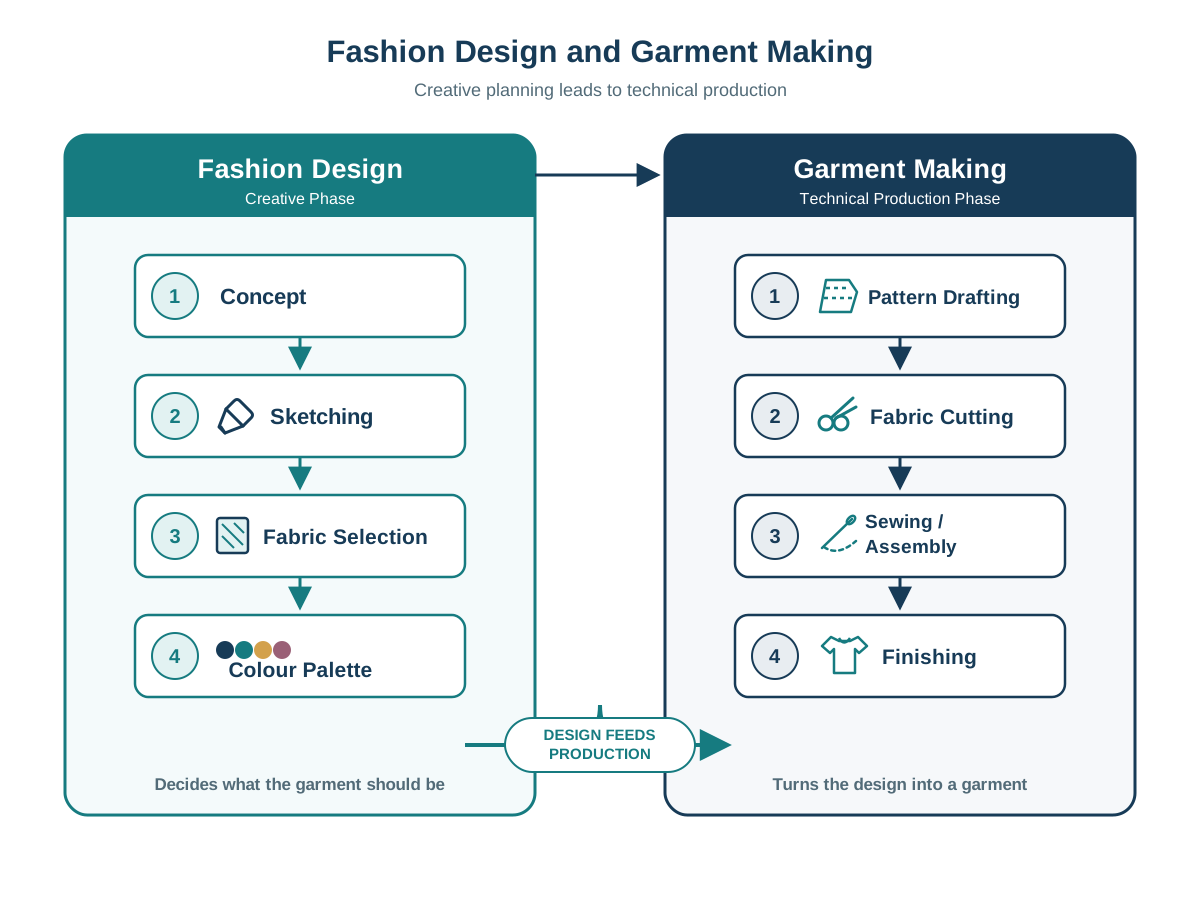
Fashion design involves conceptualizing ideas, sketching designs, selecting colors, choosing fabrics, and planning how a finished article of clothing will look. It is a creative process that requires an understanding of consumer preferences, artistic trends, and textile properties.
Meaning of a Garment
A garment is any article of clothing worn on the human body.
Garments include items such as shirts, trousers, dresses, skirts, jackets, and traditional robes like Agbada or Buba and Gele. Garments are made from various textile materials, including woven, knitted, or non-woven fabrics.
Meaning of Garment Making
Garment making is the process of cutting, sewing, and finishing fabric to create wearable clothing.
Garment making is the practical, technical execution of a design. It involves taking body measurements, drafting or using commercial patterns, laying out and cutting fabric, assembling the pieces using sewing machines, and applying finishing touches such as hems, buttons, and zippers.
Distinction Between Fashion Design and Garment Making
While fashion design and garment making are closely linked, they represent different stages in the production of clothing. Fashion design is primarily conceptual and creative, focusing on the visual appeal, style, and planning of the clothing. In contrast, garment making is technical and physical, focusing on the actual construction, assembly, and production of the physical clothing item from raw fabric.
Reasons for Wearing Garments
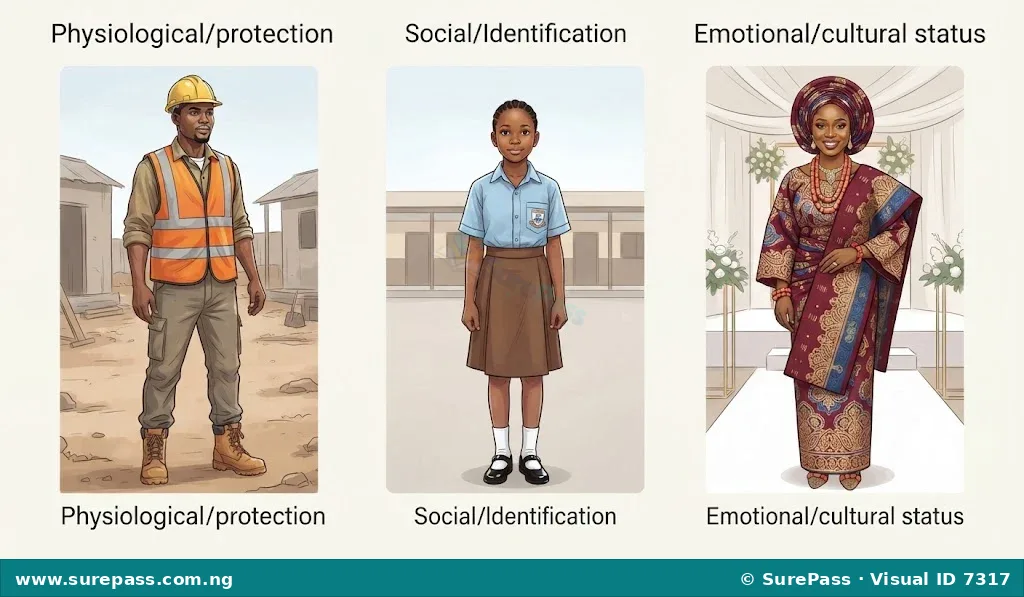
Humans wear garments for several essential reasons. These reasons can be classified into physiological, emotional, and social categories.
Physiological Reasons
Physiological reasons relate to the physical needs of the human body, particularly protection and comfort.
The primary physiological reasons for wearing garments include:
- Protection from environmental conditions: Garments shield the human body from extreme weather conditions such as intense heat from the sun, cold winds, rain, and dust. For example, thick woolen sweaters are worn during cold harmattan periods, while light cotton clothing is preferred during hot seasons.
- Protection from physical hazards: Garments protect the skin from cuts, scratches, insect bites, and harmful chemicals. Workers in factories wear overalls, while medical personnel wear scrubs and gowns for protection against infections.
- Hygiene and sanitation: Undergarments absorb sweat and body oils, preventing them from staining outer clothing and helping to maintain personal hygiene.
Emotional and Psychological Reasons
Emotional and psychological reasons relate to how garments affect a person’s feelings, self-perception, and mental well-being.
The main emotional and psychological reasons include:
- Modesty: Garments are worn to cover private parts of the body in accordance with personal, religious, or societal standards of decency.
- Self-expression: Clothing allows individuals to express their personality, mood, and personal taste. A person may wear bright colors to express happiness or specific styles to show individuality.
- Confidence and self-esteem: Wearing well-fitted, clean, and attractive garments enhances a person’s confidence and self-worth, making them feel comfortable in public spaces.
Social Reasons
Social reasons relate to how garments help individuals interact with others and fit into specific groups or cultures.
The major social reasons include:
- Identification and role definition: Garments help identify a person’s profession, status, or group membership. Examples include school uniforms, military uniforms, and police attire.
- Cultural and religious conformity: Garments are used to show respect for cultural heritage and religious beliefs. For instance, traditional Nigerian attires like the Yoruba Aso-Oke, Igbo Isiagu, or Hausa Babariga are worn during cultural festivals and ceremonies.
- Status and prestige: High-quality, expensive, or designer garments are often worn to indicate wealth, social class, or high status within a community.
Careers in Garment Making
A career is an occupation or profession undertaken for a significant period of a person’s life and with opportunities for progress.
The garment-making industry offers a wide range of career opportunities, ranging from creative design to technical production and commercial sales.
Types of Careers in Garment Making
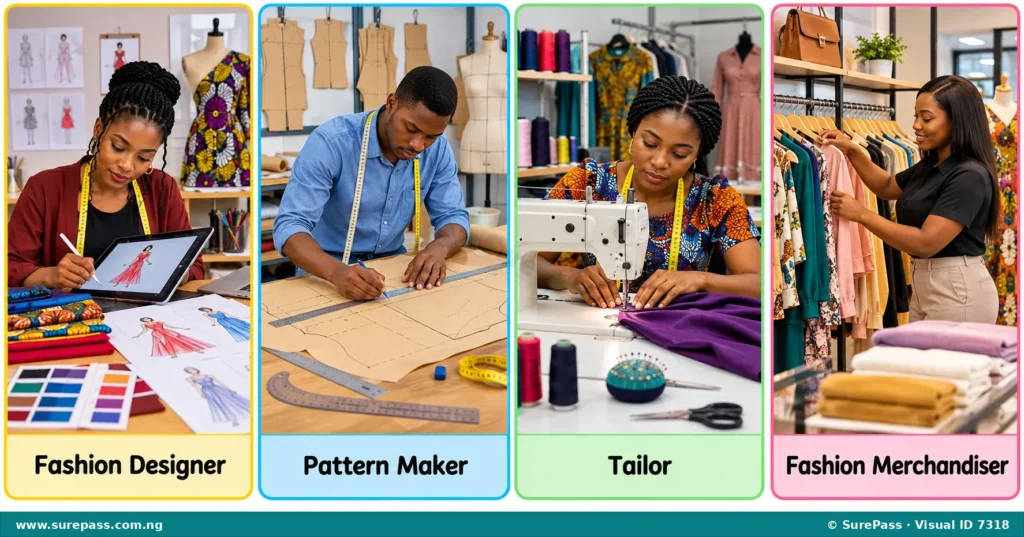
The key professional roles in the garment-making industry are:
- Fashion Designer: A professional who creates original ideas, sketches designs, selects fabrics and patterns, and directs the production of clothing and accessories. Fashion designers anticipate consumer trends and create collections for specific seasons.
- Tailor or Dressmaker: A skilled technician who cuts, sews, alters, and repairs garments. Tailors generally specialize in men’s clothing (such as suits and trousers), while dressmakers specialize in women’s apparel. They work directly with clients to create custom-fitted clothing.
- Pattern Maker: A specialist who translates a fashion designer’s sketch into physical templates or patterns. These patterns are used as guides to cut fabric pieces accurately before they are sewn together. Pattern making can be done manually or using Computer-Aided Design (CAD) software.
- Fashion Merchandiser: A professional who manages the business side of fashion. Merchandisers analyze market trends, buy fabric and finished garments, plan inventory, and set prices to ensure that the right clothing is available to consumers at the right time.
- Fashion Illustrator: An artist who creates visual representations of clothing designs through drawings, paintings, or digital art. These illustrations are used in design houses, magazines, and advertisements.
- Quality Control Inspector: A technician who examines finished garments to ensure they meet specific standards of construction, size, stitching, and overall quality before they are packaged and sold.
Choosing a Career in Garment Making
Choosing a career is a critical decision that shapes a person’s future. Success in the garment-making industry requires matching personal attributes with the demands of specific roles.
Factors to Consider When Choosing a Career
When determining the most suitable career path in garment making, several factors must be evaluated:
- Interest and Passion: A genuine love for fashion, fabrics, and clothing construction is essential to sustain motivation and creativity over time.
- Skills and Aptitude: Different careers require different skills. For example, fashion design requires strong artistic and creative skills, pattern making requires mathematical accuracy and spatial awareness, while tailoring requires excellent hand-eye coordination and sewing skills.
- Educational Requirements and Training: Some careers, such as fashion merchandising or industrial pattern making, may require formal degrees or diplomas from fashion institutes, while tailoring can be learned through apprenticeship programs.
- Market Demand and Job Opportunities: It is important to research the availability of jobs or the potential for self-employment in the chosen field within the local and international market.
- Financial Resources: Some career paths, such as starting a large-scale fashion brand, require significant capital for machinery, rent, and materials, while other roles, like freelance illustration, require minimal initial investment.
Steps to Determine and Choose a Career
The process of choosing a career involves the following steps:
- Conduct a self-assessment to identify personal strengths, interests, and skills.
- Research different career options in the garment industry to understand their daily duties and work environments.
- Acquire relevant education, vocational training, or apprenticeship experience in the chosen area.
- Seek mentorship from established professionals in the fashion and garment-making industry.
- Gain practical experience through internships, workshops, or personal projects to build a professional portfolio.
Summary
The garment-making industry is a diverse field that combines artistic creativity with technical skills. Garments serve vital physiological, emotional, and social purposes, protecting the body while allowing for self-expression and cultural identification. By understanding the various career paths—such as fashion design, tailoring, pattern making, and merchandising—and evaluating personal interests and skills, individuals can make informed decisions to build successful careers in this industry.
Questions for Evaluation
Answer the following questions to test your understanding of the lesson:
- Explain the difference between fashion design and garment making.
- Describe three ways garments protect the human body from environmental conditions.
- List and explain four career opportunities available in the garment-making industry.
- State four factors that should be considered when choosing a career in garment making.
- Identify the professional in the garment industry who is responsible for translating a designer’s sketch into physical templates.





0 comments
Open the discussion when you need it. Comments stay collapsed until requested so the initial article remains light.