



ARTICLE CONTENTSOn this page 7 sections
Packaging and Exhibition of Products
Performance Objectives
By the end of the lesson, students should be able to:
- explain the meaning of packaging and exhibition;
- identify the materials for packaging and exhibition;
- package products attractively for exhibition.
Concept of Packaging and Exhibition
Meaning of Packaging
Packaging is the art and technology of wrapping, packing, or enclosing garments and fashion items in suitable containers or materials for protection, storage, and presentation.
In fashion design and garment making, packaging is the final touch given to a finished article before it is delivered to a client or displayed for sale. It serves as the first point of contact between the customer and the product, making it a critical element of presentation.
The purposes of packaging in garment making include:
- Protection: It shields garments from dust, moisture, dirt, grease, and physical damage during transportation and storage.
- Preservation: It maintains the ironed state, shape, and quality of the garment, preventing wrinkles and creases.
- Identification: It provides essential information about the garment, such as size, fabric care instructions, brand name, and price through labels and tags.
- Attraction: It enhances the visual appeal of the product, making it look professional, high-quality, and appealing to potential buyers.
Meaning of Exhibition
An exhibition is a public display of items, garments, or creative works organized to showcase skills, attract customers, and promote products.
In the context of fashion design, an exhibition provides a platform for tailors, pattern makers, and fashion designers to present their finished works to an audience. This audience may include school administrators, parents, industry professionals, and potential clients. Exhibitions can take place in school halls, community centres, fashion runways, or retail showrooms.
The purposes of an exhibition in garment making include:
- Showcasing Skills: It allows students and designers to demonstrate their technical abilities, creativity, and neatness in garment construction.
- Marketing and Sales: It serves as an avenue to promote fashion businesses, attract new clients, and sell finished garments.
- Feedback Collection: It provides an opportunity to receive constructive criticism and praise from viewers, which helps in improving future designs.
- Education: It inspires other students and fashion enthusiasts by exposing them to different styles, fabric combinations, and sewing techniques.
Materials for Packaging and Exhibition
Selecting the right materials is essential to ensure that garments are both well-protected and beautifully presented. Different materials are used depending on whether the goal is packaging for delivery or setting up an exhibition display.
Materials for Packaging
Packaging materials must be clean, durable, and appropriate for the type of garment being packaged.
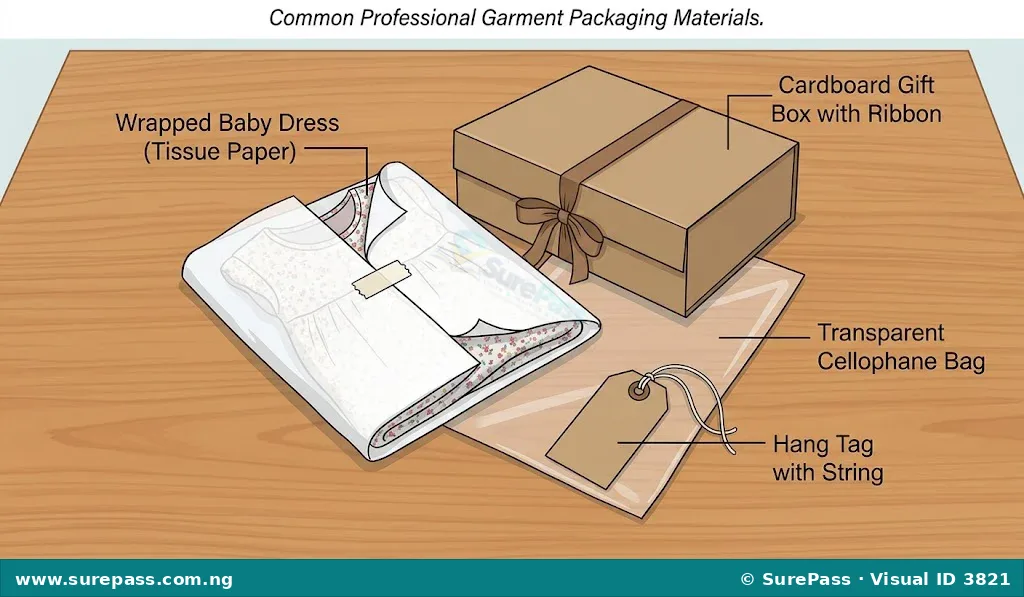
Common materials used for packaging garments include:
- Garment Bags: These are long, protective covers made of plastic or breathable fabric, used to protect hanging garments like dresses, suits, and gowns from dust and moisture.
- Cardboard Boxes: These are sturdy boxes of various sizes used to pack folded garments such as shirts, baby dresses, and native wear. They can be customized with brand logos.
- Acid-Free Tissue Paper: This is soft, thin paper used to wrap delicate garments before placing them in boxes. It prevents friction, color transfer, and creasing.
- Cellophane Wraps: These are transparent plastic sheets used to wrap folded items tightly, allowing the customer to see the product while keeping it clean.
- Ribbons and Decorative Cords: These are used to tie packaged boxes or tissue-wrapped garments, adding an elegant and premium feel to the presentation.
- Hang Tags and Labels: These are small cards attached to the garment containing the brand name, size, price, and fabric care instructions.
- Carrier Bags: These are paper or plastic bags with handles, used to hand over the packaged product to the customer.
Materials for Exhibition and Display
Exhibition materials are tools and equipment used to present garments and related design projects in an organized and visually appealing manner.
Common materials used for exhibitions include:
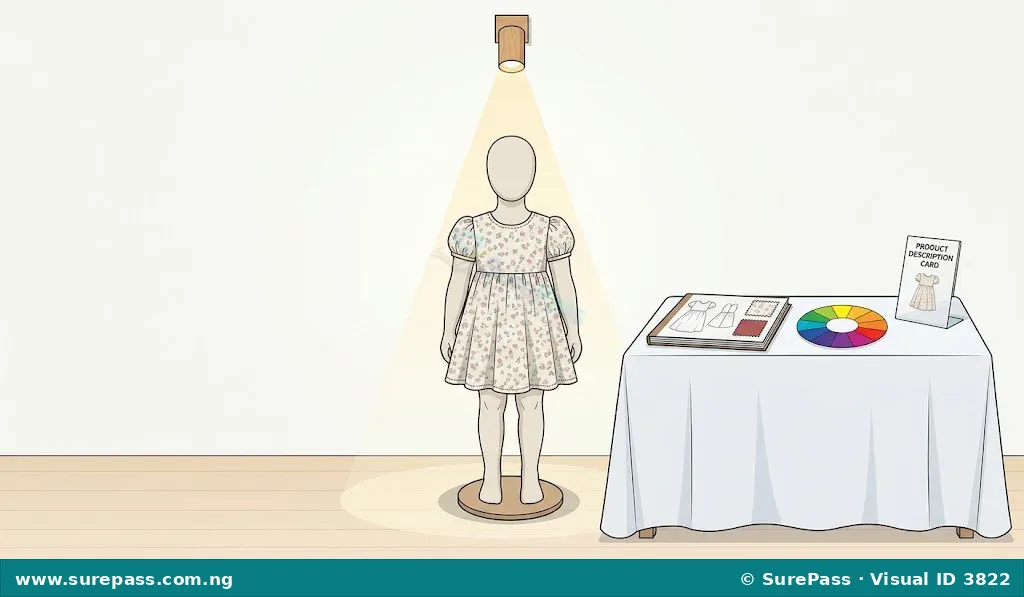
- Mannequins and Dress Forms: These are three-dimensional model figures of the human body used to display garments, showing how the clothes fit and drape on a real person.
- Clothes Racks and Hangers: Racks are metal or wooden stands used to hang multiple garments on hangers, allowing viewers to browse through the collection easily.
- Display Tables and Tablecloths: Tables are used to present folded garments, design albums, colour wheels, and small accessories. Clean, neutral-coloured tablecloths are used to cover the tables to create a professional look.
- Display Boards: These are vertical boards used to pin up design sketches, fabric swatches, fashion albums, and the colour wheel.
- Spotlights and Lighting: Adjustable lamps or spotlights are used to illuminate the display area, highlighting the details, textures, and colours of the garments.
- Product Description Cards: These are small, neatly printed cards placed next to each exhibited item, stating the name of the garment, the designer, the fabric used, and the inspiration behind the design.
How to Package and Display Products for Exhibition
The process of preparing garments for an exhibition requires careful planning, neatness, and attention to detail. Properly packaged and displayed items reflect high standards of workmanship.
How to Package a Baby Dress for Exhibition
A baby dress is a delicate item that must be packaged carefully to maintain its shape and appeal.
The procedure for packaging a baby dress involves the following steps:
- Inspect the garment: Ensure all loose threads are trimmed, buttons are securely sewn, and there are no stains or dirt on the dress.
- Iron the dress: Press the baby dress thoroughly using an electric iron set to the correct temperature for the fabric type. Allow it to cool completely to prevent moisture buildup.
- Fold the dress neatly: Place the dress face down on a clean surface. Fold the sleeves and sides inward, then fold the skirt section upward to form a neat rectangle.
- Wrap in tissue paper: Place the folded dress on a sheet of acid-free tissue paper. Fold the paper over the dress neatly to protect the fabric.
- Place in a packaging box: Gently lift the wrapped dress and place it inside a clean, appropriately sized cardboard box.
- Attach the label: Place a hang tag or label on the dress or secure it to the outside of the box, showing the product details.
- Secure the package: Close the box and tie a decorative ribbon around it in a neat bow.
How to Set Up an Exhibition Display
An exhibition display must be arranged in a way that attracts viewers and allows them to appreciate the details of each product.
The procedure for setting up an exhibition display involves the following steps:
- Clean the exhibition space: Sweep and dust the display area, tables, and racks to ensure a spotless environment.
- Drape the display tables: Cover the tables with clean, ironed tablecloths that complement the colours of the exhibited items.
- Position the mannequins: Place mannequins wearing the key garments (such as a baby dress) in prominent positions where they can be easily seen from different angles.
- Arrange hanging items: Hang other garments neatly on clothes racks using matching hangers. Ensure there is adequate spacing between the garments so they do not look crowded.
- Display flat items and albums: Place design albums, colour wheels, and flat textile samples neatly on the display tables.
- Place description cards: Position a product description card next to each item, ensuring the text is clear and easy to read.
- Adjust the lighting: Direct spotlights or lamps toward the mannequins and key display areas to enhance visibility and highlight the fabric textures.
- Conduct a final inspection: Walk through the display area to ensure everything is balanced, stable, and visually appealing.
Summary of Packaging and Exhibition Guidelines
To achieve the best results during a school exhibition, certain standards must be maintained. The table below outlines the key differences between packaging and exhibition activities.
| Feature | Packaging Activity | Exhibition Activity | |
|---|---|---|---|
| Primary Focus | Enclosing and protecting individual garments. | Presenting and showcasing garments to an audience. | |
| Key Materials Used | Tissue paper, boxes, cellophane, ribbons, hang tags. | Mannequins, clothes racks, display tables, spotlights. | |
| Garment State | Folded neatly or placed in protective garment bags. | Draped on mannequins or hung openly on racks. | |
| Main Goal | Safe delivery, preservation, and professional branding. | Visual attraction, skill demonstration, and marketing. |
Evaluation Guide
To assess understanding and practical skills, students should perform the following tasks:
- Explain the difference between packaging and exhibition in garment making.
- List four packaging materials and three exhibition materials used in the fashion industry.
- Package a finished baby dress neatly using tissue paper, a box, and a ribbon.
- Set up a group exhibition table displaying a colour wheel, a design album, and a packaged garment.





0 comments
Open the discussion when you need it. Comments stay collapsed until requested so the initial article remains light.