



ARTICLE CONTENTSOn this page 8 sections
Management of e-Waste
Performance Objectives
By the end of the lesson, students should be able to:
- explain e-waste;
- list examples of e-waste;
- list harmful substances found in e-waste;
- discuss environmental impacts of e-waste;
- describe ways of managing e-waste.
Meaning of e-Waste
Electronic waste, commonly known as e-waste, refers to discarded, broken, or obsolete electrical and electronic devices.
Electronic items become e-waste when they reach the end of their useful life, stop working, or are replaced by newer technology. When these items are thrown away carelessly, they do not decompose like organic waste. Instead, they remain in the environment for a very long time, creating significant waste management challenges in communities.
Examples of e-Waste
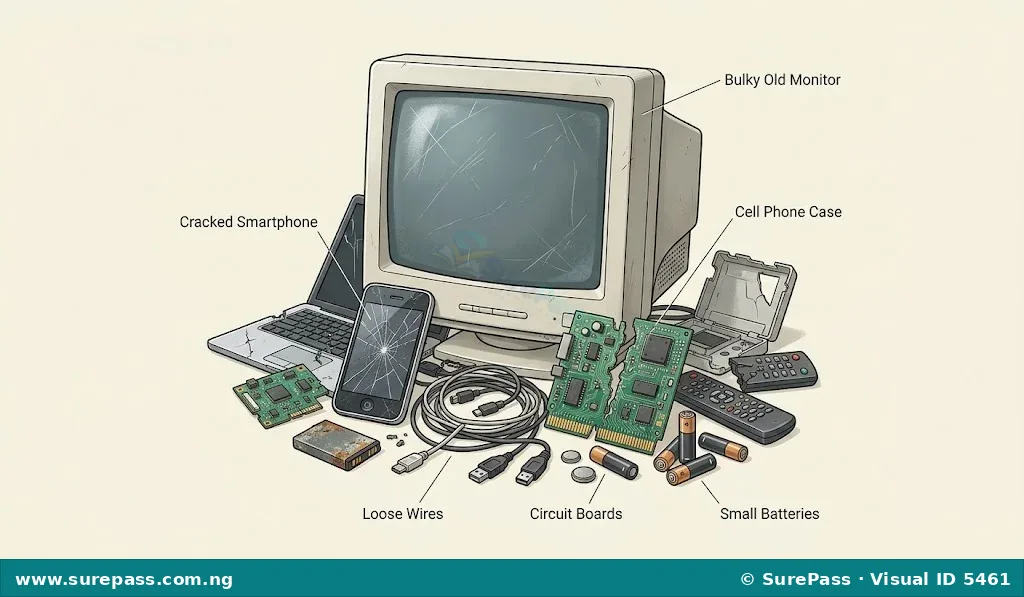
Electronic waste comes from various sources, including homes, schools, offices, and industries. Common examples of electronic waste include:
- Scrap computers and accessories: Old desktop system units, cathode-ray tube (CRT) monitors, flat screens, laptops, broken keyboards, computer mice, and printers.
- Mobile devices: Obsolete mobile phones, smartphones, tablets, chargers, and damaged charging cables.
- Batteries: Lithium-ion batteries from phones and laptops, lead-acid batteries, and household dry-cell batteries.
- Entertainment electronics: Broken television sets, DVD players, radio sets, video game consoles, and headphones.
- Household appliances: Damaged refrigerators, electric irons, microwaves, air conditioners, and washing machines.
Observe the image below to see common examples of discarded electronic items.
Harmful Substances Found in e-Waste
Electronic devices are made of many different components. While some parts are made of harmless plastics or metals, other parts contain toxic chemicals and heavy metals. The main harmful substances found in e-waste include:
- Lead: Found in old computer monitors, circuit boards, and solder. It is highly toxic to humans and animals.
- Mercury: Found in flat-screen monitors, fluorescent lamps, and switches. It can damage the nervous system when released into the environment.
- Cadmium: Found in rechargeable computer batteries, contacts, and switches. It is a toxic metal that can cause organ damage.
- Beryllium: Found in computer motherboards and connectors. Inhaling beryllium dust can cause severe lung diseases.
- Polybrominated flame retardants: Chemicals used in plastic casings to prevent fires. These chemicals do not break down easily and can accumulate in the environment.
Environmental Impacts of e-Waste
When electronic waste is dumped in open fields, buried in landfills, or burned improperly, it causes severe damage to the environment. The major environmental impacts of e-waste include:
- Air pollution: Burning e-waste to extract valuable metals like copper releases toxic fumes, heavy metals, and greenhouse gases into the atmosphere. This makes the air unsafe to breathe.
- Soil pollution: Toxic chemicals like lead and cadmium leak from dumped electronics directly into the ground. This ruins soil quality, kills beneficial soil organisms, and prevents plants from growing healthy.
- Water pollution: Rainwater washes toxic chemicals from e-waste dumps into nearby streams, rivers, and underground water sources. This poisons aquatic life and makes the water unsafe for drinking and farming.
- Loss of biodiversity: Toxic chemicals poison plants and animals in local ecosystems. This leads to the destruction of natural habitats and a reduction in the variety of living organisms in the area.
- Climate change: The manufacturing of new electronics to replace discarded ones consumes massive amounts of energy, which releases greenhouse gases. Additionally, burning plastic casings of e-waste releases carbon dioxide, contributing to global warming.
Look at the diagram below to understand how e-waste toxins spread through the environment.
Managing e-Waste Responsibly
Because of the dangers associated with electronic waste, proper management is essential to protect human health and the environment.
Importance of Proper Disposal and Recycling
Proper disposal and recycling of electronic waste are important for the following reasons:
- Protection of human health: It prevents toxic substances from entering the food and water supply, protecting communities from diseases.
- Environmental conservation: It prevents the pollution of air, soil, and water bodies.
- Resource recovery: Recycling allows valuable materials like gold, silver, copper, and high-quality plastics to be recovered and reused in making new products. This reduces the need to mine new raw materials.
- Reduction of landfill waste: It reduces the volume of waste sent to landfills, saving valuable land space.
Ways to Manage e-Waste Responsibly
Responsible methods for managing electronic waste include:
- Recycling programs: Taking old electronics to licensed e-waste recycling centres where they can be safely dismantled and processed.
- Donation: Giving functional but unwanted devices to schools, community centres, or individuals who still need them, thereby extending the lifespan of the devices.
- Proper disposal: Using designated e-waste collection bins instead of throwing electronics into regular household dustbins.
- Reduce and reuse: Maintaining electronic devices properly to extend their lifespan, and repairing broken devices instead of immediately buying new ones.
Observe the diagram below showing the key pillars of responsible e-waste management.
Evaluation Guide
To evaluate understanding of this unit, learners should complete the following tasks:
- Explain the meaning of e-waste.
- List four examples of electronic waste commonly found in homes or schools.
- State two harmful substances found in e-waste and explain why they are dangerous.
- Discuss three environmental impacts of improper e-waste disposal.
- Describe three responsible ways of managing e-waste.
- Write a short essay of about 150 words on e-waste, its environmental impact, and ways of managing it.




0 comments
Open the discussion when you need it. Comments stay collapsed until requested so the initial article remains light.