


ARTICLE CONTENTSOn this page 8 sections
Internet Communication Practices
Performance Objectives
By the end of the lesson, students should be able to:
- identify uncivilised communication practices;
- explain why such practices are not allowed;
- discuss the effects of uncivilised Internet communication practices on individuals and society.
Meaning of Internet Communication Practices
Internet communication is the sharing of information, ideas, messages, images or videos between people using digital devices connected to the internet.
The internet allows people across Nigeria and the rest of the world to connect instantly. This communication can be done through emails, social media platforms, instant messaging applications, discussion forums and video conferencing tools. The way individuals behave and interact in these digital spaces is referred to as internet communication practices. These practices can be broadly categorised into ethical (civilised) practices and unethical (uncivilised) practices.
Uncivilised internet communication is the use of digital platforms to send messages, images or videos that are disrespectful, harmful, dishonest, offensive or illegal.
Just as there are rules of behavior in physical communities, there are also rules of behavior in digital communities. Civilised communication promotes respect, safety and truth, while uncivilised communication creates confusion, pain and conflict.
Examples of Uncivilised Internet Communication Practices
Uncivilised communication online takes many forms. Understanding these practices helps internet users to recognise and avoid them.
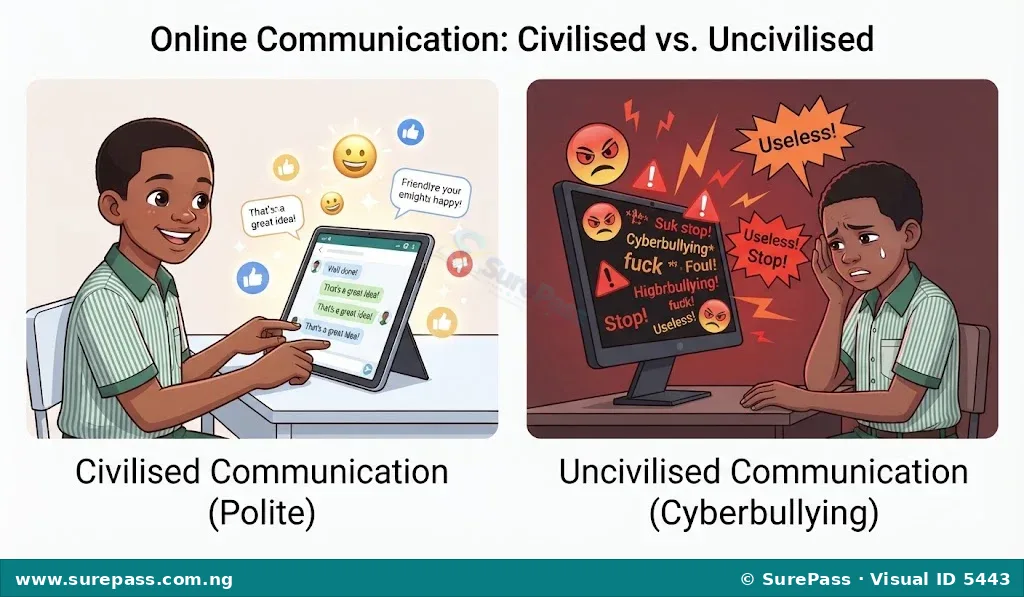
Bullying (Cyberbullying)
Cyberbullying is the use of digital technology to harass, threaten, humiliate or target another person repeatedly.
Examples of cyberbullying include sending threatening text messages, posting embarrassing photos of a classmate online without permission, or spreading cruel rumours about someone on social media platforms. Unlike physical bullying, cyberbullying can happen at any time of the day and can reach a very large audience quickly.
Sending Unsolicited Messages, Videos and Pictures
Unsolicited messages are unwanted digital communications sent to individuals without their consent or request.
This practice is often referred to as spamming. It includes sending bulk advertisements, chain messages, or inappropriate media files to people who have not agreed to receive them. This clogs up communication channels and invades the privacy of the recipients.
Use of Foul Language
Foul language is the use of vulgar, abusive, rude or socially unacceptable words during communication.
In online forums, comment sections and chat groups, some users write abusive words when they disagree with others. This practice destroys the quality of discussions and makes digital spaces hostile and unsafe for polite users.
Hate Speech
Hate speech is any form of communication that attacks, insults or discriminates against individuals or groups based on their race, religion, ethnicity, gender or disability.
In a diverse nation like Nigeria, hate speech online often targets specific ethnic groups or religious beliefs. This practice promotes hostility and divides people who should live together in peace.
Sharing Fake News
Fake news is false or misleading information presented as accurate news with the intention to deceive people.
With the speed of social media, false stories can spread to millions of people within minutes. Examples include sharing false reports about disease outbreaks, fake election results, or non-existent government policies. Sharing fake news misleads the public and can cause widespread panic.
Sharing of Obscene Images and Videos
Obscene images and videos are sexually explicit, indecent or highly offensive visual materials that violate public moral standards.
Sharing such materials in public chat groups, social media timelines, or directly to individuals is highly uncivilised. It violates community standards, corrupts moral values, and is often illegal under Nigerian law.
Observe the image below to understand the contrast between civilised and uncivilised online communication.
Why Uncivilised Internet Communication Practices Are Not Allowed
Uncivilised internet communication practices are restricted and prohibited across the globe for several important reasons.
The main reasons these practices are not allowed include:
- Violation of Platform Terms of Service: Social media platforms and internet service providers have strict rules that guide user behavior. Accounts that engage in bullying, hate speech, or sharing obscene materials are suspended or permanently banned.
- Legal Consequences: Many uncivilised practices are crimes. In Nigeria, the Cybercrimes Act punishes cyberstalking, online bullying, and the distribution of racist or xenophobic materials with fines and imprisonment.
- Protection of Public Peace: False news and hate speech can easily lead to physical violence, riots, and destruction of property. Governments and security agencies restrict these practices to maintain law and order.
- Preservation of Mental Health: Online spaces should be safe for learning and interaction. Restricting harmful communication protects users from emotional distress, anxiety, and depression.
Effects of Unethical Internet Communication Practices
Unethical internet communication has severe consequences that affect both the individuals targeted and the society at large.
Effects on Individuals
The consequences of unethical online behavior on individuals include:
- Loss of Self-Confidence: Victims of cyberbullying and online abuse often begin to doubt their worth. This leads to low self-esteem, poor academic performance, and withdrawal from social activities.
- Suicide: Extreme cases of online harassment, public humiliation, and relentless bullying have led victims to experience severe depression, sometimes resulting in self-harm or suicide.
- Hate: Individuals who are constantly targeted with abusive language or discrimination online often develop deep feelings of anger and hatred toward their abusers or society in general.
Effects on Society
The consequences of unethical online behavior on the wider community include:
- Disunity: When hate speech and ethnic insults are shared freely online, they destroy national unity. Different groups within the country begin to view each other with suspicion and hostility.
- War and Genocide: History has shown that unchecked hate speech and fake news can incite communities to violence. In extreme cases, online propaganda and hate campaigns can lead to civil wars and the mass killing of a particular group of people (genocide).
The diagram below illustrates how unethical online communication can escalate from individual actions to major societal crises.
How to Practise Ethical Internet Communication
To maintain a safe and productive digital environment, internet users must follow ethical communication guidelines.
The procedure for communicating ethically online involves the following steps:
- Think Before Typing: Read through every message before sending or posting it. Ensure that the words are polite and cannot be easily misunderstood.
- Verify Information: Do not share news stories, broadcast messages, or images unless their truthfulness has been confirmed from reliable sources.
- Respect Privacy: Do not share other people’s private messages, photos, or personal details without their clear permission.
- Use Polite Language: Avoid using abusive words, even when expressing disagreement in comment sections or group chats.
- Report and Block: Use the reporting tools on digital platforms to flag cyberbullying, hate speech, or obscene content. Block users who persist in sending unsolicited or abusive messages.
Summary
The table below summarises the key differences between civilised and uncivilised internet communication practices.
| Practice Category | Key Characteristics | Examples | Impact on Society |
|---|---|---|---|
| Civilised (Ethical) | Respectful, honest, polite, and constructive. | Encouraging peers, sharing verified educational facts, reporting abuse. | Promotes peace, unity, learning, and mutual respect. |
| Uncivilised (Unethical) | Harmful, abusive, deceptive, and offensive. | Cyberbullying, hate speech, sharing fake news, sending spam. | Causes disunity, loss of confidence, emotional trauma, and conflict. |



0 comments
Open the discussion when you need it. Comments stay collapsed until requested so the initial article remains light.