


ARTICLE CONTENTSOn this page 8 sections
Social Media Networking
Performance Objectives
By the end of the lesson, students should be able to:
- describe social media;
- identify popular social media platforms;
- discuss the characteristics of social media;
- create personal social media accounts;
- create a class chat group;
- relate and communicate responsibly on social media.
Introduction to Social Media
In today’s digital world, connecting with people across different locations has become easier than ever before. Social media platforms are powerful tools that allow individuals to interact, share information, and build communities online. These platforms have changed how people communicate, learn, and even conduct business.
Meaning of Social Media
Social media refers to websites and applications that enable users to create and share content or to participate in social networking.
These platforms are designed to connect people globally, allowing them to share thoughts, photos, videos, and other forms of digital content. They facilitate communication and interaction among individuals and groups.
Popular Social Media Platforms
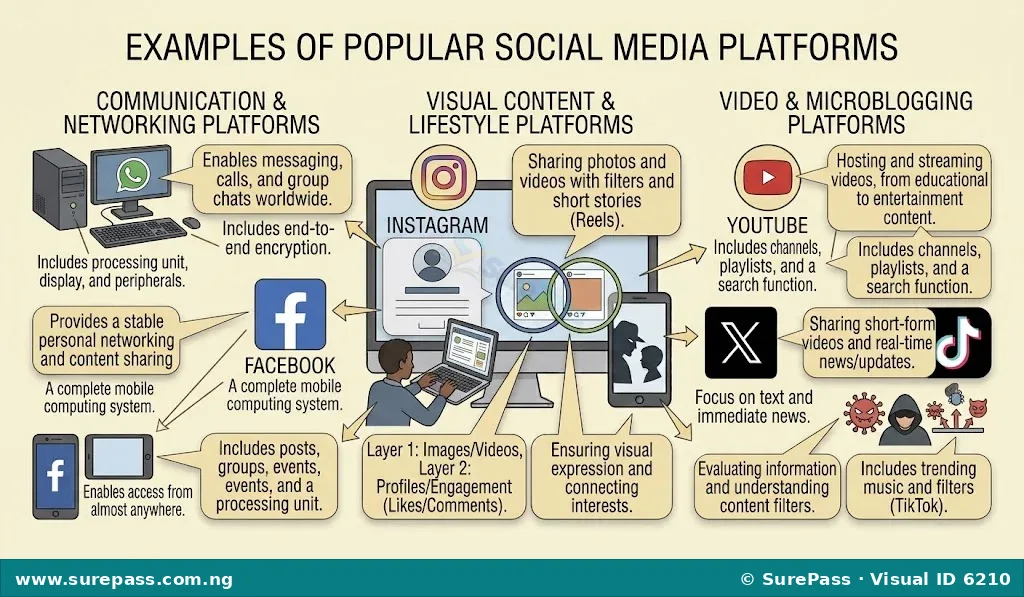
Many social media platforms are widely used across Nigeria and the world. Each platform often has unique features and is used for different purposes, though some functions overlap. Understanding these platforms helps in choosing the right one for specific communication needs.
Some popular social media platforms include:
- Facebook: A widely used platform for connecting with friends and family, sharing updates, photos, and videos, and joining groups based on interests.
- WhatsApp: A messaging application that allows users to send text messages, make voice and video calls, and share media files with individuals and groups.
- Instagram: A platform primarily focused on photo and video sharing, popular for visual content and short video stories.
- X (formerly Twitter): A microblogging platform where users share short messages called “tweets,” follow news, and engage in public conversations.
- YouTube: A video-sharing platform where users can upload, view, rate, share, and comment on videos. It is a major source for entertainment, education, and news.
- TikTok: A platform for creating and sharing short-form mobile videos, often featuring music, dance, and comedy.
Characteristics of Social Media
Social media platforms share several common characteristics that define their functionality and impact. These features make them distinct from traditional forms of communication.
The characteristics of social media include:
- User-Generated Content: The content on social media platforms is primarily created and shared by the users themselves. This includes posts, photos, videos, comments, and reviews.
- Interactivity and Connectivity: Social media allows users to interact with each other in real-time or asynchronously. Users can connect with friends, family, and new people, forming networks and communities.
- Profile Creation: Most social media platforms require users to create a personal profile, which often includes their name, photo, and other personal information. This profile represents their identity on the platform.
- Networking: Social media platforms enable users to build and maintain social networks. Users can follow, friend, or subscribe to others, expanding their connections.
- Real-Time Information Sharing: Information can be shared and spread very quickly across social media platforms, often in real-time. This allows for rapid dissemination of news, updates, and events.
- Public and Private Communication: Users can engage in both public conversations (e.g., comments on posts, public tweets) and private communication (e.g., direct messages, private group chats).
Setting Up Social Media Accounts
Creating a social media account is generally a straightforward process, though the exact steps may vary slightly between platforms. It typically involves providing some personal details and agreeing to the platform’s terms of service.
The general steps for setting up a social media account are:
- Choose a Platform: Decide which social media platform best suits your needs for communication or content sharing.
- Download the App or Visit the Website: Access the platform through its official mobile application or its website using a computer or internet-enabled device.
- Sign Up/Create New Account: Look for a “Sign Up” or “Create New Account” option.
- Provide Required Information: You will typically be asked for details such as your full name, date of birth, email address or phone number, and to create a unique username.
- Create a Strong Password: Choose a password that is difficult for others to guess. It should combine uppercase and lowercase letters, numbers, and symbols.
- Agree to Terms and Conditions: Read and accept the platform’s terms of service and privacy policy.
- Verify Your Account: Some platforms may send a verification code to your email or phone number to confirm your identity. Enter this code to complete the registration.
- Set Up Your Profile: Once registered, you can customise your profile by adding a profile picture, writing a short bio, and adjusting privacy settings.
Responsible Use of Social Media
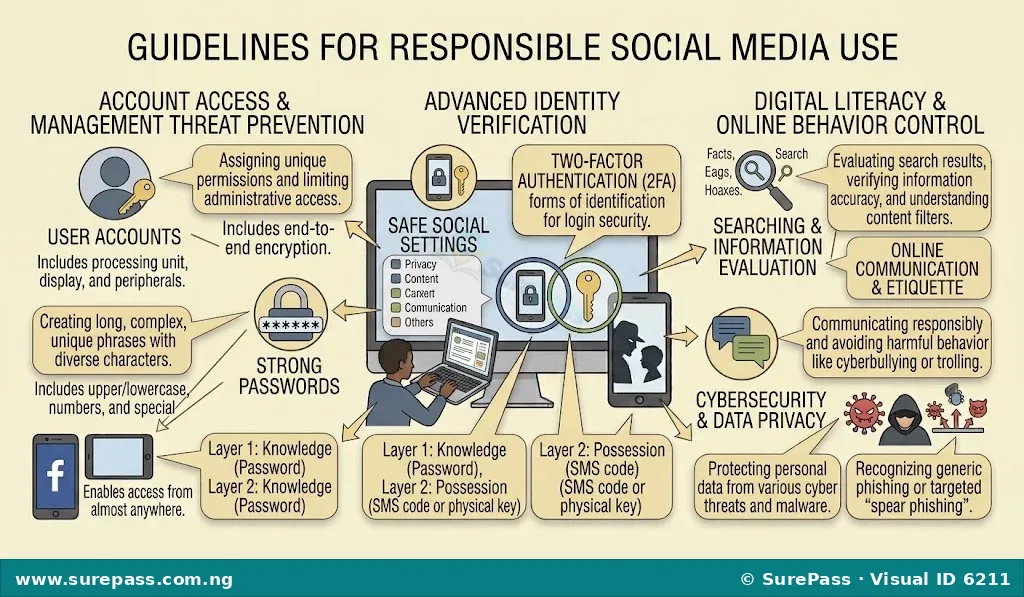
Using social media responsibly is essential for personal safety, maintaining good relationships, and ensuring a positive online experience. Responsible use involves being mindful of what is shared, how one interacts with others, and respecting privacy.
Key aspects of responsible social media use include:
- Protecting Personal Information: Avoid sharing sensitive personal details such as your home address, phone number, school schedule, or financial information publicly. Be cautious about what you post, as it can be seen by many people.
- Thinking Before Posting: Once something is posted online, it can be difficult to remove completely. Consider the impact of your words and images before sharing them. Ask yourself if the content is kind, true, and necessary.
- Respecting Others: Treat others online with the same respect you would in person. Avoid cyberbullying, hate speech, or making offensive comments. Do not share private information or images of others without their explicit permission.
- Verifying Information: Not all information found on social media is true. Be critical of what you read and see. Check facts from reliable sources before believing or sharing news and information.
- Managing Privacy Settings: Regularly review and adjust your privacy settings to control who can see your posts, photos, and personal information. Limit access to your content to trusted friends or family members.
- Reporting Inappropriate Content: If you encounter content that is harmful, offensive, or violates the platform’s rules, report it to the platform administrators. This helps keep the online environment safe for everyone.
- Time Management: Be aware of the amount of time you spend on social media. Excessive use can affect your studies, sleep, and real-life interactions. Set limits for yourself.
- Creating a Class Chat Group Responsibly: When creating or participating in a class chat group (e.g., on WhatsApp or Telegram), ensure it serves its academic purpose.
- Purpose: Clearly define the group’s purpose, such as sharing notes, discussing assignments, or coordinating group projects.
- Rules: Establish clear rules for communication, including appropriate language, posting times, and relevance of shared content.
- Privacy: Ensure all members consent to being part of the group and understand that their phone numbers are visible to other members.
- Respect: Maintain a respectful tone in all communications. Avoid personal attacks or off-topic discussions.
- Moderation: The group administrator should monitor content and ensure rules are followed to maintain a productive environment.



0 comments
Open the discussion when you need it. Comments stay collapsed until requested so the initial article remains light.