


ARTICLE CONTENTSOn this page 8 sections
Chemical Hazards
Performance Objectives
By the end of the lesson, students should be able to:
- state the meaning of chemical hazards;
- name common Laboratory hazards;
- identify the symbols of common laboratory hazards.
Introduction
Chemistry is an exciting subject that involves working with various substances. Many of these substances, known as chemicals, can be dangerous if not handled correctly. Understanding chemical hazards and following safety rules are essential for preventing accidents and ensuring a safe learning environment in the laboratory and beyond.
Meaning of Chemical Hazards
Chemical hazards are substances that can cause harm to humans, animals, or the environment due to their physical or chemical properties.
These substances can be found in various forms, including solids, liquids, and gases. The harm they cause can range from mild irritation to severe injury, illness, or even death. It is important to recognise these hazards to protect oneself and others.
Common Laboratory Hazards and Their Symbols
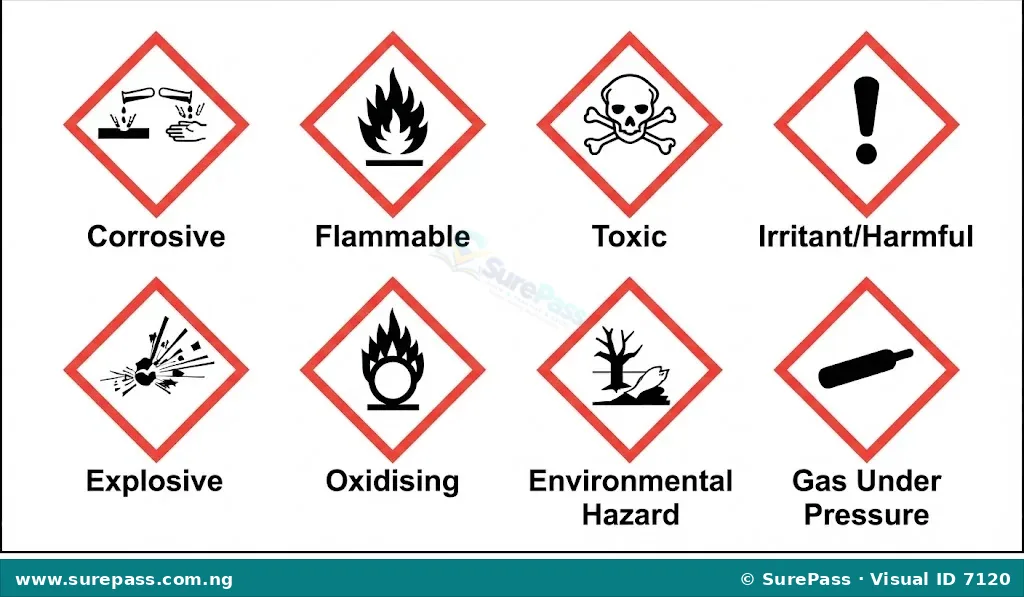
Chemicals often come with warning labels that include specific symbols to indicate their hazards. These symbols are universally recognised and provide quick information about the potential dangers of a substance. Identifying these symbols is a crucial part of laboratory safety.
Common laboratory hazards and their symbols include:
- Corrosive: These chemicals can cause severe damage to living tissue (like skin and eyes) and can also corrode or eat away at materials such as metals. Examples include strong acids (like concentrated sulphuric acid) and strong bases (like sodium hydroxide).
- Flammable: These substances can easily catch fire and burn rapidly, even at low temperatures. They can be liquids, solids, or gases. Examples include ethanol, acetone, and hydrogen gas.
- Toxic: These chemicals are poisonous and can cause serious illness, injury, or death if inhaled, swallowed, or absorbed through the skin. Examples include mercury compounds and cyanide.
- Irritant/Harmful: These substances can cause irritation to the skin, eyes, or respiratory system. They are generally less severe than toxic chemicals but still require careful handling. Examples include ammonia solution and some cleaning agents.
- Explosive: These chemicals can explode under certain conditions, such as heat, shock, or friction, releasing a large amount of energy very quickly. Examples include picric acid and some peroxides.
- Oxidising: Oxidising agents can cause or intensify a fire, or cause an explosion, by providing oxygen to other substances. They do not necessarily burn themselves but support combustion. Examples include hydrogen peroxide and potassium permanganate.
- Environmental Hazard: These chemicals are harmful to the environment, particularly aquatic life, and can cause long-term damage to ecosystems. Proper disposal is critical for these substances. Examples include heavy metals and certain pesticides.
- Gas Under Pressure: These symbols indicate gases stored under high pressure in cylinders. They can explode if heated, and the rapidly escaping gas can cause cold burns. Examples include cylinders of nitrogen, oxygen, or carbon dioxide.
Standard Precautions for Handling Chemicals
To ensure safety when working with chemicals, certain standard precautions must always be followed. These precautions help to minimise risks and prevent accidents.
The standard precautions for handling chemicals include:
- Read Labels Carefully: Always read the label of a chemical container before use. Pay attention to hazard symbols, warnings, and instructions for safe handling and storage.
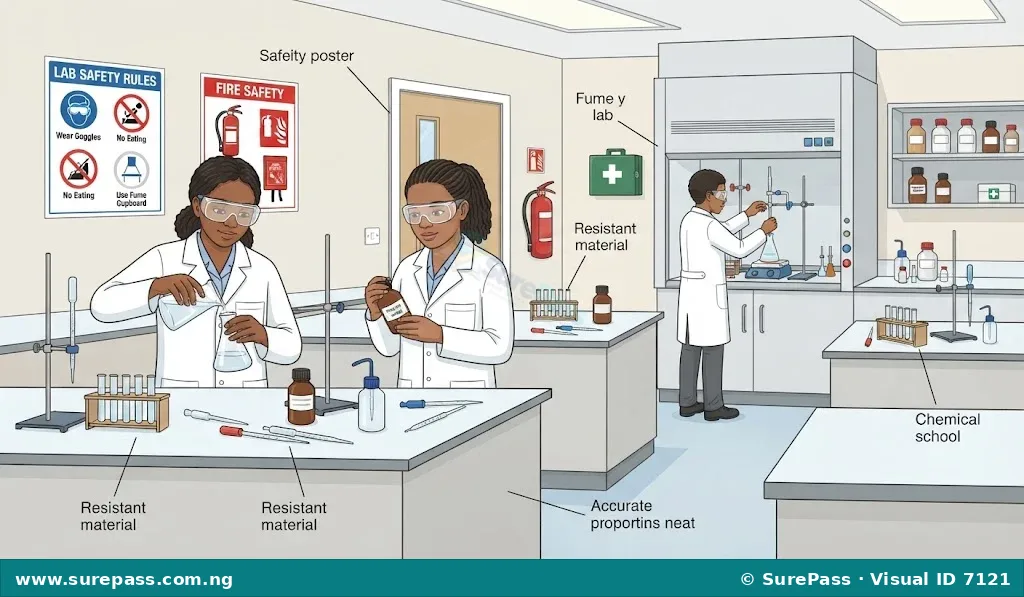
- Wear Personal Protective Equipment (PPE): Always wear appropriate PPE, such as safety goggles to protect the eyes, laboratory coats to protect clothing and skin, and gloves to protect hands from chemical contact.
- Work in a Fume Cupboard: When working with volatile or hazardous chemicals that produce fumes, always use a fume cupboard to ensure proper ventilation and prevent inhalation of harmful vapours.
- Avoid Direct Contact: Never touch, taste, or smell chemicals directly unless specifically instructed to do so under controlled conditions. Use appropriate tools like spatulas or droppers.
- Handle with Care: Carry chemical bottles with two hands, especially large ones. Pour liquids slowly and carefully to avoid spills.
- Never Return Unused Chemicals: Do not return unused chemicals to their original containers to prevent contamination.
- Wash Hands: Always wash hands thoroughly with soap and water after handling any chemicals and before leaving the laboratory.
- Know Emergency Procedures: Be aware of the location and proper use of safety equipment such as fire extinguishers, emergency showers, and eyewash stations.
Safety Rules in the Laboratory
Beyond specific chemical handling precautions, general safety rules are essential for maintaining a safe laboratory environment for everyone.
Important safety rules in the laboratory include:
- Follow Instructions: Always listen carefully to and follow all instructions given by the teacher or supervisor. Do not perform unauthorised experiments.
- No Eating, Drinking, or Chewing Gum: Food, drinks, and chewing gum are strictly prohibited in the laboratory to prevent accidental ingestion of chemicals.
- No Running or Horseplay: Maintain a calm and orderly environment. Running, pushing, or engaging in horseplay can lead to serious accidents.
- Keep Work Area Tidy: Ensure your workbench is clean and organised. Keep only necessary materials on the bench and clear away clutter.
- Report Accidents and Spills: Immediately report any accident, injury, or chemical spill to the teacher, no matter how minor it seems.
- Know Emergency Exits: Be familiar with the location of emergency exits and assembly points in case of an evacuation.
- Tie Back Long Hair: Long hair should be tied back to prevent it from catching fire, getting into chemicals, or obstructing vision.
- Wear Appropriate Clothing: Avoid loose clothing that can get caught in equipment or dip into chemicals. Closed-toe shoes are recommended to protect feet from spills or falling objects.
- Do Not Work Alone: Never work in the laboratory without supervision.
Safe Chemical Handling
Proper handling, storage, and disposal of chemicals are practical skills that ensure safety and prevent environmental contamination.
Proper Handling of Chemicals
Handling chemicals correctly involves a series of steps to minimise exposure and prevent spills.
The procedure for proper handling includes:
-
Before Use:
- Ensure the chemical is the correct one for the experiment by checking its label.
- Inspect the container for any damage or leaks.
- Gather all necessary PPE (safety goggles, lab coat, gloves) and put them on.
- Prepare your workspace, ensuring it is clean and free of clutter.
-
During Use:
- When pouring liquids, hold the container with two hands, one on the base and one on the neck.
- Pour slowly to avoid splashing. Use a funnel if transferring to a narrow-necked container.
- Keep the label facing upwards to prevent drips from obscuring it.
- When using solids, use a clean spatula or scoop. Do not use your hands.
- Avoid cross-contamination by using separate, clean equipment for each chemical.
- If a chemical comes into contact with your skin or eyes, immediately rinse the affected area with plenty of water and inform your teacher.
-
After Use:
- Replace caps or stoppers tightly on chemical containers immediately after use.
- Clean any spills promptly and according to your teacher’s instructions.
- Clean all glassware and equipment used.
- Wash your hands thoroughly with soap and water.
Proper Storage of Chemicals
Storing chemicals correctly is vital to prevent reactions, degradation, and accidental access.
Key principles for proper chemical storage include:
- Labelled Containers: All chemicals must be stored in clearly labelled containers. Never use unlabelled chemicals.
- Original Containers: Store chemicals in their original containers unless specifically instructed otherwise.
- Cool, Dry, and Well-Ventilated Area: Most chemicals should be stored in a cool, dry place away from direct sunlight and heat sources. Good ventilation helps to disperse any escaping fumes.
- Segregation of Incompatible Chemicals: Store incompatible chemicals (e.g., acids and bases, oxidisers and flammables) separately to prevent dangerous reactions if containers leak or break.
- Secure Storage: Keep chemicals in locked cabinets or designated storage areas to prevent unauthorised access.
- Flammable Liquids: Store flammable liquids in specially designed flammable liquid storage cabinets.
Proper Disposal of Chemicals
Improper disposal of chemicals can harm the environment and pose risks to human health. Always follow specific disposal guidelines.
The procedure for proper chemical disposal includes:
- Never Pour Down the Drain: Do not pour chemicals down the sink or toilet unless explicitly instructed by your teacher that the substance is safe for drain disposal. Many chemicals can damage plumbing or contaminate water systems.
- Use Designated Waste Containers: Different types of chemical waste (e.g., organic solvents, heavy metal solutions, strong acids/bases) often require separate waste containers. Your teacher will provide these.
- Follow Teacher’s Instructions: Always ask your teacher for specific instructions on how to dispose of chemicals used in an experiment. They will guide you on the correct waste container or method.
- Neutralisation: Some acidic or basic waste may need to be neutralised before disposal, but this should only be done under strict supervision and instruction.
- Broken Glass: Dispose of broken glassware in a designated “broken glass” bin, not in regular waste bins.




0 comments
Open the discussion when you need it. Comments stay collapsed until requested so the initial article remains light.