


ARTICLE CONTENTSOn this page 9 sections
Entrepreneurship in Chemistry
Performance Objectives
By the end of the lesson, students should be able to:
- explain the meaning of entrepreneurship;
- describe the concept of entrepreneurship in chemistry;
- explain the concept of chemistry-based entrepreneurship;
- identify entrepreneurship knowledge, skills, and attitudes;
- generate chemistry related business ideas: societal needs;
- prepare a business plan for a chemistry related enterprise.
Chemistry is a fundamental science that studies matter and its properties, as well as how matter changes. The knowledge gained from chemistry is not only useful for understanding the world around us but also for creating new products and services that can meet human needs. This connection between chemistry and meeting needs forms the basis of entrepreneurship in chemistry.
Meaning of Entrepreneurship
Entrepreneurship is the process of identifying a problem or need in society and creating a new business venture to solve that problem or meet that need, often taking on financial risks in the hope of profit.
An entrepreneur is a person who starts a new business, often involving innovation and risk-taking. Entrepreneurs are driven by the desire to create value, solve problems, and contribute to the economy. They combine resources like money, materials, and labour to produce goods or services.
Entrepreneurship in Chemistry
Entrepreneurship in chemistry involves applying chemical knowledge, principles, and techniques to develop new products, processes, or services that address specific market needs or societal challenges.
This field combines scientific expertise with business acumen. It focuses on turning chemical discoveries, innovations, or existing chemical processes into viable commercial ventures. For example, a chemist might develop a new, more effective cleaning agent, a safer pesticide, or a method for recycling plastic waste, and then establish a business to produce and sell these solutions.
Chemistry-Based Entrepreneurship
Chemistry-based entrepreneurship specifically refers to businesses where the core product, service, or process is fundamentally rooted in chemical science and technology.
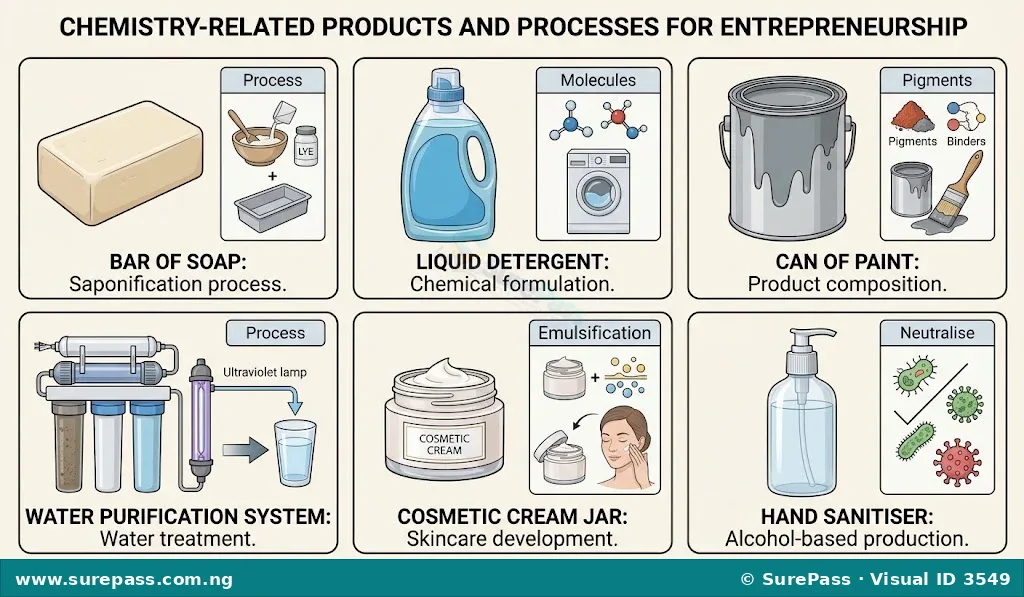
This means that the success of the enterprise relies heavily on chemical understanding, experimentation, and application. It goes beyond simply using chemicals in a business; it involves creating the chemical solutions themselves. Examples include businesses that manufacture soaps, detergents, paints, pharmaceuticals, cosmetics, or those that offer water treatment services, chemical analysis, or waste management solutions based on chemical processes.
Entrepreneurial Knowledge, Skills, and Attitudes
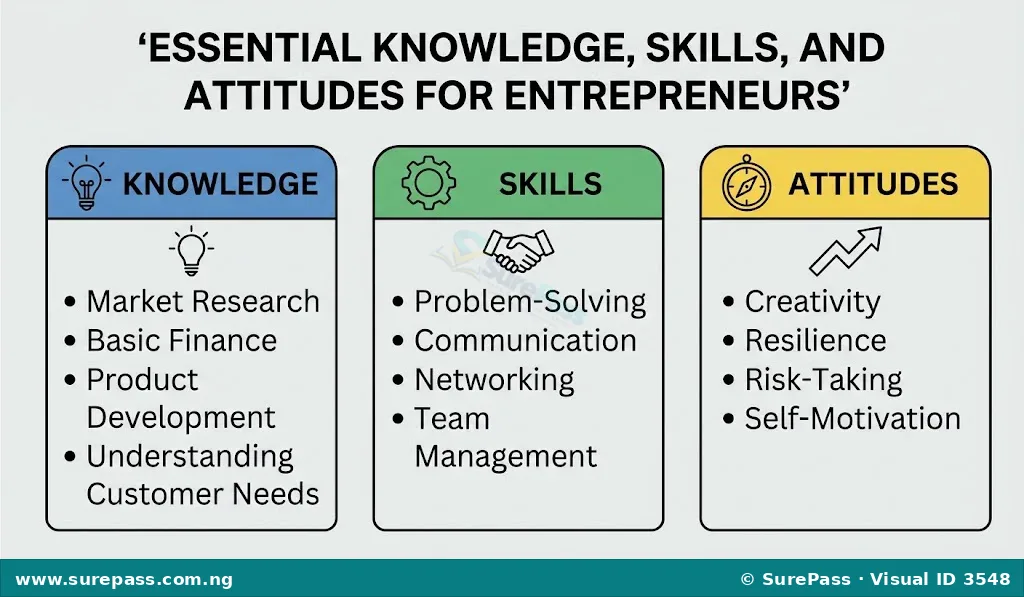
To succeed as an entrepreneur, especially in a technical field like chemistry, a person needs a combination of specific knowledge, practical skills, and a positive mindset or attitude.
Entrepreneurial Knowledge
This refers to the theoretical understanding and information an entrepreneur needs to run a business effectively. Important areas of knowledge include:
- Market Research: Understanding who the customers are, what they need, and what competitors offer.
- Basic Finance: Knowing how to manage money, understand costs, pricing, and profit.
- Product Development: Understanding the steps involved in creating and improving a product or service.
- Legal and Regulatory Requirements: Knowing the laws and rules that apply to the business, especially concerning chemical products and safety.
Entrepreneurial Skills
These are the practical abilities and competencies required to perform tasks and solve problems in a business setting. Key skills include:
- Problem-Solving: The ability to identify challenges and find effective solutions.
- Communication: Clearly conveying ideas to customers, suppliers, and team members.
- Decision-Making: Making informed choices quickly and effectively.
- Networking: Building relationships with other business people, mentors, and potential partners.
- Time Management: Organising and prioritising tasks to meet deadlines.
Entrepreneurial Attitudes
These are the personal qualities and mindsets that help an entrepreneur overcome challenges and stay motivated. Important attitudes include:
- Creativity and Innovation: Thinking of new and better ways to do things or create products.
- Resilience: The ability to recover quickly from difficulties and setbacks.
- Risk-Taking: Being willing to take calculated chances for potential rewards.
- Self-Confidence: Believing in one’s own abilities and ideas.
- Perseverance: Continuing to work towards goals despite obstacles.
Generating Chemistry-Related Business Ideas
Generating business ideas involves identifying unmet needs or problems in society that can be solved using chemical knowledge. This process often starts with observing the environment and thinking critically about how chemistry can offer solutions.
Identifying Societal Needs
Societal needs are problems or gaps in services and products that affect people in a community or country. These needs can be observed in various aspects of daily life:
- Household Needs: People always need effective cleaning agents, pest control, air fresheners, and personal care products like soaps and lotions.
- Environmental Needs: Issues like water pollution, waste management, and air quality often require chemical solutions.
- Agricultural Needs: Farmers need fertilisers, pesticides, and soil conditioners to improve crop yield and protect plants.
- Health Needs: The demand for medicines, disinfectants, and diagnostic tools is constant.
- Industrial Needs: Industries require various chemicals for manufacturing, processing, and maintenance.
By carefully observing these areas, one can identify specific problems that chemistry can address. For example, if there is a need for affordable, locally produced soap, a chemistry-based business idea could be soap manufacturing.
Examples of Chemistry-Related Business Ideas
Once a societal need is identified, chemistry knowledge can be applied to develop a business idea. Some examples include:
- Soap and Detergent Production: Manufacturing various types of soaps (bar soap, liquid soap) and detergents for laundry and dishwashing. This addresses household cleaning needs.
- Paint Manufacturing: Producing different types of paints for homes, offices, and industrial uses. This meets construction and aesthetic needs.
- Water Purification and Treatment: Offering services or products to purify drinking water or treat wastewater for communities and industries. This addresses environmental and health needs.
- Cosmetics and Personal Care Products: Creating lotions, creams, hair products, and perfumes. This meets personal grooming needs.
- Disinfectant and Sanitiser Production: Manufacturing products to kill germs in homes, hospitals, and public spaces. This addresses health and hygiene needs.
- Adhesive Production: Developing glues and bonding agents for various applications, from household repairs to industrial manufacturing.
- Pesticide and Insecticide Formulation: Creating chemical agents to control pests in agriculture or homes, ensuring food security and comfort.
Business Plans
A business plan is a formal written document that describes a business’s goals, how it plans to achieve those goals, and the resources it will need. It serves as a roadmap for the business and is essential for attracting investors or securing loans.
Importance of a Business Plan
A well-prepared business plan is crucial for several reasons:
- It helps to clarify the business idea and its objectives.
- It provides a detailed strategy for how the business will operate.
- It helps identify potential challenges and how to overcome them.
- It is a vital tool for securing funding from banks or investors.
- It guides the entrepreneur in making informed decisions.
Key Components of a Business Plan
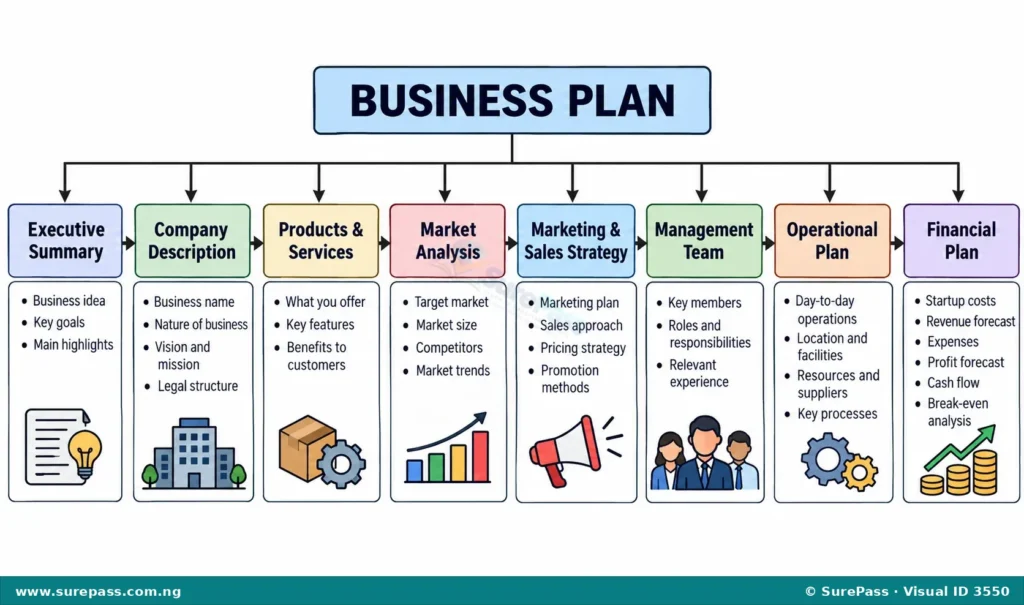
While business plans can be complex, a basic plan for a chemistry-related enterprise should include the following sections:
- Executive Summary: A brief overview of the entire business plan, highlighting the key points.
- Company Description: Details about the business, its mission, vision, and legal structure.
- Products and Services: A detailed description of the chemistry-based products or services offered, including their unique features and benefits.
- Market Analysis: Information about the target customers, market size, and competition.
- Marketing and Sales Strategy: How the business will promote and sell its products or services.
- Management Team: Information about the people running the business and their qualifications.
- Operational Plan: How the products will be made or services delivered, including facilities, equipment, and raw materials (e.g., chemical reagents).
- Financial Plan: Projections of costs, revenue, profit, and funding requirements.
How to Prepare a Business Plan for a Chemistry-Related Enterprise
Preparing a business plan requires careful thought and research. The following steps outline a basic approach to developing a plan for a chemistry-based business:
The procedure involves the following steps:
- Choose a Chemistry-Related Business Idea: Select a specific product or service that you want to develop, based on a societal need and your chemistry knowledge. For example, producing liquid soap.
- Write an Executive Summary: Briefly describe your business idea, its goals, and why it will be successful. This is often written last, but placed first in the document.
- Describe Your Company: State the name of your business, its mission (what it aims to do), and its vision (what it hopes to become). Explain its legal structure (e.g., sole proprietorship).
- Detail Your Products/Services: Clearly explain what you are selling. For liquid soap, describe its type, ingredients (e.g., caustic soda, palm kernel oil, colour, fragrance), how it works, and what makes it better than existing products.
- Conduct Market Analysis:
- Target Market: Who will buy your product? (e.g., households, schools, restaurants).
- Market Size: How many potential customers are there?
- Competition: Who else sells similar products? What are their strengths and weaknesses?
- Develop Marketing and Sales Strategies:
- Promotion: How will people know about your product? (e.g., social media, flyers, word-of-mouth).
- Pricing: How much will you sell your product for?
- Sales Channels: Where will you sell it? (e.g., direct sales, local markets, distributors).
- Outline Your Management Team: If you have partners, describe their roles and experience. If you are working alone, highlight your own skills and qualifications.
- Create an Operational Plan:
- Production Process: Describe the steps involved in making your product (e.g., for soap: mixing chemicals, heating, cooling, packaging).
- Raw Materials: List the chemicals and other materials needed and where you will source them.
- Equipment: List the tools and machinery required (e.g., mixing tanks, weighing scales, safety gear).
- Location: Where will your production take place?
- Prepare a Financial Plan:
- Startup Costs: How much money do you need to start? (e.g., for raw materials, equipment, registration).
- Operating Costs: How much money is needed to run the business monthly?
- Revenue Projections: How much money do you expect to make from sales?
- Profitability: When do you expect the business to start making a profit?
- Review and Refine: Read through your entire business plan. Ensure it is clear, logical, and addresses all key aspects of your proposed business. Seek feedback from teachers or mentors.




0 comments
Open the discussion when you need it. Comments stay collapsed until requested so the initial article remains light.