



ARTICLE CONTENTSOn this page 5 sections
Branches of Chemistry
Performance Objectives
By the end of the lesson, students should be able to:
- identify various branches of chemistry;
- relate events in the environment with the branches of chemistry;
- state the importance of chemistry to individuals and the society.
Introduction to Chemistry
Chemistry is the scientific study of matter, its properties, composition, structure, and the changes it undergoes. It explores how different substances interact with each other and the energy involved in these interactions.
From the air breathed to the food eaten, and the materials used every day, chemistry plays a fundamental role in understanding the world. Because the field of chemistry is so vast and covers many different aspects of matter, it is divided into several specialised branches.
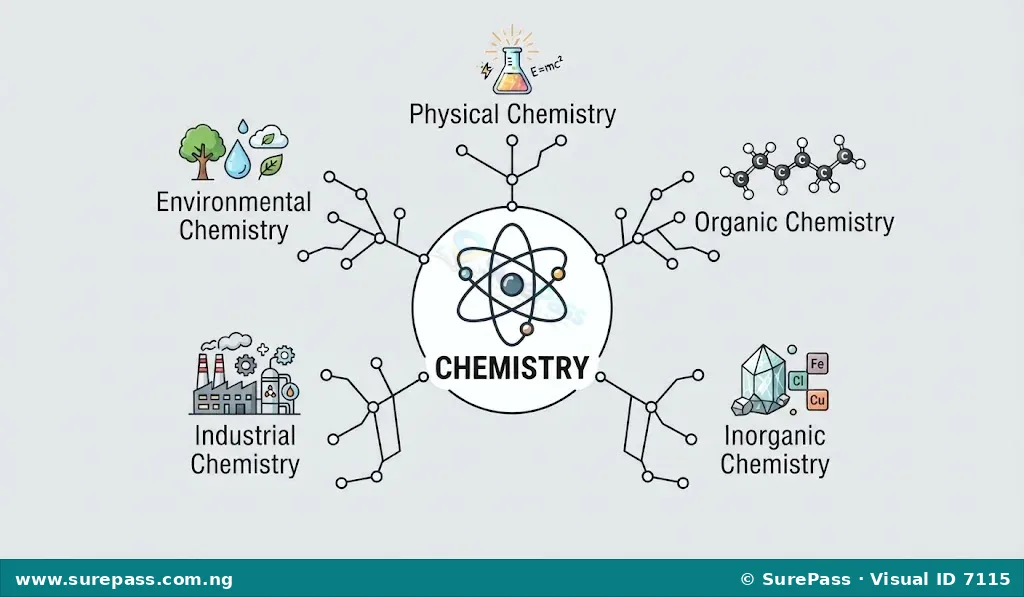
Main Branches of Chemistry
The study of chemistry is organised into different branches to allow for deeper understanding and specialisation. Each branch focuses on specific types of matter, reactions, or applications. The main branches of chemistry include:
- Physical Chemistry
- Organic Chemistry
- Inorganic Chemistry
- Industrial Chemistry
- Environmental Chemistry
Physical Chemistry
Physical chemistry is the branch of chemistry that studies the physical properties and behaviour of matter, and the changes it undergoes, including energy changes. It combines principles of physics and chemistry to explain chemical phenomena.
This branch investigates topics such as reaction rates, the amount of energy absorbed or released during chemical reactions, the properties of gases, liquids, and solids, and how electricity interacts with chemical substances.
Importance of Physical Chemistry:
Physical chemistry is crucial for understanding the fundamental principles that govern all chemical processes. Its importance includes:
- Developing New Materials: It helps in designing materials with specific properties, such as stronger plastics or more efficient semiconductors for electronics.
- Optimising Industrial Processes: Understanding reaction rates and energy changes allows industries to make chemical production more efficient, safer, and cost-effective.
- Energy Production and Storage: It is vital in the development of batteries, fuel cells, and other energy storage systems, which are important for powering homes, vehicles, and devices.
- Environmental Modelling: Physical chemistry principles are used to model how pollutants disperse in the atmosphere or water bodies, helping in environmental protection efforts.
Organic Chemistry
Organic chemistry is the branch of chemistry that focuses on the study of carbon-containing compounds, especially those that contain carbon-hydrogen bonds. These compounds are often associated with living organisms, but many are also synthesised in laboratories.
Carbon’s unique ability to form strong bonds with itself and other elements allows for the creation of millions of different organic compounds, ranging from simple molecules to complex polymers.
Importance of Organic Chemistry:
Organic chemistry is central to many aspects of daily life and industrial production:
- Pharmaceuticals and Medicine: Most drugs and medicines are organic compounds. Organic chemistry is essential for discovering, developing, and manufacturing new treatments for diseases.
- Plastics and Polymers: Materials like PVC pipes, nylon fabrics, and plastic containers are all products of organic chemistry. These materials are used extensively in construction, packaging, and clothing.
- Fuels: Petroleum, natural gas, and coal, which are major sources of energy, are primarily composed of organic compounds. Organic chemistry helps in refining these fuels and developing new energy sources.
- Food and Agriculture: Many food additives, flavourings, vitamins, and pesticides are organic compounds. Organic chemistry contributes to food preservation and crop protection.
- Cosmetics and Personal Care Products: Soaps, detergents, perfumes, and lotions are largely made of organic chemicals, improving personal hygiene and appearance.
Inorganic Chemistry
Inorganic chemistry is the branch of chemistry that studies compounds that do not primarily contain carbon-hydrogen bonds. This includes all elements in the periodic table and their compounds, such as metals, minerals, salts, and acids.
It deals with the synthesis, structure, properties, and reactions of inorganic compounds, which are often found in non-living matter like rocks and soil.
Importance of Inorganic Chemistry:
Inorganic chemistry has wide-ranging applications that impact various industries and aspects of society:
- Agriculture: Fertilisers like urea, ammonium sulphate, and superphosphate, which are crucial for crop growth and food production, are inorganic compounds.
- Construction Materials: Cement, glass, ceramics, and bricks are all inorganic materials vital for building infrastructure like houses, roads, and bridges.
- Metallurgy: The extraction of metals from their ores, purification, and the creation of alloys (mixtures of metals) are key areas of inorganic chemistry, providing materials for tools, vehicles, and electronics.
- Electronics: Many components in electronic devices, such as semiconductors in computer chips and materials in batteries, rely on inorganic compounds.
- Water Treatment: Inorganic chemicals are used to purify drinking water and treat wastewater, ensuring public health.
Industrial Chemistry
Industrial chemistry is the branch of chemistry that applies chemical principles and processes to the large-scale production of chemicals and related products. Its main goal is to convert raw materials into useful products efficiently, safely, and economically.
This branch focuses on the design, operation, and optimisation of chemical plants and processes to meet societal demands for various goods.
Importance of Industrial Chemistry:
Industrial chemistry is a cornerstone of modern society, driving economic growth and providing essential products:
- Mass Production of Goods: It enables the large-scale manufacturing of plastics, detergents, paints, dyes, textiles, and many other everyday items that improve quality of life.
- Economic Development: Chemical industries create jobs, contribute significantly to national economies, and support other sectors like agriculture, construction, and healthcare.
- Resource Utilisation: It transforms natural resources, such as crude oil, minerals, and agricultural products, into valuable chemicals and materials.
- Innovation and Research: Industrial chemists continuously research and develop new processes and products, leading to technological advancements and sustainable solutions.
Environmental Chemistry
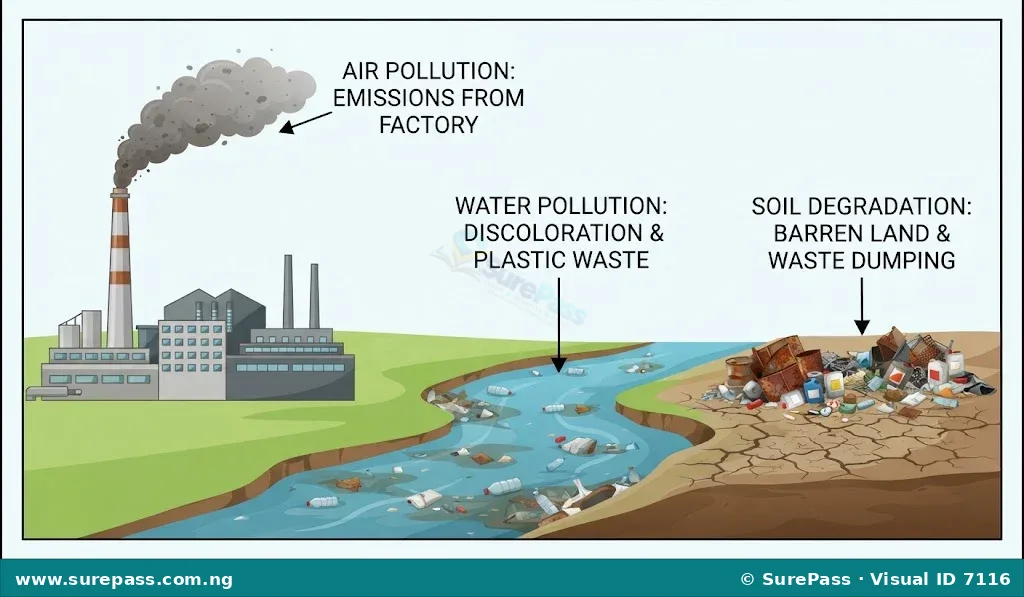
Environmental chemistry is the branch of chemistry that studies chemical processes occurring in the natural environment, including the air, water, and soil. It also investigates the impact of human activities on these processes and seeks solutions to environmental problems.
This branch examines the sources, reactions, transport, and effects of chemical species in the environment, focusing on issues like pollution, climate change, and resource management.
Importance of Environmental Chemistry:
Environmental chemistry is vital for protecting the planet and ensuring a healthy future for individuals and society:
- Pollution Control: It helps identify the sources and types of pollutants (e.g., industrial waste, vehicle emissions) and develops methods to reduce or eliminate them from air, water, and soil.
- Climate Change Understanding: Environmental chemists study greenhouse gases and their effects on the atmosphere, contributing to strategies for mitigating climate change.
- Water and Soil Quality: It monitors the chemical composition of water bodies and soil, ensuring they are safe for human use, agriculture, and supporting ecosystems.
- Waste Management: This branch develops chemical processes for treating and recycling waste materials, reducing landfill burden and promoting resource recovery.
- Sustainable Development: Environmental chemistry promotes the development of eco-friendly products and processes, leading to more sustainable practices in industries and daily life.
Overall Importance of Chemistry to Individuals and Society
Chemistry, through its various branches, is indispensable to human well-being and societal progress. It provides the fundamental knowledge needed to understand the world around us and to solve complex challenges.
For individuals, chemistry contributes to health through medicines, nutrition through fertilisers and food science, and comfort through materials like clothing and housing. For society, it drives technological innovation, supports economic growth through industries, and addresses critical issues such as energy supply, environmental protection, and public health.
Without the diverse applications of chemistry, many modern conveniences and advancements would not be possible, making it a truly central science.




0 comments
Open the discussion when you need it. Comments stay collapsed until requested so the initial article remains light.