



ARTICLE CONTENTSOn this page 9 sections
Laboratory Safety Rules and Guidelines
Performance Objectives
By the end of the lesson, students should be able to:
- identify safe ways of storing and retrieving chemicals in the laboratory;
- describe proper ways of disposing chemicals;
- recite chemistry laboratory safety rules/pledge;
- work safely in a chemistry laboratory.
Introduction to Laboratory Safety
A chemistry laboratory is a place where experiments are conducted to understand the properties and reactions of substances. While it is a place of discovery and learning, it can also be dangerous if proper precautions are not taken. Chemicals, glassware, and equipment can pose risks if handled incorrectly. Therefore, understanding and following safety rules are essential for everyone working in the laboratory.
Laboratory safety ensures the well-being of all individuals and prevents accidents, injuries, and damage to equipment or the environment. Adhering to safety guidelines helps create a secure and productive learning environment.
General Chemistry Laboratory Safety Rules
Working in a chemistry laboratory requires strict adherence to a set of rules designed to prevent accidents and ensure the safety of everyone present. These rules should be memorised and practised at all times.
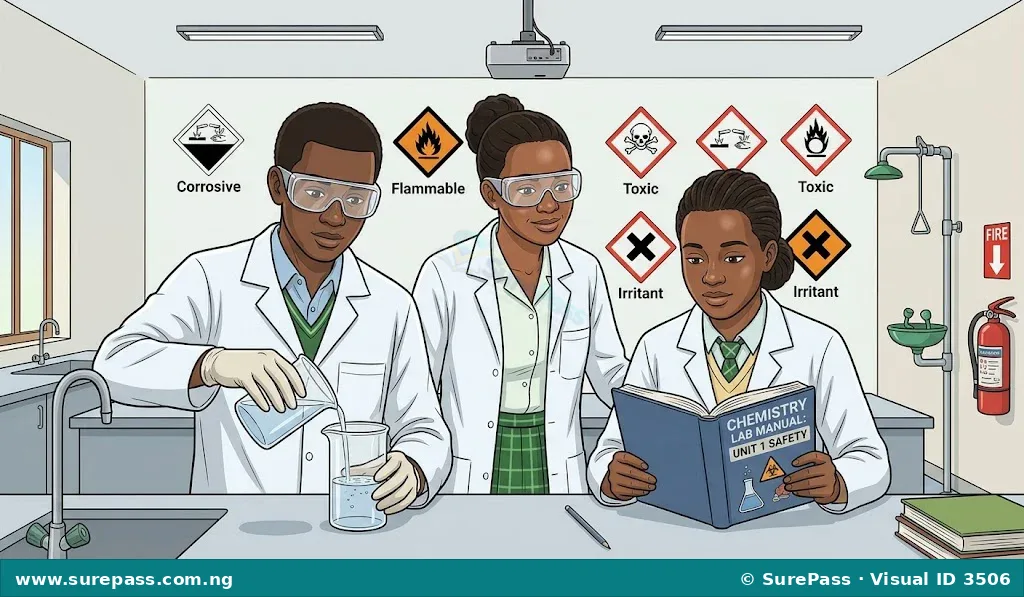
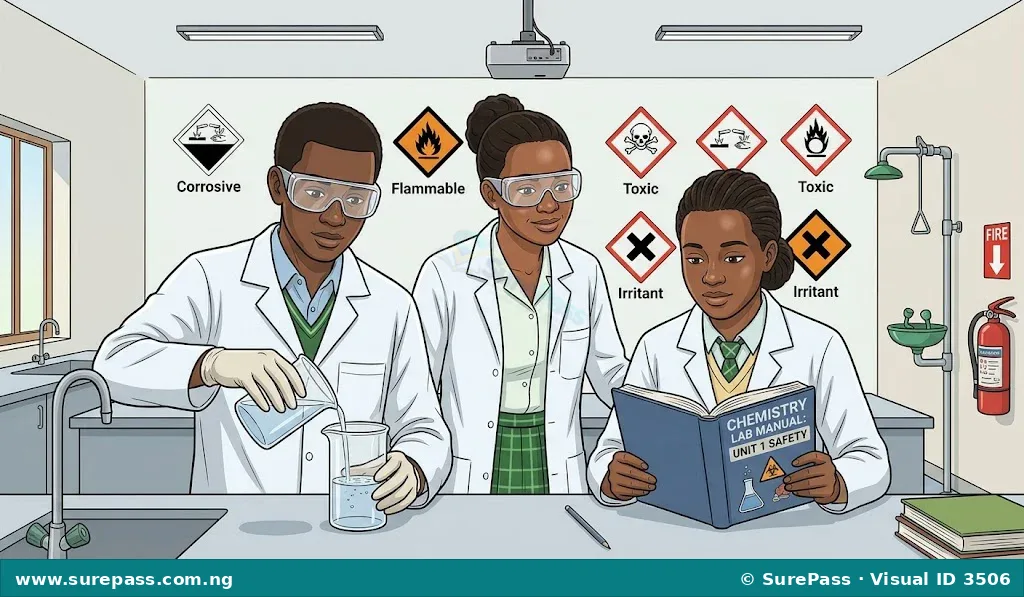
- Always wear appropriate Personal Protective Equipment (PPE): This includes a lab coat, safety goggles to protect the eyes, and gloves when handling chemicals.
- No eating, drinking, or chewing gum: Food and drinks can become contaminated with chemicals, leading to accidental ingestion.
- No running or horseplay: The laboratory environment contains fragile equipment and hazardous substances, making running or playful behaviour extremely dangerous.
- Keep the workspace tidy: Cluttered benches can lead to spills, broken glassware, and other accidents. Ensure all reagents and equipment are returned to their designated places after use.
- Read all instructions carefully: Before starting any experiment, read and understand the entire procedure. Ask the teacher for clarification if any part is unclear.
- Report all accidents immediately: Even minor spills, cuts, or breakages must be reported to the teacher or supervisor at once.
- Know the location of safety equipment: Be familiar with the location and operation of the eyewash station, safety shower, fire extinguisher, and first-aid kit.
- Never work alone: Always ensure a teacher or supervisor is present when conducting experiments.
- Do not taste or smell chemicals directly: To identify a chemical by smell, waft a small amount of vapour towards the nose using a hand.
- Tie back long hair: Long hair can catch fire or get entangled in equipment.
- Wear closed-toe shoes: Sandals or open-toe shoes do not protect the feet from chemical spills or broken glass.
- Wash hands thoroughly: Always wash hands with soap and water before leaving the laboratory, even if gloves were worn.
Understanding Chemical Hazards
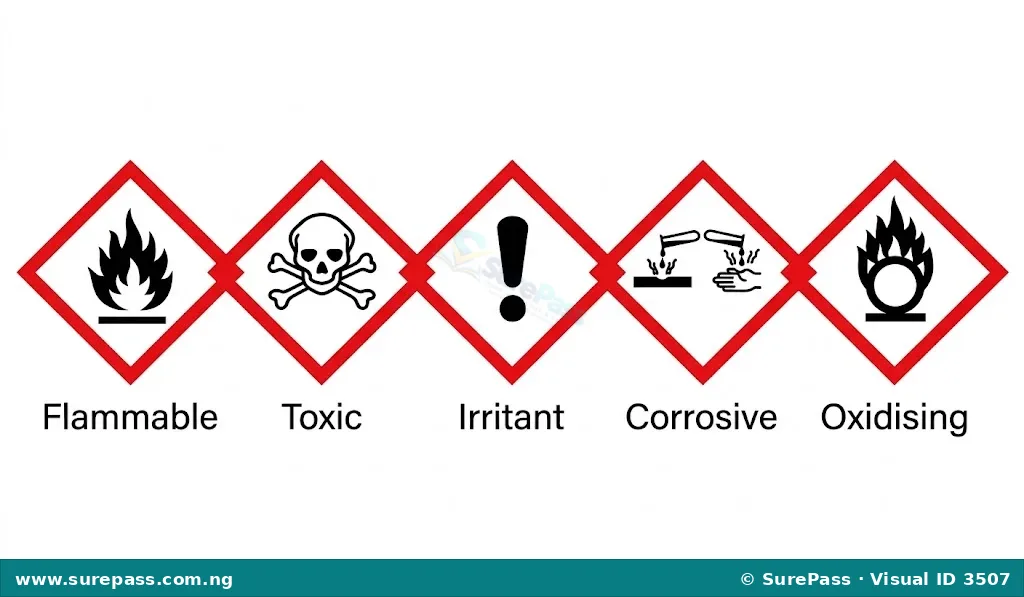
Chemicals used in the laboratory can have various hazardous properties. It is important to recognise these hazards to handle, store, and dispose of chemicals safely. Hazard symbols, often displayed on chemical containers, provide quick visual information about the potential dangers.
Common chemical hazards include:
- Flammable: Substances that can easily catch fire.
- Corrosive: Substances that can cause damage to living tissue or materials upon contact.
- Toxic: Substances that can cause harm or death if ingested, inhaled, or absorbed through the skin.
- Irritant: Substances that can cause inflammation or irritation to skin, eyes, or respiratory system.
- Oxidising: Substances that can cause or enhance the combustion of other materials.
Recognising these hazards helps in taking appropriate safety measures.
Safe Handling of Chemicals
Proper handling of chemicals is critical to prevent accidents and exposure. Every chemical should be treated with caution, even if its hazards are not immediately obvious.
Important practices for handling chemicals include:
- Read labels carefully: Before using any chemical, always read the label to understand its name, concentration, hazard warnings, and safety precautions.
- Use appropriate measuring equipment: Use pipettes, burettes, or measuring cylinders to measure liquids accurately. Never use beakers or conical flasks for precise measurements.
- Dispense chemicals carefully: Pour liquids slowly to avoid splashing. Use a spatula or scoop for solid chemicals.
- Avoid direct contact: Always wear gloves when handling chemicals, especially corrosive or toxic ones. Use tongs or forceps to handle hot or contaminated items.
- Work in a fume cupboard: If an experiment involves chemicals that produce harmful fumes or vapours, conduct the experiment inside a fume cupboard to ensure proper ventilation.
- Never return unused chemicals to the original container: This can contaminate the entire stock. Dispose of unused chemicals as instructed by the teacher.
- Clean up spills immediately: Small spills should be cleaned up promptly using appropriate absorbents and disposal methods. Report large spills to the teacher immediately.
- Use the smallest practical quantity: Only take the amount of chemical needed for the experiment to minimise waste and potential hazards.
- Keep chemical containers closed: Close bottles and containers immediately after use to prevent spills, evaporation, and contamination.
Safe Storage of Chemicals
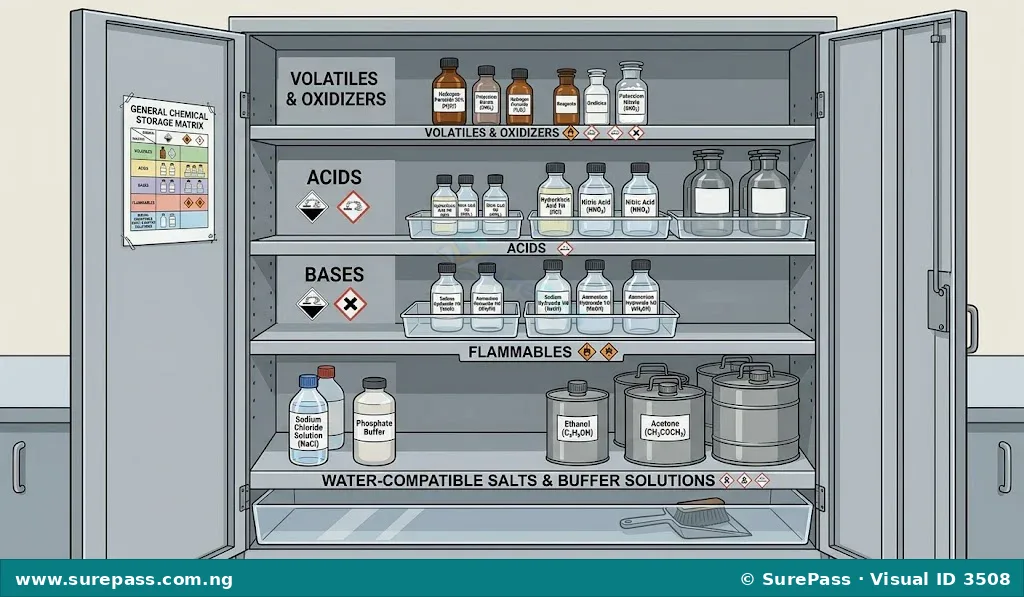
Chemicals must be stored correctly to maintain their integrity, prevent reactions between incompatible substances, and ensure easy and safe retrieval. Improper storage can lead to dangerous situations like fires, explosions, or the release of toxic fumes.
Safe ways of storing and retrieving chemicals in the laboratory include:
- Proper labelling: All chemical containers must have clear, legible labels indicating the chemical name, concentration, hazard warnings, and date of receipt or preparation. Never use a chemical from an unlabelled container.
- Appropriate containers: Store chemicals in their original containers or in suitable, clearly labelled secondary containers. Ensure containers are made of materials compatible with the chemical (e.g., glass for most liquids, plastic for hydrofluoric acid).
- Segregation of incompatible chemicals: Store chemicals based on their hazard class and compatibility. For example, acids should be stored separately from bases, and oxidisers should be kept away from flammable materials.
- Cool, dry, and well-ventilated areas: Most chemicals should be stored in cool, dry places, away from direct sunlight and heat sources. Good ventilation helps prevent the build-up of hazardous vapours.
- Flammable liquids storage: Flammable liquids must be stored in approved flammable liquid storage cabinets, away from ignition sources.
- Corrosive chemicals storage: Corrosive acids and bases should be stored in dedicated corrosive storage cabinets, preferably at a low level to minimise the risk of spills from falling.
- Secure storage: Highly hazardous or valuable chemicals should be stored in locked cabinets to prevent unauthorised access.
- Organised shelving: Store chemicals on sturdy shelves, with heavier containers on lower shelves to prevent them from falling. Do not store chemicals on the floor or in direct pathways.
- Retrieval procedures: When retrieving chemicals, take only the amount needed. Ensure the container is properly sealed and returned to its designated storage location immediately after use. Avoid leaving chemical bottles on the workbench unnecessarily.
Proper Disposal of Chemicals
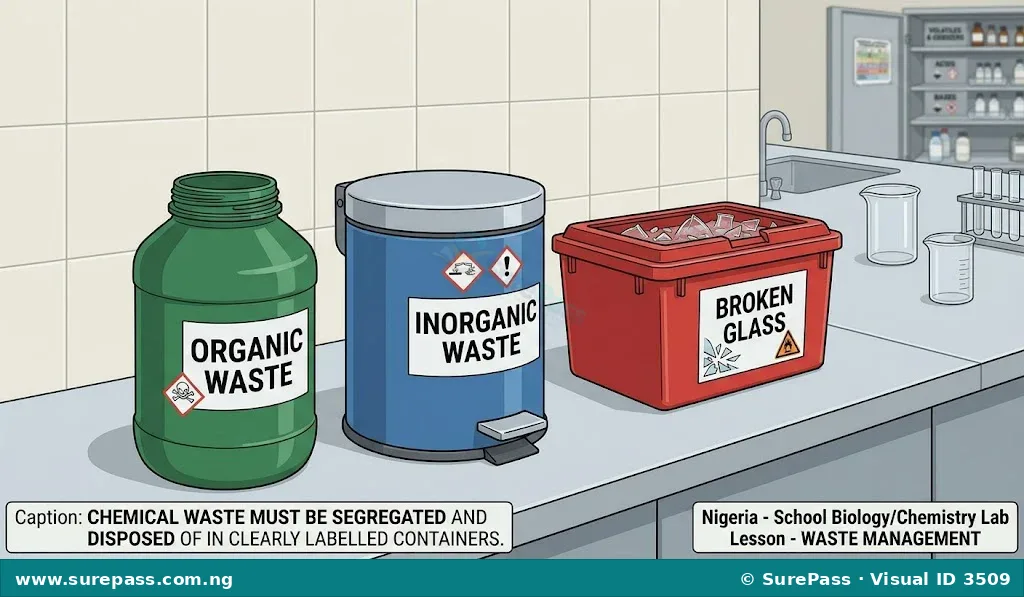
The safe disposal of chemical waste is as important as safe handling and storage. Improper disposal can harm the environment, contaminate water sources, and pose risks to human health. Never pour chemicals down the sink or into general waste bins unless specifically instructed to do so by the teacher.
Proper ways of disposing chemicals include:
- Segregation of waste: Chemical waste should be separated into designated containers based on its type and hazard. Common categories include:
- Organic waste: Solvents like ethanol, acetone, or petroleum ether.
- Inorganic waste: Solutions containing heavy metals (e.g., lead, mercury), strong acids, or strong bases.
- Halogenated waste: Organic compounds containing halogens (chlorine, bromine, iodine).
- Broken glassware: Place broken glass in a designated “broken glass” bin, not with general waste.
- Neutralisation: Dilute acids and bases may sometimes be neutralised before disposal, but this should only be done under strict supervision and instruction from the teacher.
- Use designated waste containers: Specific containers, clearly labelled for different types of chemical waste, must be used. These containers should be kept closed when not in use.
- Never mix incompatible wastes: Mixing different types of chemical waste can lead to dangerous reactions, such as heat generation, gas evolution, or explosions.
- Consult the teacher: Always ask the teacher for specific instructions on how to dispose of any chemical waste generated during an experiment. They will guide on the correct procedure and designated waste containers.
- Empty containers: Empty chemical containers should be rinsed thoroughly (if safe to do so) and disposed of according to laboratory policy, or reused if appropriate and cleaned.
Working Safely in a Chemistry Laboratory
Working safely in a chemistry laboratory involves applying all the safety rules and guidelines consistently throughout an experiment. It is a skill that develops with practice and careful attention to detail.
The procedure for working safely in the laboratory involves the following steps:
- Preparation before the experiment:
- Read and understand the experimental procedure thoroughly.
- Identify all chemicals to be used and their associated hazards by checking labels and safety data sheets (if available).
- Gather all necessary equipment and ensure it is clean and in good working condition.
- Clear your workspace of any unnecessary items.
- Put on your lab coat, safety goggles, and appropriate gloves before starting.
- During the experiment:
- Follow the experimental procedure exactly as written. Do not deviate without teacher approval.
- Measure chemicals accurately using the correct apparatus.
- Handle chemicals carefully, avoiding spills and splashes.
- If heating substances, use appropriate heating methods (e.g., water bath, heating mantle) and never point the mouth of a test tube towards yourself or others.
- Observe reactions carefully, noting any changes in colour, temperature, or gas evolution.
- Keep chemical containers closed when not in use.
- Immediately clean up any small spills according to instructions. Report all accidents, no matter how minor, to the teacher.
- Maintain a calm and focused attitude. Avoid distractions.
- After the experiment:
- Dispose of all chemical waste into the correct, labelled waste containers as instructed by the teacher.
- Clean all glassware and equipment used, and return them to their proper storage locations.
- Wipe down your workbench with a damp cloth.
- Remove your gloves and lab coat.
- Wash your hands thoroughly with soap and water before leaving the laboratory.
By consistently following these steps and adhering to all safety rules, you can ensure a safe and productive learning experience in the chemistry laboratory.





0 comments
Open the discussion when you need it. Comments stay collapsed until requested so the initial article remains light.