


ARTICLE CONTENTSOn this page 6 sections
Digital Devices
Performance Objectives
By the end of the lesson, students should be able to:
- explain the meaning of digital devices;
- identify digital devices;
- list uses of digital devices.
What Are Digital Devices?
A digital device is an electronic machine that works with information in a digital form.
These devices use electricity to process and store information. They are found everywhere around us, in our homes, schools, and communities, helping people with many daily tasks.
Common Digital Devices
Many devices we use every day are digital devices. They help us communicate, learn, play, and do many other things. Some common examples include:
Personal Computers (Desktop and Laptop)
Personal computers are powerful digital devices used for many tasks. They can be found in homes, schools, and offices.
A desktop computer is a computer that is usually placed on a desk. It has separate parts like a monitor (screen), a keyboard, a mouse, and a system unit (the main box). These parts are connected together.
A laptop computer is a portable computer that combines all the parts of a desktop computer into one compact unit. It can be carried easily from one place to another and can run on a battery.
Mobile Phones
Mobile phones are small, handheld digital devices that allow people to make calls and send messages. Modern mobile phones, often called smartphones, can do much more than just make calls.
They have screens that can display pictures and videos, and they can connect to the internet. Mobile phones are very popular because they are easy to carry and use almost anywhere.
Smart Watches
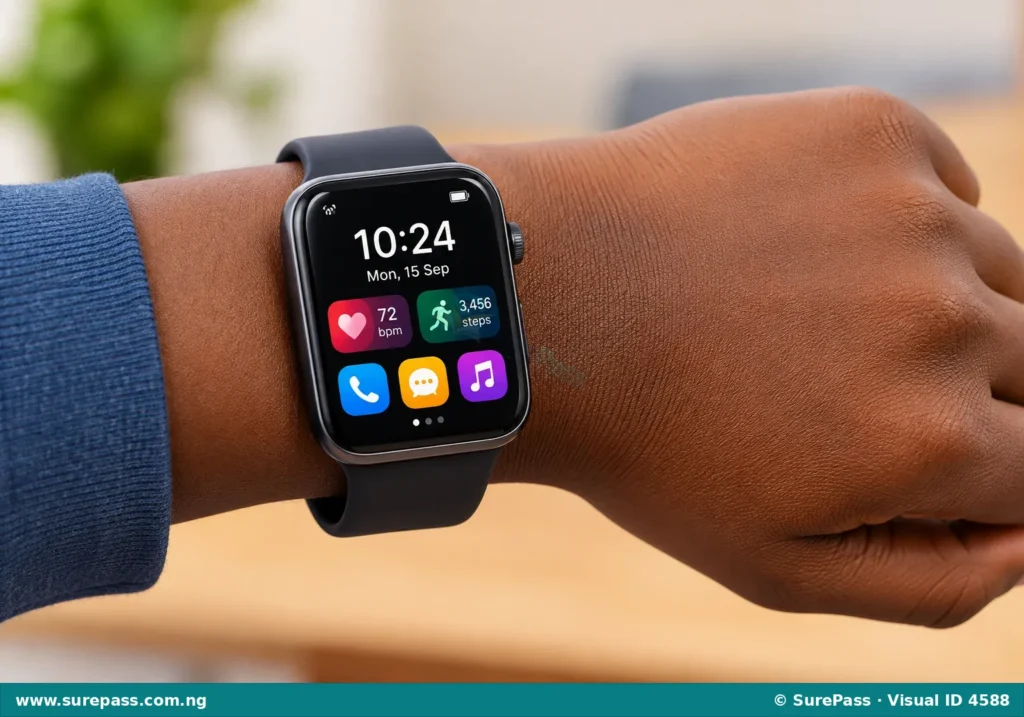
A smart watch is a digital device worn on the wrist, just like a regular watch. However, a smart watch can do much more than just tell time.
It can connect to a mobile phone and show notifications, track physical activity, and even monitor some basic health information. Smart watches are useful for people who want to stay connected and keep track of their health on the go.
Identifying Digital Devices
Identifying digital devices means being able to recognise them when you see them and know what they are. You can identify digital devices by their appearance and what they are used for.
For example, a laptop is a digital device because it is an electronic machine with a screen and keyboard that can be carried around. A mobile phone is identified by its small size, screen, and ability to make calls. A smart watch is identified by its wrist-worn design and digital display.
Uses of Digital Devices
Digital devices have many uses that make our lives easier and more interesting. Different devices can perform different tasks, but many share common uses.
The main uses of digital devices include:
- Playing games: Many digital devices, like computers and mobile phones, are used for playing various types of games for entertainment.
- Typing of text: Computers, especially desktops and laptops, are widely used for typing documents, stories, letters, and other text. Mobile phones also allow for typing messages and notes.
- Watching educational films: Digital devices with screens, such as computers and mobile phones, are used to watch educational videos and films, helping people learn new things.
- Storing information: Digital devices have memory to store different types of information, such as pictures, videos, documents, and games.
- Making phone calls: Mobile phones are primarily used for making and receiving phone calls to communicate with people far away.
- Checking basic health vitals: Smart watches can help check basic health information like heart rate or steps taken, which are simple health vitals.



0 comments
Open the discussion when you need it. Comments stay collapsed until requested so the initial article remains light.