



ARTICLE CONTENTSOn this page 8 sections
Basics of Robotics
Performance Objectives
By the end of the lesson, students should be able to:
- explain the meaning of robotics;
- list basic types of robots;
- Explain the basic features of robots;
- Explain benefits of robots.
What is Robotics?
Robotics is the study of robots. It is about how robots are designed, built, operated and used.
Robotics combines different areas of science and engineering to create machines that can do tasks automatically or with some help from humans. These machines are called robots.
What is a Robot?
A robot is a machine that can be programmed to carry out a series of actions automatically.
Robots are designed to help people with different tasks, especially those that are difficult, dangerous or repetitive for humans.
Types of Robots
Robots come in many shapes and sizes, and they are used for different purposes. The basic types of robots include:
- Industrial robots
- Service robots
- Toy robots
Industrial Robots
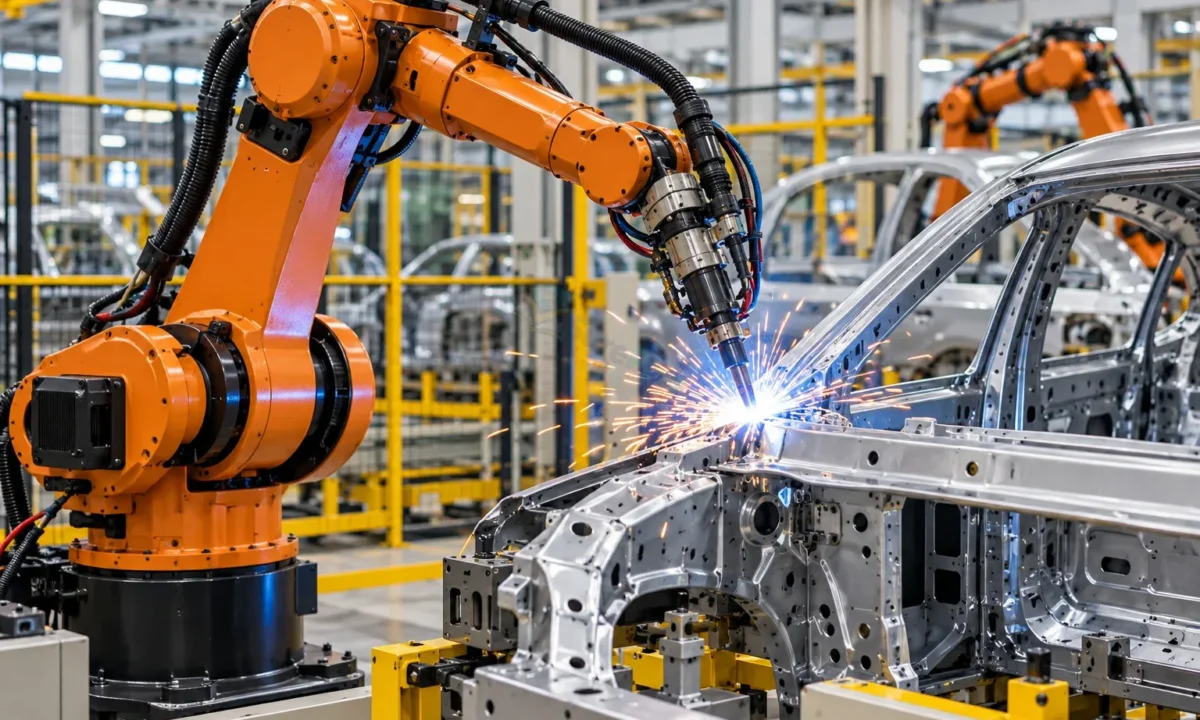
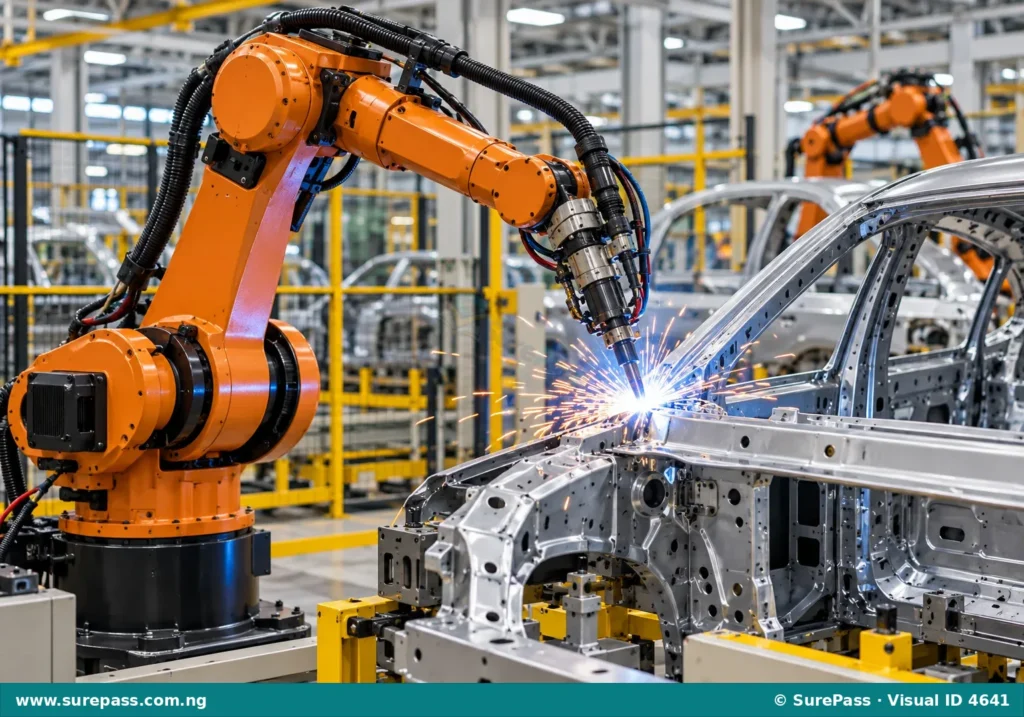
Industrial robots are machines used in factories and industries to perform tasks like welding, painting, assembling products or moving heavy materials.
These robots often work on assembly lines, helping to build cars, electronics and other goods. They are very strong and precise, making them good at repetitive tasks.
Service Robots
Service robots are designed to help people in homes, hospitals, offices and other public places.
These robots perform tasks that make life easier or safer for people. They can clean floors, deliver items, assist doctors or even guide visitors in a building.
Examples of service robots include:
- Vacuum cleaning robots that clean floors automatically.
- Delivery robots that carry food or packages.
- Hospital robots that move medicines or equipment.
Toy Robots
Toy robots are designed for entertainment and education, especially for children.
These robots can be simple remote-control toys or more advanced ones that can be programmed to move, make sounds or interact with their environment. They help children learn about technology and problem-solving.
Examples of toy robots include:
- Remote-control cars or drones.
- Robots that can walk, talk or dance.
- Simple programmable robots that teach coding basics.
Features of a Robot
For a robot to work, it needs special parts that help it sense its surroundings and move. The basic features of a robot include sensors and actuators.
Sensors
A sensor is a device that detects changes in the environment and sends information to the robot’s control system.
Sensors are like the eyes, ears and touch of a robot. They help the robot gather information about its surroundings. For example, a robot might have sensors to detect light, sound, heat, distance or touch.
The function of sensors is to collect data from the environment. This data helps the robot understand what is happening around it, so it can make decisions or react to changes.
For example, a robot vacuum cleaner uses sensors to detect walls and furniture, preventing it from bumping into them.
Actuators
An actuator is a component of a machine that is responsible for moving or controlling a mechanism or system.
Actuators are like the muscles of a robot. They allow the robot to move its parts, such as arms, legs or wheels. They can also make the robot produce sounds or light.
The function of actuators is to convert energy into physical motion. This motion allows the robot to perform tasks, like picking up objects, walking, driving or making sounds.
For example, a robot arm uses actuators to move its joints and grip objects. A toy robot uses actuators to make its wheels turn and move forward.
Benefits of Robots
Robots offer many benefits to people and industries. Some of these benefits include efficiency, safety and recreation.
Efficiency
Robots can perform tasks much faster and more accurately than humans, leading to greater efficiency.
In factories, industrial robots can work continuously without getting tired, making sure products are made quickly and correctly. This helps to produce more goods in less time.
Safety
Robots can be used to perform dangerous tasks that would put human lives at risk, thereby improving safety.
For example, robots can explore dangerous places, handle toxic materials or work in extreme temperatures. This keeps people safe from harm.
Recreation
Toy robots and other recreational robots provide entertainment and educational value.
They offer fun ways for children to play and learn about technology, programming and problem-solving. They can also be companions or tools for creative expression.
Identifying Robots by Their Features
To identify a robot, look for its main features: sensors and actuators. A robot must be able to sense its environment and move or act based on what it senses.
Consider the following examples:
- A machine in a car factory that picks up heavy car parts and places them precisely on an assembly line. This machine likely has sensors to know where the parts are and actuators to move its strong arms. It is an industrial robot.
- A small device that moves around your house, sucking up dust from the floor. It uses sensors to avoid bumping into furniture and actuators to move its wheels and brushes. This is a service robot.
- A toy car that you control with a remote. It has sensors to receive signals from the remote and actuators to make its wheels turn. This is a toy robot.
If a machine can sense its surroundings and move or act on its own, it is likely a robot. The type of robot depends on its purpose and where it is used.





0 comments
Open the discussion when you need it. Comments stay collapsed until requested so the initial article remains light.